Custom Men's Tracksuits: Jacket–Pant Size Matching for Production
- Share
- publisher
- HUCAI activewear
- Issue Time
- Nov 19,2026
Summary
Jacket and pant sizes match when the worn overlap, the length-to-rise proportion and the grade increments agree at every size. This guide sets out ten interface fields, a coupling rule for increments, the tolerance stack behind after-wash drift, four movement checks and the bulk pairing rules that keep a custom men's tracksuit matched.
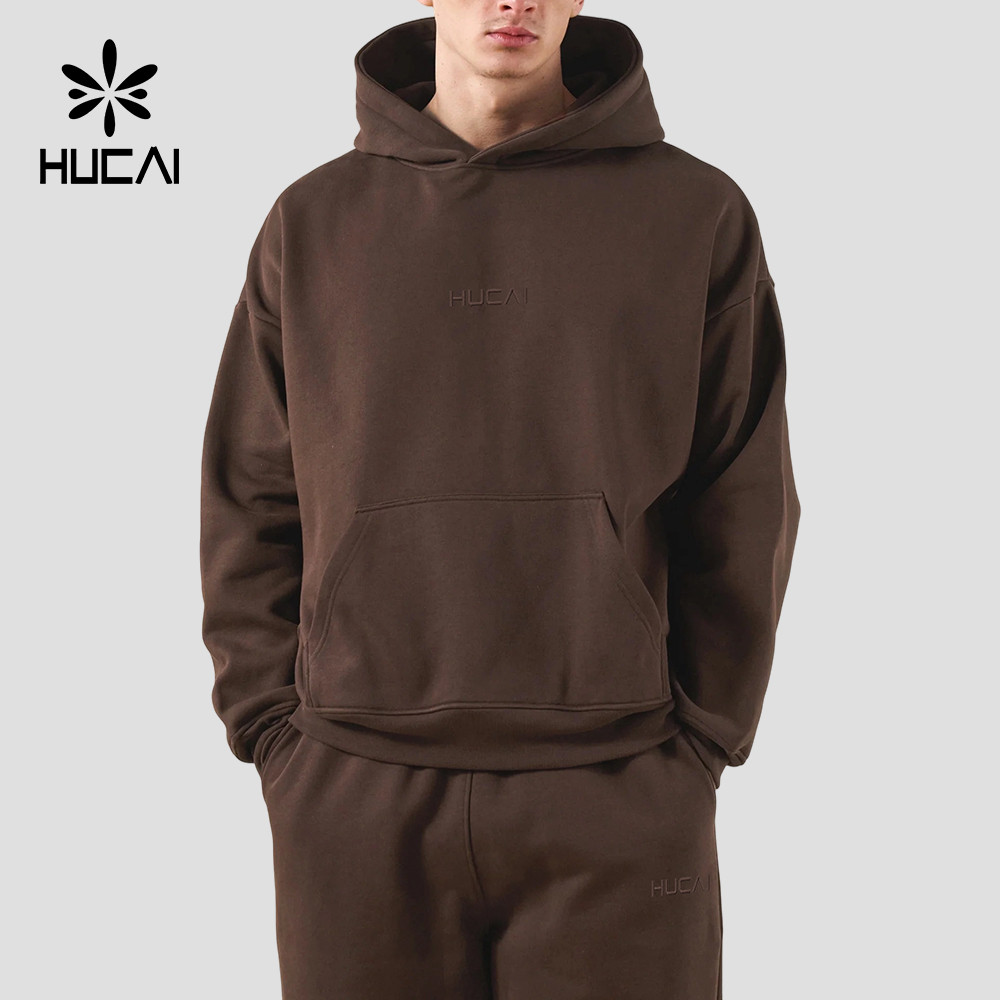
A custom men's tracksuit is bought as one outfit and produced as two garments. That gap is where size problems begin: the jacket passes its own measurement check, the pant passes its own, and the pair still reads wrong on a body because nobody agreed what the pieces owe each other at the waist. This guide is for brands sourcing custom men's tracksuits and for private label teams adding a hoodie-and-jogger or jacket-and-pant set. It covers the interface measurements to fix before sampling, how increments keep the pair proportional, where tolerance accumulates, and what to verify at bulk. HUCAI activewear develops men's tracksuits through its own pattern desk and sample room, so the checkpoints follow what is measured on the floor.
Quick Answer
Jacket and pant sizes match when three things agree at every size in the run: the worn overlap between jacket hem and waistband, the proportion between jacket body length and pant rise, and the direction each grade increment travels. Matching is a measurement decision, not a color decision. Fix the interface fields on one paired sheet, set the proportion at the base size, couple the increments, then approve the pair in three sizes after a wash cycle.
Table of Contents
- Who This Article Is For
- A Matched Size Is a Worn Relationship, Not Two Correct Garments
- The Paired Measurement Sheet: Ten Interface Fields
- One Block or Two: How Increments Decide Whether the Pair Holds
- The Tolerance Stack: Where a Matched Pair Drifts
- Dynamic Fit Checks: Four Movements That Expose a Mismatch
- Bulk Pairing: Cutting, Bundling and Inspection Rules
- Decision Check
- Founder's Insight: Jean Yuan
- FAQ
- Final Takeaway
Who This Article Is For
- Primary reader: brand owners and product developers placing a first or second tracksuit program with an OEM or private label supplier.
- Secondary reader: sourcing managers comparing quotations where two suppliers quote the same style but different size charts.
- Product stage: after the style and fabric direction are chosen, before the sample request is issued.
- Problem being solved: the jacket and the pant each measure correctly against their own spec, yet the set looks mismatched once it is graded, washed or worn.
- Who may not need this article: teams buying stock sets from a catalogue where the size chart is already fixed and non-negotiable.
What you gain from this article: a paired measurement sheet you can send to a supplier, a grade-increment coupling rule that keeps the large sizes from drifting apart, a tolerance budget that explains why a pair changes after one wash, and the three checks that stop a mismatched pair leaving the factory.
A Matched Size Is a Worn Relationship, Not Two Correct Garments
Most size charts describe garments one at a time. A tracksuit needs a third set of numbers that describes the pair: how far the jacket hem sits below the waistband when worn, how much of the pant waist the hem covers, and how that overlap behaves when the wearer raises both arms.
This is the first place a program goes wrong. A supplier receives a jacket spec and a pant spec, both complete, and cuts them on separate schedules. Each garment passes inspection, then the pair is graded by two people who never compare notes, and by size L the jacket reads short over a high rise. No garment is defective; the relationship was never written down. At HUCAI activewear the paired file opens before either spec is signed.
Public product pages across performance brands such as Gymshark, Castore and Ten Thousand market tracksuit sets as a coordinated look with matched trims, yet published size guidance stays per garment. The coordination is a design promise, and the buyer infers the worn proportion. For an OEM program that inference has to become a stated number.
The practical consequence is a change of unit. Approve the set, not the jacket and the pant. The two garment specs sit beside a third page of interface values, and the sample is reviewed against all three before bulk fabric is booked.

The Paired Measurement Sheet: Ten Interface Fields
A paired sheet is short by design. Ten fields pin the relationship, and each one needs a named owner on the buyer side, because a field without an owner gets renegotiated at the sample review.
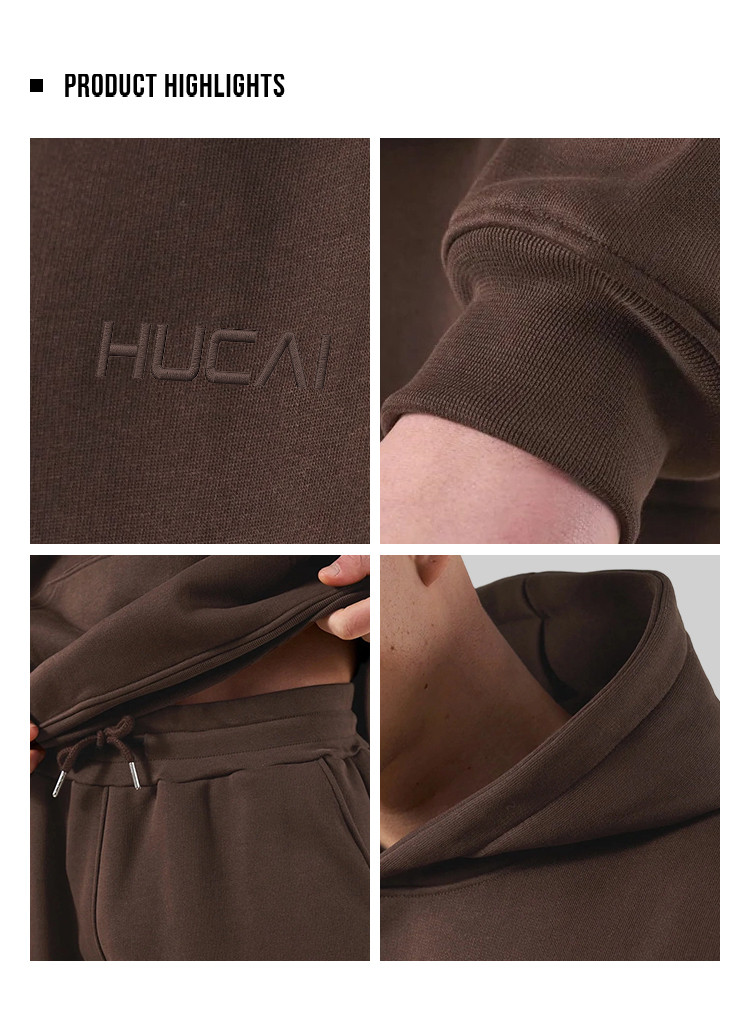
The first four describe the waist interface: jacket body length from high point shoulder, pant front rise, pant back rise, and the worn overlap, measured as hem position minus waistband top position on a form. The next three describe volume: jacket chest, pant seat, and hem width against the stretched waistband, to stop a hem collapsing into the band. The last three describe the trim contract: waistband rib width and stretch, cuff rib width and recovery, and sleeve length from center back.
A shrinkage line per component closes the sheet. Jacket shell, pant shell and both ribs can move differently in the same wash, and a pair approved dry can separate by the second wear.
| Interface field | Owner | What it controls when worn | Visible failure if it drifts |
|---|---|---|---|
| Jacket body length (HPS to hem) | Pattern desk | How much of the waistband the hem covers | Hem rides above the band in larger sizes |
| Pant front rise (waist seam to crotch) | Pattern desk | Where the band sits relative to the hem | Set reads high-waisted under a long top |
| Pant back rise | Pattern desk | Seat coverage when crouching | Band pulls down at the back |
| Worn overlap at center front | Fit technician | The single number that describes the pair | Visible gap or double layer |
| Jacket chest (below armhole) | Merchandiser | Volume relationship with the pant seat | Top blouses while the pant pulls |
| Pant seat | Pattern desk | Hip volume for the same body size | Seat tight under a relaxed jacket |
| Jacket hem width vs stretched waistband | Pattern desk | Hem clearance over the band | Hem catches on the band when moving |
| Waistband rib width and stretch | Trim technician | Band recovery and comfort at the fold | Band gapes or digs after wash |
| Cuff rib width and recovery | Trim technician | Wrist position relative to the pant pocket | Cuff covers the hand or rides up |
| Sleeve length from center back | Pattern desk | Where the cuff lands at rest | Sleeve crowds the pocket line |
Two habits make the sheet usable. Measure the overlap on a form at the base size and record the number, not a description such as mid-hip. Then repeat it on the approved sample after one agreed wash cycle, because the washed number is the one that governs bulk.
One Block or Two: How Increments Decide Whether the Pair Holds
A tracksuit is two blocks and one proportion. The jacket block controls shoulder, chest, armhole and body length. The pant block controls rise, seat, thigh, inseam and leg opening. Neither block is wrong on its own; the pair fails when the two grade at rates that were never compared.
Experienced pattern makers describe the outcome as a question of where the eye lands. If jacket length grows faster than rise, the large size reads as a long top over a short bottom. If rise grows faster, the set reads as a cropped top over a high waist. Both are grade-rule results, correctable on the sheet rather than at cutting.
The working method at HUCAI activewear is to set the proportion at the base size, hold it inside a stated band across the run, and adjust the increment on one piece only. Changing both to chase the look moves the grade off the body it was drafted for.
| Measurement point | Base size example | Increment per size | Coupling rule |
|---|---|---|---|
| Jacket body length | 68 cm | +1.5 cm | Hold worn overlap inside the agreed band |
| Pant front rise | 27 cm | +0.6 cm | If rise outruns length, adjust rise first |
| Jacket chest | 56 cm | +4 cm | Keep the chest-to-seat difference stable |
| Pant waist relaxed | 78 cm | +5 cm | Keep band stretch ratio unchanged |
| Pant inseam | 74 cm | +0.5 cm | Match leg length to the jacket silhouette |
| Sleeve from center back | 88 cm | +1 cm | Check cuff against pocket at every size |
Values in this table are illustrative for a mid-weight fleece set and show the shape of the decision. The approved base size and increments come from the buyer's size chart and the supplier's block, and belong in the tech pack, not an email.

The Tolerance Stack: Where a Matched Pair Drifts
Even a correctly coupled grade moves once production starts, because four tolerances accumulate on the pair. Fabric shrinkage differs by component and direction. Cutting allows a small deviation per panel, and a set has more panels than a garment. Sewing adds variation at the hem, waistband join and side seams. Rib recovery changes with band width and wash cycles.
The arithmetic explains why a pair that looks right in the sample room can look wrong later. Take a jacket body length shrinking about two percent and a pant rise shrinking about one percent, on a 68 cm and a 27 cm measurement. The jacket loses roughly 14 mm, the rise roughly 3 mm, and the worn overlap shifts by about 11 mm in one wash. Neither garment leaves a plus or minus 10 mm allowance, yet the relationship has moved further.
This is why interface fields need tighter allowances than garment fields, and why shrinkage is measured per component rather than per style. Under the ISO 6330 dimensional stability framework the wash and dry cycle is specified and repeatable, which makes a per-component record comparable between sample and bulk. AATCC 135 adds the appearance side, so surface and dimensional change are checked in one run. At HUCAI activewear the record is re-read at the paired wash test.
The control is a tolerance budget written next to the sheet: what the pair may move in total, and which component absorbs the movement. Without that line, every drift becomes a debate settled by re-cutting one piece.
Dynamic Fit Checks: Four Movements That Expose a Mismatch
A static review confirms symmetry and spec compliance. It does not show what happens when the wearer reaches overhead, squats, sits for twenty minutes or walks a flight of stairs. For a two-piece set those movements are the real test, because the interface is where the garments interact.
Four checks cover most of the risk. Overhead reach shows whether the jacket hem clears the waistband or drags it upward. A full squat shows whether the back rise holds while the hem stays level. Twenty minutes seated shows whether the hem folds into the band. Walking shows whether the cuff settles at the wrist or slides over the hand.
Discussions across training and running communities raise the same complaint from the other direction: a set that fits standing is described as riding up, bunching at the waist or exposing the lower back in use. That points to an interface problem rather than a sizing problem, which is why movement checks belong in the sample review.
Record each check as pass or fail against the approved overlap number. A pair that fails overhead reach but passes measurement still needs a pattern correction, and it is cheaper on the sample than on the first bulk cut.

Bulk Pairing: Cutting, Bundling and Inspection Rules
Bulk is where a coordinated set either holds or separates. The two pieces usually run on different operations and often on different days, so pairing has to be planned into the schedule rather than assumed. Three rules prevent most failures.
First, cut both pieces of a size from the same fabric lot where the color story requires it, and record the lot against the size rather than the order. Second, bundle by pair: one bundle carries the jacket and pant of a single size, and the packing label repeats the pair code so a mixed carton is caught before it ships. Third, inspect the pair together at pre-shipment, measuring the overlap on a sample of pairs rather than checking each garment alone.
| Failure seen at bulk | Typical root cause | Where it is caught | Control to add |
|---|---|---|---|
| Hem sits above the band in L and XL | Length increment lower than rise increment | Three-size sample run | Couple increments on the sheet |
| Jacket and pant in different shades | Two fabric lots without a lot record | Pre-shipment inspection | Lot code on the bundle label |
| Band gapes after wash | Rib recovery below the band width requirement | Paired wash test | Rib width and recovery in the trim spec |
| Cuff covers the hand in larger sizes | Sleeve increment not checked against pocket line | Size set review | Sleeve field on the paired sheet |
| Carton contains mismatched sizes | Bundling by garment instead of by pair | Packing station | Pair-coded bundle and label |
| Set matched at sample, separated at reorder | No retained golden pair or change log | Repeat order review | Sealed golden pair per size |
At HUCAI activewear the pair is tracked through one order record, with fabric, trim, pattern, sample and inspection notes attached to the same file, so a change to one piece is visible against the other before it reaches the line.

Decision Check: Is the Pair Ready for a Sample Request?
Before requesting samples, confirm the following:
- Interface fields agreed: jacket length, front and back rise, and worn overlap are written as numbers on one sheet, not split across two specs.
- Owners named: each field has a named decision maker on the buyer side, so the sample review has one answer per point.
- Increments coupled: the grade rule states which piece absorbs the adjustment across sizes, and the base size proportion is fixed.
- Trim contract set: waistband and cuff rib widths, stretch and recovery are specified with the fabric, not chosen at the sample review.
- Shrinkage expected per component: a per-component allowance exists before the first wash test, so drift has a place to land.
- Size set defined: the sample request names three sizes across the run rather than one base size.
- Paired approval path: the sample is approved as a set, with a wash result and a re-measured overlap attached to the same file.
- Bulk pairing rule: bundle and packing logic keeps jacket and pant of one size together, with a lot code on the label.
If six or more criteria are confirmed, the direction is ready for a structured sample request. If fewer are resolved, the missing fields will reappear at the sample review as revision rounds, and each round costs calendar time.
Founder's Insight: Jean Yuan on Why the Pair Is the Unit of Approval
Jean Yuan, Founder of HUCAI activewear, frames the problem from the cutting table rather than the size chart. "The mistake I see most often is a brand buying one size up in the jacket to make the set feel relaxed, then keeping the pant at the original size. On paper both are approved. On a body the set has two owners, and by the second wash the hem and the band have moved in opposite directions."
His second observation concerns the trim. A wider waistband rib looks more substantial in a sample photo, but width and recovery trade against each other. "We test the band on the same form as the pant, after the same wash, because a band that recovers well dry can still relax once it has been through a dryer. If the band relaxes and the hem shrinks, the overlap closes up and the set starts to look short."
The third point is about evidence. "Three pairs tell you more than thirty photographs. Cut the base size, one size up and one size down from the same lot, wash them together, and measure the overlap again on each. If the direction is consistent across the three, the grade is sound. If it is not, the increment is the problem, and inspection at the end of the line will not fix an increment."
FAQ
What is the MOQ for custom men's tracksuits?
MOQ is from 100 pcs/style for custom men's tracksuits. The quantity that finally applies depends on fabric, color, size range, trims, logo method and order structure, because a two-piece set consumes two garments' worth of material per unit.
How long does a tracksuit sample round take?
Sample timing is usually about 10-15 days. It depends on fabric availability, pattern work, logo method, fit adjustment and revision rounds, so it should be confirmed against the approved brief.
Can a tracksuit be developed from reference images only?
Yes, through an ODM route. Reference images can define the look, but the interface numbers still have to be decided, so the first session converts the images into a paired measurement sheet.
Do we need a tech pack before starting?
A tech pack shortens the process but is not a precondition. The minimum inputs are the target size chart, the fabric and trim direction, the logo method and the size range.
Should the jacket and pant be graded from the same block?
No. A jacket block and a pant block grade on different points and at different rates. What has to be shared is the proportion at the base size and the rule that decides which piece absorbs an adjustment.
What tolerance is realistic between sample and bulk on a matched pair?
It depends on the fabric, the construction and the measurement point, so the number belongs in the approved spec rather than a general figure. Interface fields need a tighter allowance than garment fields, because the pair accumulates variation from both pieces.
Why does a set look matched in the sample room and mismatched in size L?
Usually because the two garments grade at rates that were never compared. Jacket length and pant rise both increase with size, but rarely by the same proportion, so the overlap changes while both garments stay inside their own tolerance.
How do brands keep a set matched across repeat orders?
With a sealed golden pair per size, a fabric lot record against each size, and a change log showing which piece was altered and when. Bulk timing is often about 25-30 days, but a repeat order is only dependable when those records exist.
Final Takeaway
A tracksuit size is a relationship, and it has to be measured on purpose. Jacket length, pant rise and the worn overlap belong on one sheet with named owners. The grade rule then decides which piece absorbs an adjustment, a tolerance budget explains where the pair will move, and paired approval after a wash proves the direction.
Next Steps
If the interface fields are already agreed, send the paired sheet with your size chart and start an OEM sample-to-bulk path with the measurement points attached. If the set is still being defined, share reference images and the target size range so the pattern desk at HUCAI activewear can draft the interface values with you. If you are comparing suppliers, ask how they grade the pair and where they measure the overlap.
About HUCAI activewear
- Men's activewear manufacturer supporting OEM, ODM and private label development, including tracksuits, hoodies, joggers, shorts, T-shirts and compression wear.
- In-house pattern, sample and production teams, with a fabric library, trim library and pattern library used to align a set before sampling.
- Paired sample review with sample-to-bulk consistency checks, AQL 2.5 inspection and inspection before shipment as part of the quality workflow.
- MES and ERP order tracking so fabric, trim, pattern, sample and inspection notes stay attached to one record per order.
Current certification information can be reviewed during supplier evaluation based on the project and documentation requirements.