Heat-Zone Ventilation in Men's Running Tops: Mesh Placement, Body Mapping and Seam Position
- Share
- publisher
- HUCAI activewear
- Issue Time
- Sep 8,2026
Summary
A B2B technical development guide for running brands and private label buyers on heat-zone ventilation in men's running tops: why the upper back, chest and underarm need different airflow tools, mesh panel vs laser perforation vs lighter knit, seam placement that avoids chafing, and how to carry the ventilation map into sample and bulk.
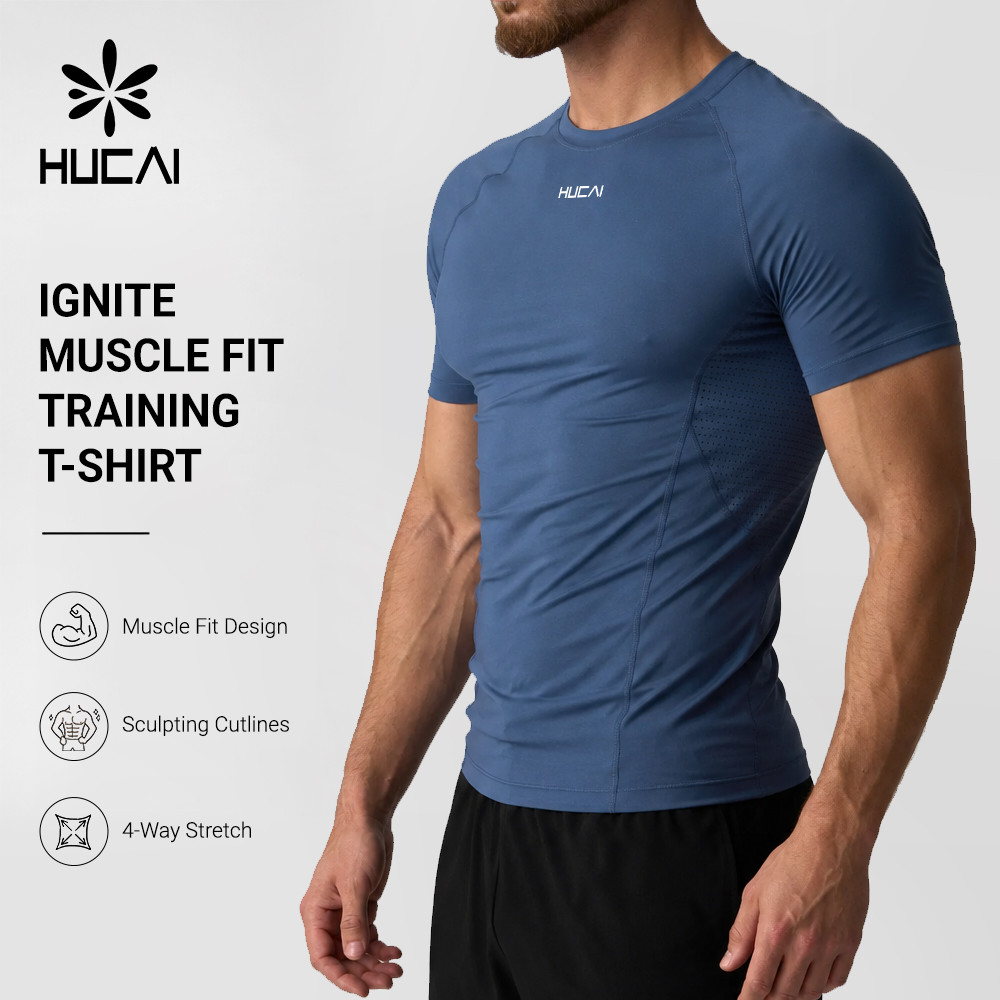
Running brands usually start a men's running top project by asking a supplier for breathable fabric, then adding a few mesh inserts where they look technical. In private label activewear and custom men's activewear development, that approach rarely produces a top that manages heat where the body actually generates it, and it often adds seams in places that irritate during long runs. Heat-zone ventilation only works when mesh placement, fabric zoning and seam position are designed together against how a runner heats up, moves and sweats. This technical development guide explains how running brands can brief a men's activewear manufacturer with a body-mapped ventilation plan instead of a vague fabric request, and how HUCAI activewear supports OEM / ODM development and bulk production for running tops from the first ventilation sketch to final delivery.
Quick Answer
Ventilation in a men's running top is not one fabric or one feature. It is a zoning decision: the chest needs airflow without cling, the upper back is a primary heat release zone, and the underarm area is where sweat and arm swing meet the garment. Each zone can be handled with a different tool, a mesh panel, laser perforation or a lighter knit, and each tool changes the seam map. The seams that hold ventilation in place must sit away from high-friction paths such as the top of the shoulder and the underarm, and they need flat, low-bulk finishes. When these decisions are written into a development spec, sample review and bulk production can follow the same ventilation map.
Who This Article Is For
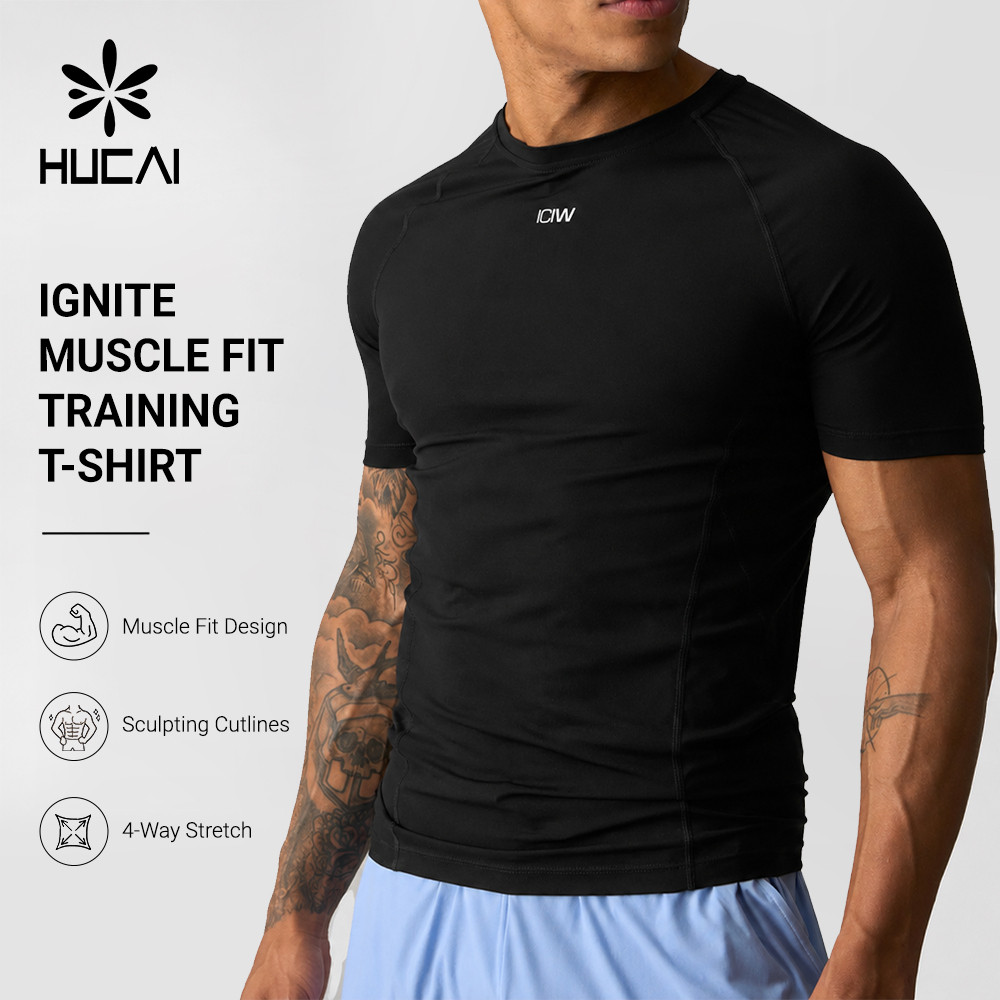
This guide is written for running brands planning a new men's running top or singlet, private label buyers who need to brief ventilation details without over-engineering the first sample, and product managers reviewing an existing top that runs hot or irritates after an hour of running.
If you are at the idea stage with reference images rather than a full tech pack, the same framework still applies. You can use the zones and tool options below to tell a manufacturer what you want to achieve before any pattern or fabric is committed.
Why This Guide Starts With a Ventilation Map, Not a Fabric Name
At HUCAI activewear, running top projects are reviewed as development work: which zones need airflow, which tool creates it, what seams the tool adds, and how the garment behaves in motion. A body map keeps the sample and bulk conversations concrete, and it stops ventilation from being judged on how a top looks on a hanger instead of how it feels at kilometre five. You can see the categories we develop in our men's activewear product range and learn more about our development support from fabric to delivery.
Why "Breathable Fabric Plus Mesh" Is Not a Ventilation System
Many so-called breathable running tops are built the same way: a lightweight moisture-management knit as the base, with a mesh insert or two placed where they look good on the drawing. The result can still run hot because the base fabric carries most of the surface area, and the mesh areas are often too small or in the wrong place to release the heat the body produces.
Ventilation is a system of choices, and each choice trades something off. Open fabric lets air move but can feel less substantial or become translucent when wet. Mesh panels add targeted airflow but introduce seams, stretch differences and color matching work. Perforation adds airflow without new seams but weakens a localised area if placed where the fabric stretches hard. A top that treats these as decoration instead of engineering usually ends up with moderate airflow everywhere and poor airflow exactly where the runner needs it.
The common failure pattern we see in early-stage running top projects is a brand approving a sample on feel during a short indoor try-on, then discovering the garment clings on the upper back or chafes under the arm during an outdoor run. Both problems trace back to the same cause: ventilation was added without a map of heat zones, movement paths and seam positions.
Body Mapping: Where a Running Top Actually Heats Up
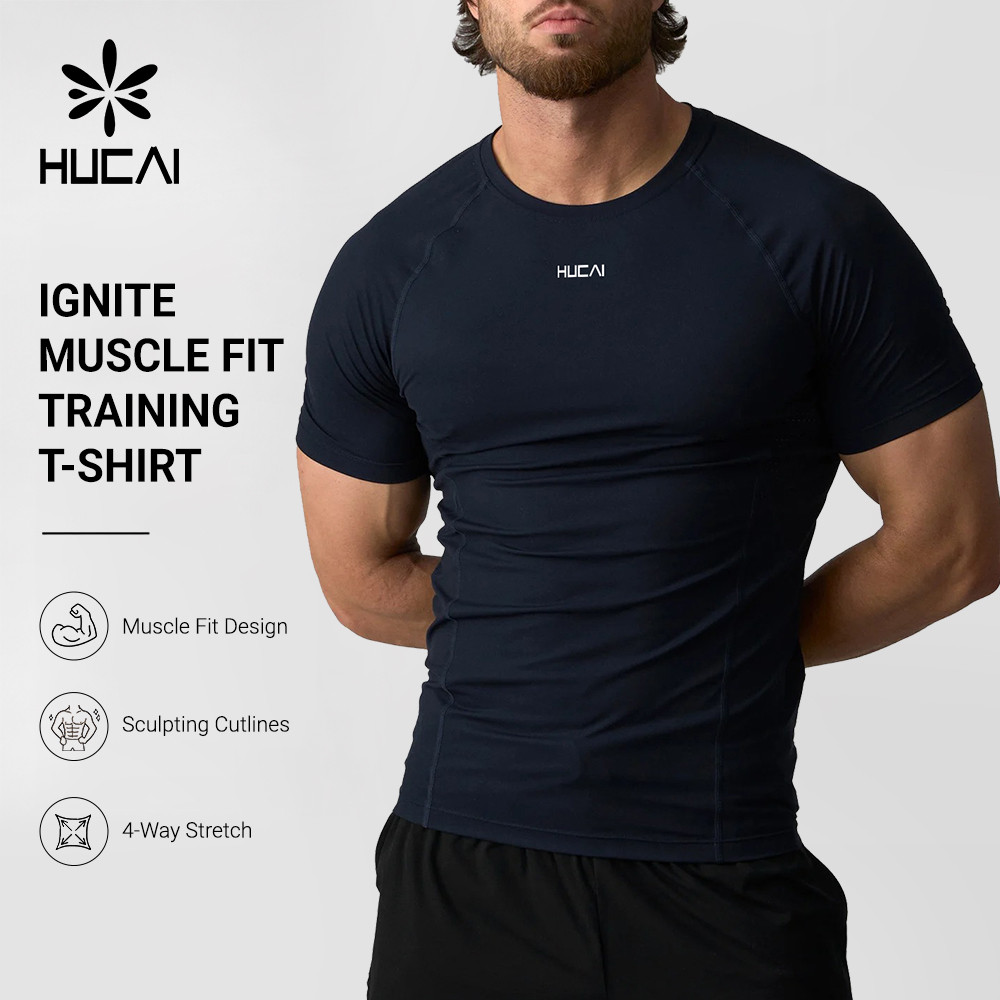
Body-mapped ventilation starts from a simple observation: a running torso does not heat up evenly. The upper back, the chest and the underarms behave differently, and a ventilation plan that treats them the same will end up compromising somewhere.
The upper back is a primary heat release area during running. The back is also covered when you are in the running posture, which traps heat between the torso and the fabric, so airflow here matters more than most design sketches suggest. The chest has a large surface and catches the wind at the front, which makes cling and wetness management as important as raw airflow. The underarm area combines high sweat output with continuous arm swing, which means it needs ventilation that survives movement and does not turn into a friction point.
Sweat mapping follows a similar logic. The centre of the upper back and the underarms wet out first on most runners, while the chest and mid-back stay drier for longer. A ventilation placement chart should note where sweat appears first and where heat is trapped by posture, and the fabric zoning should respond to those two signals rather than to a symmetrical design grid.
Fit changes the map as well. A close-fitting running top keeps fabric in contact with the skin, so its ventilation zones need to work while touching the body. A looser training top creates its own air gap, which changes how much panel ventilation it needs. When you brief a manufacturer, state the fit intent first, because the same mesh map will perform differently in a race-fit top and a relaxed training top.
Mesh Panel, Laser Perforation or Lighter Knit
Once the zones are mapped, the next question is which tool creates the airflow in each zone. Three options are common in men's running top development, and they are not interchangeable.
Mesh panels. An open knit panel is the most direct way to add targeted airflow. Mesh is available in different openness and weights, so a panel can be tuned to the zone: denser mesh for a chest insert that needs some structure, more open mesh for an upper-back release zone. The trade-offs are seams around every panel, a different stretch and recovery behaviour from the base fabric, and color matching between panel and body knit.
Laser perforation. Perforation removes material from the base fabric without adding any new panel or seam. It suits zones where a brand wants controlled airflow without changing the garment's color story or introducing panel matching. The limitation is that every hole is a localised reduction in fabric strength, so perforation should avoid high-stretch paths and areas that rub against other surfaces, and the pattern needs to be confirmed for wash behaviour and edge stability.
Lighter or more open base knit. Choosing a lighter or more open knit for the whole garment creates even airflow without any panel seams. This is the cleanest option visually and the easiest to produce, but it is not zoned: the fabric cannot be more open on the upper back and more protective on the chest unless a second fabric is added, which brings the panel decision back.
| Approach | Airflow Type | Seams Added | Good For | Main Watch-Outs |
|---|---|---|---|---|
| Mesh panel | Targeted, high airflow in a defined zone | Yes, around every panel | Upper back and underarm release zones | Panel seams, stretch difference, color matching |
| Laser perforation | Controlled airflow without new fabric | No new seams | Zones needing airflow in the base fabric only | Localised strength, stretch paths, hole edge stability |
| Lighter / more open knit | Even airflow across the whole top | None from ventilation | Minimal visual design and simpler bulk programs | No zoning, opacity when wet, durability balance |
For many running top programs the strongest result combines the tools: a light-to-mid weight base knit for structure and coverage, with mesh or perforation used only on the upper back and underarm map. That keeps the garment simple to produce while concentrating airflow where the runner feels it.
Seam Placement: Ventilation Without Adding Friction
Every mesh panel or perforated zone changes the seam map of the top, and seams are the most common source of irritation in running wear. The rule is simple: ventilation should not add a seam inside a high-friction path.
The top of the shoulder and the underarm are the two areas where a running top moves hardest against the skin. A mesh insert whose seam runs across the top of the shoulder can become a rubbing point on every arm swing, no matter how soft the mesh itself feels. Panels around the upper back can be seam-heavy because the area is large, so their seam lines should follow movement rather than cross it.
Seam finish choices matter as much as seam position. Flatlock seams sit flatter against the skin and are a common choice for running tops, while coverstitch works well where a smooth, strong finish is needed on stress points. When mesh is joined to a solid knit, the seam allowance and the finish method must control two different fabric behaviours at once, which is why mesh edges need stable finishing to prevent curling and progressive fraying over washes.
Underarm construction deserves specific attention in the sample review. Whether the ventilation is a mesh gusset, a perforated zone or a panel seam, the area must be checked in the running arm position, not with the arm at rest, because the fabric shifts forward and upward as the arm swings. A seam that looks clean in a standing fit review can sit directly in the armpit during the movement it was designed for.
Fabric Weight and Knit Decisions That Support Airflow
Ventilation tools sit on top of a base fabric decision, and the base fabric often determines whether the zoning works. A heavy, dense base knit will fight a small mesh panel; a very light base with a large open-mesh back panel can feel unstable or become too transparent when wet.
For a men's running top, the base fabric weight usually lands in a light-to-mid range that balances airflow, drying speed, opacity and durability. The exact GSM depends on the intended season, the fit and the position of the top in the collection, which is why the fabric and the ventilation map should be reviewed together rather than selected separately.
Two knit behaviours deserve attention at the development stage. First, stretch and recovery: a mesh panel with different stretch from the base fabric can distort the panel edge during movement and after washing, so panel stretch direction should be aligned with the body fabric. Second, drying and cling: the wet fabric should release from the skin quickly in the zones that wet out first, otherwise ventilation airflow is working against a wet, clinging surface.
From Ventilation Sketch to Sample and Bulk
A ventilation map becomes useful only when it is written into the development file. The practical way to do this is a simple placement chart that names each zone, the tool chosen for it, the panel dimensions or perforation area, the mesh or base fabric details, and the seam finish for every new seam line.
- Zone and tool. Name the zone, chest, upper back or underarm, and the tool selected for it so the sample team builds the right map.
- Fabric details. Record the base knit and any mesh by composition, weight, openness and stretch direction, including how the mesh color will be matched to the base.
- Panel geometry. Define panel shapes, dimensions and placement distances from the collar, shoulder point and armhole so the map survives pattern changes.
- Seam specification. State the seam type and finish for every ventilation seam, and keep seams out of the shoulder top and underarm friction paths.
- Movement check. Include a running-motion review in the sample stage, checking the arm swing position, back stretch and any cling on the wet-out zones.
- Wash and edge check. Confirm panel edges, perforation edges and seam finishes after repeated washing, not only on the first sample.
When the ventilation map is approved at sample stage, it should stay visible through bulk. The same fabric, panel geometry and seam details are part of the pre-production review, so production follows the approved map rather than a simplified version of it. This is where sample-to-bulk consistency is protected: a change in mesh source, panel size or seam finish can quietly remove the ventilation performance the sample demonstrated.
Decision Check
Before you approve a running top sample or brief a new development round, work through this checklist with your manufacturer.
- Have you named the heat and sweat zones the top must address, rather than asking for general breathability?
- Is the upper back treated as a primary release zone in your placement plan?
- Does the underarm zone keep its ventilation and its seam finish out of the arm swing friction path?
- Have you chosen the tool for each zone: mesh panel, laser perforation or a lighter base knit?
- Do the mesh and base fabrics match in color, stretch direction and recovery behaviour?
- Are every ventilation seam and finish specified so the sample team cannot interpret the map differently?
- Does the sample review include a running-motion check and a wash test on panel and perforation edges?
- Is the approved ventilation map part of the pre-production review before bulk fabric is cut?
If any answer is unclear, resolve it before the sample stage ends. Ventilation decisions made on paper are inexpensive; the same decisions made after bulk fabric is cut are much harder to correct.
Manufacturer Insight
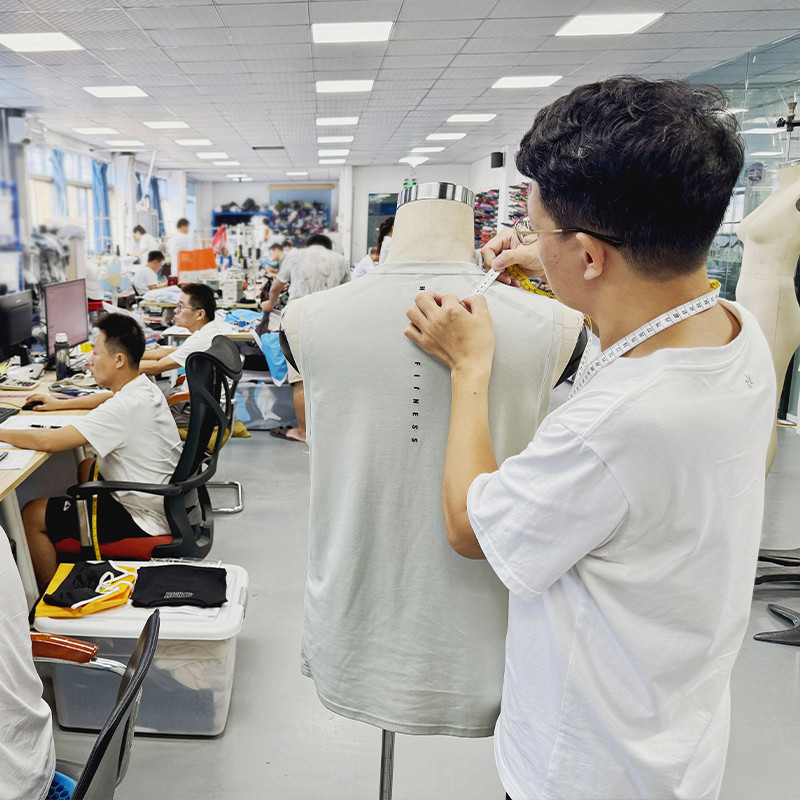
At HUCAI activewear, we see running top projects succeed when the ventilation map is treated as part of the technical specification. Our development team helps brands translate heat-zone thinking into fabric selection, panel geometry and seam choices, and our production follow-up keeps those confirmed details visible from the approved sample to final inspection, supported by AQL 2.5 quality inspection and MES / ERP production follow-up across fabric, trims, pattern, sample, bulk and QC tracking.
The goal is not to promise that any single top keeps every runner cool in every condition. It is to make sure the airflow a brand approves in a sample is the airflow it receives in bulk, and that the mesh, seams and knit work as one system rather than as decoration.
FAQ
What is body-mapped ventilation in a men's running top?
Body-mapped ventilation places airflow features where the body actually generates heat and sweat, typically the upper back, chest and underarms, instead of spreading the same fabric treatment evenly across the whole top. It combines heat zone mapping, fabric zoning and seam placement into one development plan.
Where should ventilation panels go on a running top?
The usual priority zones are the upper back, the underarm area and, depending on the fit and climate, the chest. The upper back is a major heat release area in the running posture, so many programs place their most open mesh or largest perforation zone there, with underarm ventilation handled carefully to avoid friction during arm swing.
Should we use mesh panels or laser perforation?
It depends on the zone and the design goal. Mesh panels add the highest targeted airflow and work well for upper back release zones, but they add seams and color matching work. Laser perforation adds airflow without new fabric or seams, which suits zones where the base fabric should stay continuous, but the pattern must avoid high-stretch paths.
How do we stop mesh panels from causing chafing?
Keep panel seams out of high-friction paths such as the top of the shoulder and the underarm, use flat, low-bulk seam finishes, and review the garment in the running arm position rather than standing fit. Panel edges also need stable finishing so they do not curl or fray after washing.
What fabric weight is right for a ventilated running top?
A light-to-mid weight base knit is the typical starting point, with the exact GSM depending on season, fit and the top's role in the collection. The base weight should be reviewed together with the ventilation map, because a heavy base will fight a small mesh panel and an overly light base can become unstable or transparent when wet.
Can mesh panels be matched in color to the body fabric?
Yes, but it needs to be confirmed in development rather than assumed. Mesh and solid knits can dye differently because of their different structure and surface area, so color matching should be checked under the same light source and reviewed on the actual panel fabric before bulk.
Can you develop a custom running top from reference images without a tech pack?
Yes. Many running brand projects start with reference images, a fit direction and a ventilation idea. The development team translates that into a base fabric suggestion, a zone map and a first pattern, then confirms each decision in the sample round before bulk planning.
How is ventilation placement checked in sample and bulk?
The approved ventilation map should be part of the sample review and the pre-production review. Panel geometry, mesh details and seam finishes are checked against the spec, and quality checkpoints confirm that bulk production follows the approved map, protecting sample-to-bulk consistency.
Final Takeaway
Heat-zone ventilation is a zoning decision before it is a fabric decision. Running brands that map the upper back, chest and underarm zones, choose the right tool for each zone, and place seams away from friction paths get tops that feel cooler where it matters and hold up through real runs and repeated washes.
If you are planning a running top line, share your fit direction, target seasons and any reference images, and our team can help translate them into a body-mapped ventilation specification. For brands with confirmed direction, send an inquiry with your top development details, or contact us to discuss your program. If you are still comparing options, explore our men's activewear range or read more B2B development guides first.
Related Reading
Continue exploring men's running and performance top development: