How Bodybuilding Brands Should Plan Men's Stringer and Tank Top Collections by Muscle Group Focus
- Share
- Issue Time
- Aug 17,2026
Summary
A B2B guide for growing bodybuilding brands planning men's stringer and tank top collections. Covers muscle group-focused design, armhole depth, back cut, fabric recovery, logo placement and fit family strategy for US and Australian markets.
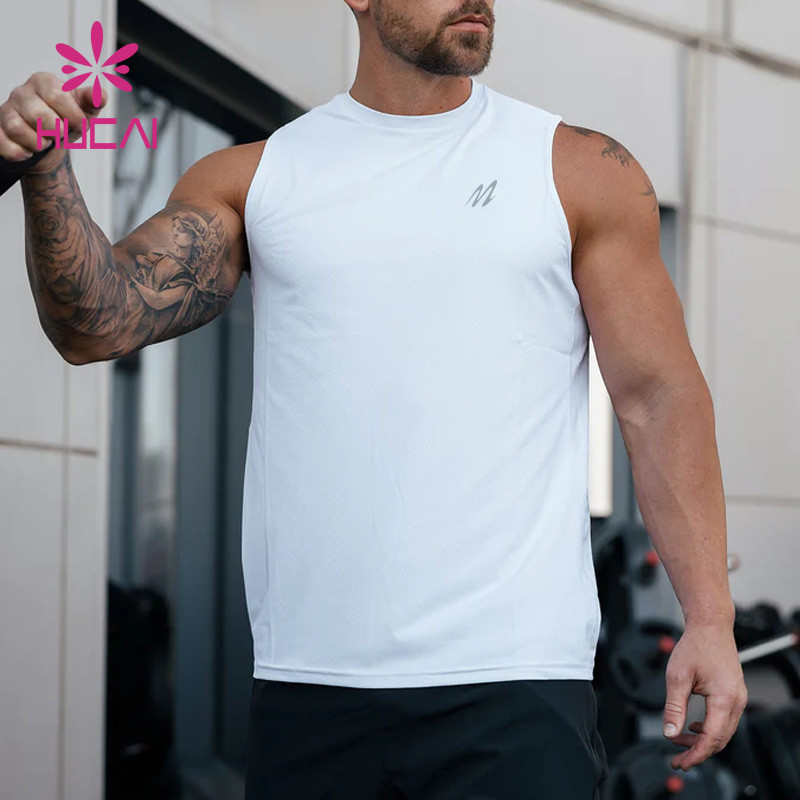
When growing bodybuilding brands contact a men's activewear manufacturer about sleeveless tops, the conversation usually starts with "we need tanks and stringers." But treating stringers and tank tops as one interchangeable category is a common early mistake. Each silhouette serves a different muscle group focus, coverage preference and training context. At HUCAI activewear, we see the most successful bodybuilding collections planned by product role first, not by style name alone.
This guide explains how growing US and Australian brands should structure men's stringer and tank top collections by muscle group focus. It covers armhole depth, back cut, fabric recovery, logo placement and fit family decisions that affect both sampling and bulk planning.
Quick Answer
Bodybuilding brands should plan stringer and tank top collections by mapping each style to a specific muscle group focus. Chest-focused pieces need moderate coverage and lower neck drops. Back-focused styles require deep back cuts and minimal strap width. Shoulder and arm-focused designs use deep armholes for maximum range of motion. General training tanks sit in the middle with balanced coverage. Fabric recovery, stretch behavior and logo compatibility should be confirmed before sample development begins.
Table of Contents
- Who This Article Is For
- Stringer vs Tank Top: The Real Product Role Difference
- Planning by Muscle Group Focus
- Fabric Recovery and Stretch for Bodybuilding
- Logo Placement and Branding Strategy
- Fit Family and Size Grading for Bodybuilding Markets
- Decision Check: Before You Sample
- Manufacturer Insight: Common Sampling Mistakes
- FAQ
- Final Takeaway
- Related Paths
Who This Article Is For
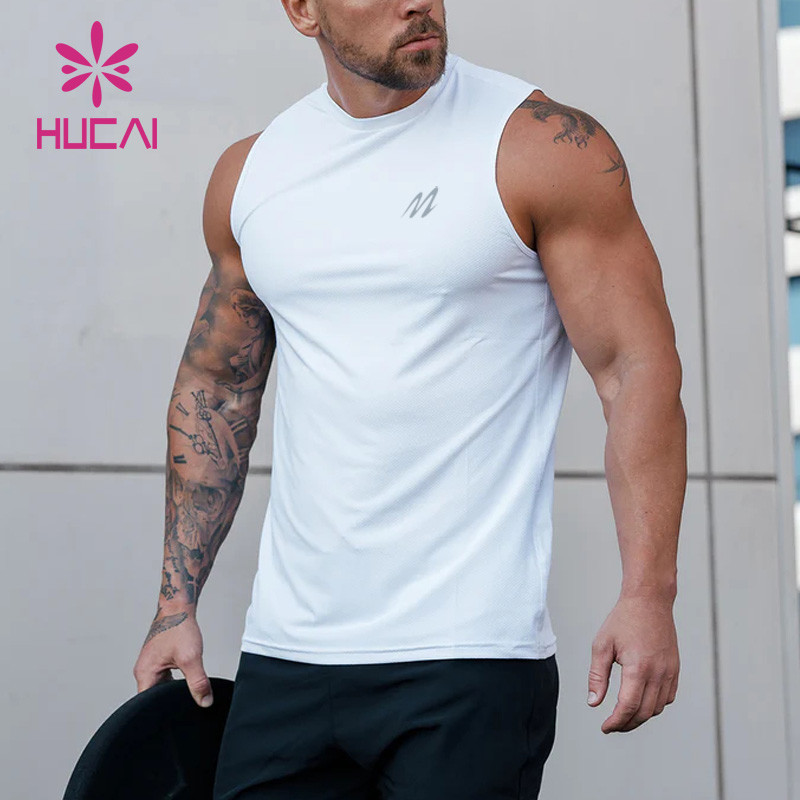
This article is written for growing bodybuilding apparel brands, gym wear startups and private label buyers in the US and Australian markets who are planning or expanding a men's tank top and stringer collection. It assumes you have reference images or product direction, but may not yet have complete tech packs or confirmed construction details.
Why This Matters for Your Collection
HUCAI activewear supports bodybuilding brands with OEM and ODM development for men's tanks, stringers and sleeveless gym wear. Our sampling process includes pattern adjustment for armhole depth, back cut and strap width, fabric recovery testing and logo placement review before bulk planning. We coordinate fabric library selection, trim sourcing and sample-to-bulk consistency checks so your collection performs as intended in the gym.
Stringer vs Tank Top: The Real Product Role Difference
Stringers and tank tops are not two names for the same garment. In bodybuilding collections, they serve distinct athlete needs and visual purposes.
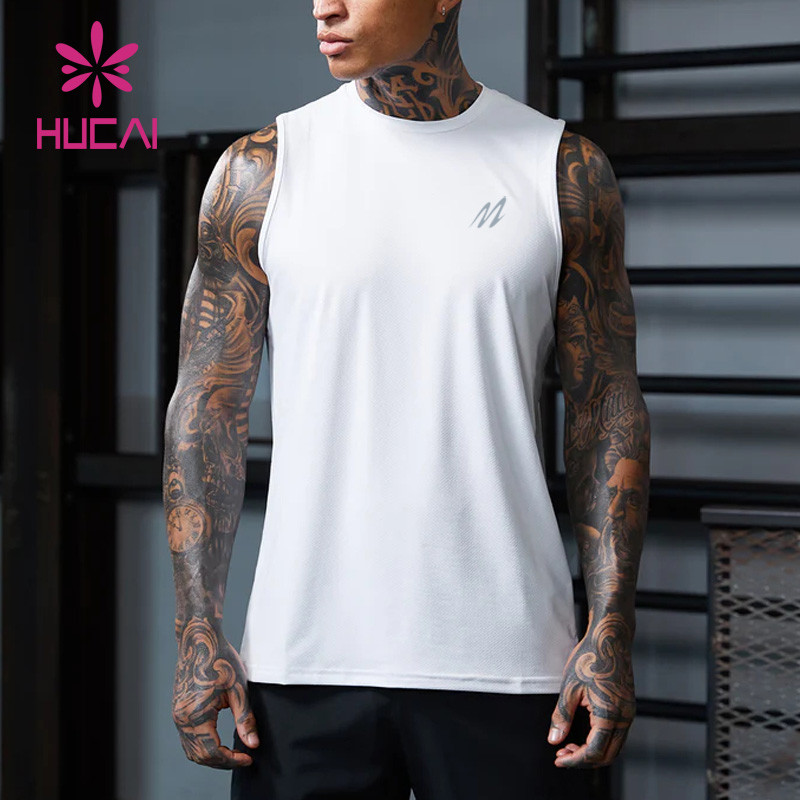
Tank tops offer more coverage across the chest and back. They typically feature wider straps, higher necklines and armholes that sit closer to the shoulder. This makes them versatile for general gym training, warm-ups and streetwear crossover.
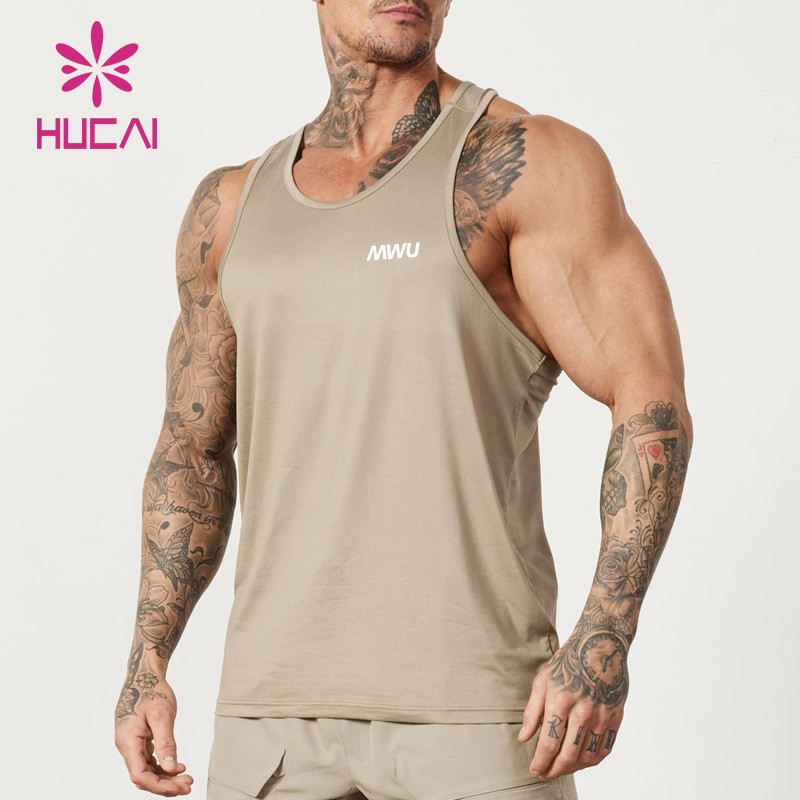
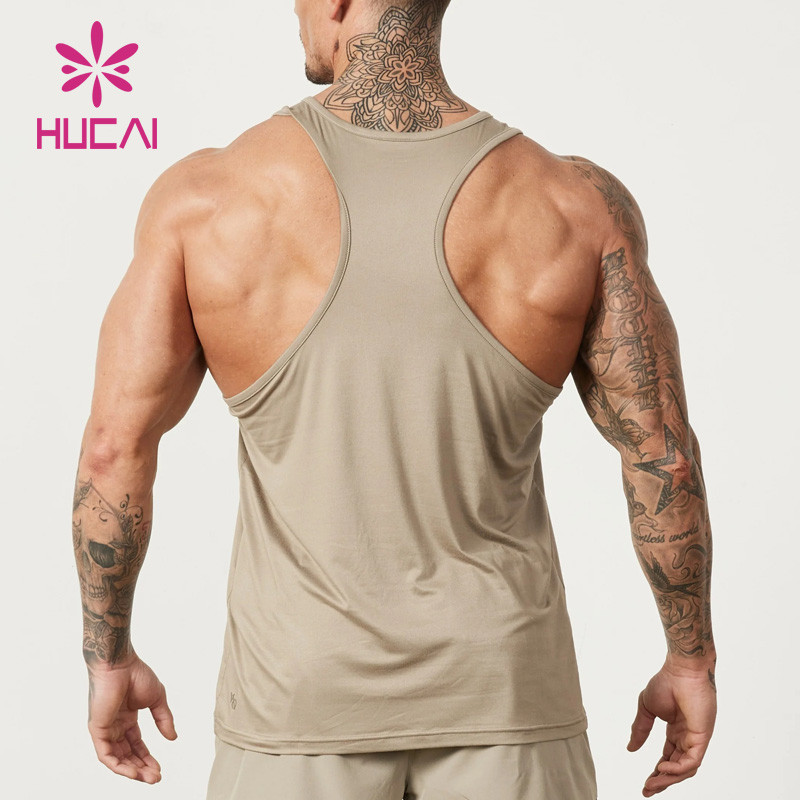
Stringers use narrow straps, deep armholes and open back cuts to expose the maximum amount of muscle surface. They are purpose-built for posing, heavy lifting visibility and environments where muscle display is part of the brand identity.
From a product development perspective, this distinction affects pattern work, fabric behavior and sizing logic. A stringer that uses the same chest width and strap placement as a tank top will fit incorrectly because the wearer's movement and posture differ between the two styles.
Key Development Notes
- Tank tops: moderate armhole depth, wider strap (5-8cm), full back coverage
- Stringers: deep armhole, narrow strap (2-4cm), Y-back or racerback cut
- Crossover styles exist, but each needs its own pattern base
Planning by Muscle Group Focus
Smart collections map each sleeveless style to the muscle group the wearer wants to emphasize. This determines back cut depth, strap width and overall silhouette.
Chest-Focused Styles
Brands targeting chest emphasis should use lower neck drops and straps wide enough to frame the pectorals without cutting into the muscle line. Armhole depth should be moderate. Too deep and the garment loses structure across the chest. Too shallow and it looks like a standard T-shirt with sleeves removed.
Back-Focused Styles
Back-focused designs need deep back cuts, minimal strap width and often Y-back or racerback construction. The latissimus dorsi should be visible, which means the back panel must drop low enough to stay clear of the muscle insertion. Strap placement here is critical: too wide and it covers the upper back; too narrow and the garment lacks support.
Shoulder and Arm-Focused Styles
Stringers designed for shoulder and arm visibility use the deepest armholes. The strap often sits at the very edge of the shoulder or slightly off it. This style requires careful fabric selection because the side of the torso is largely exposed, and any fabric rolling or poor recovery becomes immediately visible.
General Training Tanks
General training tanks serve athletes who want sleeveless mobility without extreme exposure. These pieces balance coverage across chest, back and arms. They are usually the highest-volume SKU in a bodybuilding collection because they appeal to both dedicated bodybuilders and general gym users.
Fabric Recovery and Stretch for Bodybuilding
Bodybuilding fabrics face unique stress. Posing, heavy compound movements and repeated washing test a garment's recovery and shape retention more aggressively than casual wear.
Fabric recovery is the ability of the material to return to its original shape after being stretched. In stringers and tanks, poor recovery shows up as stretched necklines, bagged armholes and twisted straps. This is especially visible in deep-armhole styles where the fabric edge is under constant tension.
Stretch percentage should be matched to the garment's function. Tanks that double as warm-up or streetwear pieces may use less aggressive stretch. Stringers need higher stretch content to accommodate posing positions and deep arm movement without constriction.
HUCAI activewear helps brands test fabric behavior during sample development. We review stretch direction, recovery speed and edge stability before confirming fabric for bulk. This prevents the common problem where a fabric looks correct on the swatch but fails after three training sessions.
Fabric Checklist for Sampling
- Confirm stretch percentage in both directions
- Test recovery after repeated extension
- Check edge rolling on armholes and necklines
- Wash test for shrinkage and color stability
Logo Placement and Branding Strategy
Branding on stringers and tanks requires different thinking than T-shirts. The reduced surface area and high-stretch zones limit where logos can sit without distortion.
Chest placement remains the most common location. For stringers, the chest logo must be positioned high enough to stay clear of the neckline drop but low enough to remain visible when the wearer is in a relaxed stance. Print size should be scaled down compared to T-shirts because the chest panel is smaller.
Back placement works well on stringers with Y-back or racerback construction. The upper back strap area offers a narrow but visible branding zone. Screen printing and heat transfer both work here, but heat transfer is often preferred for its lighter hand feel on narrow straps.
Hem tags add perceived value without interfering with stretch zones. Woven labels at the front or side hem are popular in bodybuilding collections because they signal premium construction.
HUCAI activewear provides logo method guidance during sample development. We review print size, placement and compatibility with the selected fabric's stretch behavior before production begins.
Fit Family and Size Grading for Bodybuilding Markets
Bodybuilding physiques do not follow standard grading curves. Chest, shoulder and arm measurements often sit in different size brackets compared to waist and hip. This creates fit problems when brands use generic size templates.
A fit family for bodybuilding collections should include at least two silhouettes: a muscle fit that follows a tapered V-shape with room through the chest and shoulders, and a regular fit that offers more room through the torso for general gym users.
Size grading should account for the fact that bodybuilders often size up for chest and shoulders while staying true to size at the waist. Strap length, armhole depth and back cut may need independent adjustment by size rather than uniform scaling.
At HUCAI activewear, we support pattern and sample development for bodybuilding-specific grading. Our sample team adjusts measurements based on confirmed fit targets and reference samples rather than applying standard grading rules.
Decision Check: Before You Sample
Product Role Confirmed
Have you defined whether each style is chest-focused, back-focused, shoulder-focused or general training?
Fabric Recovery Tested
Has the selected fabric been tested for stretch recovery after repeated extension?
Logo Placement Reviewed
Have you confirmed logo size and method for high-stretch zones like chest and straps?
Fit Family Defined
Do you have a muscle fit and regular fit pattern base, or are you using generic templates?
Size Grading Adjusted
Have you reviewed whether standard grading works for bodybuilding proportions?
Manufacturer Insight: Common Sampling Mistakes
In many early-stage men's gym wear projects, we see stringers developed from modified T-shirt patterns. This usually results in armholes that sit too shallow, straps that are too wide and back cuts that do not align with the intended muscle group focus.
Another common issue is selecting fabric based on hand feel alone. A fabric that feels soft in the swatch book may lack the recovery needed for a deep-armhole stringer. By the time this shows up in bulk, the collection is already committed.
HUCAI activewear handles this by separating pattern development by product role and testing fabric behavior under stretch conditions during the first sample round. Adjustments to armhole depth, strap width and back cut are made before bulk planning begins.
Frequently Asked Questions
What is the difference between a stringer and a tank top for bodybuilding?
A stringer uses narrow straps, deep armholes and an open back cut to maximize muscle visibility. A tank top offers wider straps, moderate armholes and fuller back coverage. They serve different training contexts and should be developed with separate patterns.
Can you help if we only have reference images for our stringer collection?
Yes. HUCAI activewear supports ODM development from reference images. We help define product roles, select fabric, develop patterns and adjust fit through sample rounds before bulk planning.
What fabric works best for men's bodybuilding tank tops?
Cotton-polyester blends with elastane or performance polyester-spandex fabrics are common choices. The best fabric depends on stretch needs, recovery requirements and whether the style is for training only or gym-to-street crossover. We review this during sample development.
How should brands choose armhole depth for different markets?
US bodybuilding markets often prefer deeper armholes for maximum exposure. Australian markets sometimes favor a slightly more moderate cut for crossover appeal. Your target customer and distribution channel should guide this decision.
What should be confirmed before MOQ or quotation discussion?
Confirm fabric selection, logo method, size range, fit targets and any custom construction details like binding or coverstitch specifications. These factors affect both pricing and minimum order structure.
What logo methods work best on stretchy tank top fabrics?
Heat transfer and screen printing are common. Heat transfer is lighter on narrow straps. Screen printing offers durability on chest panels. The choice depends on logo complexity, fabric stretch and wash requirements.
How do brands balance coverage and mobility in stringer design?
Balance comes from matching armhole depth to the intended muscle group focus. Deep armholes maximize mobility and visibility but reduce coverage. General training tanks use moderate depth to serve a wider user base.
How long does sample development usually take for men's stringers?
Sample timing depends on fabric availability, pattern work, logo method and revision rounds. After fabric and construction details are confirmed, first samples typically take a few weeks. Bulk timing follows after sample approval.

Final Takeaway
Planning a men's stringer and tank top collection by muscle group focus helps bodybuilding brands avoid the common mistake of treating all sleeveless tops as interchangeable. Chest-focused, back-focused, shoulder-focused and general training styles each need distinct pattern decisions for armhole depth, strap width and back cut. Fabric recovery, logo compatibility and bodybuilding-specific size grading should be confirmed during sample development. Brands that get these details right early build collections that perform better in the gym and sell more consistently in bulk.