How to Build a Men's Hybrid Training Wear Collection for Run, Train, and Recover
- Share
- publisher
- HUCAI Activewear
- Issue Time
- May 18,2026
Summary
A B2B guide for men's activewear brands planning a hybrid training wear collection. Learn how to structure run, train, and recover products with clear SKU roles, fabric families, fit progression, and sample sequencing.
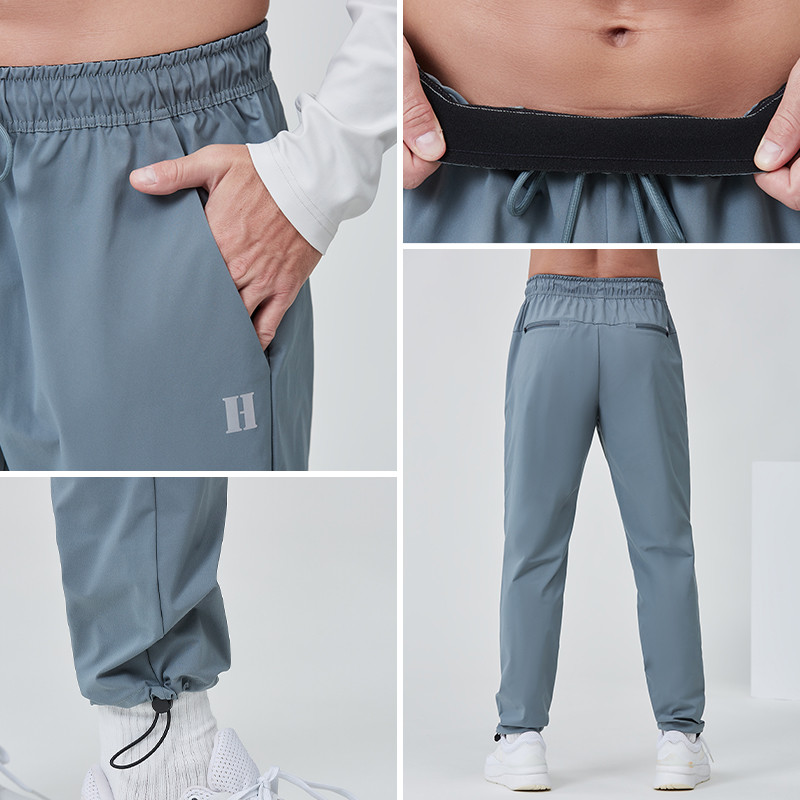
A men's hybrid training wear collection is not simply a mix of gym tops, running shorts, joggers, and lightweight jackets. For private label activewear brands, the collection needs a clear product role, fabric logic, fit progression, and sample plan before MOQ, quotation, or bulk production can be discussed properly.
As a men's activewear manufacturer, HCActivewear treats hybrid training wear as a collection planning project, not only a product sourcing request. The goal is to help brands build a line that can move between run, train, and recover scenarios while still feeling like one consistent men's gym wear or activewear collection.
Quick Answer
A strong men's hybrid training wear collection should usually start with 3 to 6 core products: a technical training T-shirt, training shorts, running or hybrid shorts, joggers or sweatpants, a quarter-zip or hoodie, and a lightweight jacket or layer if the target market needs it.
The key is not adding more SKUs. The key is making sure each SKU has a clear role. A run product should be lightweight and breathable. A train product should support movement, stretch, and durability. A recover product should feel comfortable, wearable, and easy to style after workouts.
Table of Contents
Who This Article Is For
This article is written for growing men's activewear brands, private label gym wear buyers, and startup brands preparing to move from single-product development into a more complete men's training wear capsule.
It is especially useful if your brand has reference images, a market direction, or a rough product idea, but does not yet have a complete tech pack for every SKU. If your team already has confirmed specs, this guide can still help you review whether your collection structure is clear enough before OEM sample-to-bulk production.
Trust Strip: What Buyers Should Get From This Guide
- A practical way to separate run, train, and recover products inside one men's activewear collection.
- A clearer method for choosing first-round SKUs before sampling too many products at once.
- A better understanding of how fabric families, fit logic, and color planning affect collection consistency.
- A more structured path for discussing ODM collection development with a men's activewear manufacturer.
1. Define the Collection Role Before Choosing SKUs
Many early-stage brands start collection planning by collecting product references. They may like one running short, one gym T-shirt, one jogger, one hoodie, and one jacket from different brands. The problem is that a group of good references does not automatically become a coherent collection.
A hybrid training wear collection needs a central role. Is it made for gym-to-street training? Is it for hybrid athletes who run and lift? Is it for warm-weather activewear? Is it a clean premium basics line for daily training and recovery?
Without a clear role, the collection can become scattered. The T-shirt may feel like running apparel, the shorts may feel like bodybuilding gym wear, the jogger may feel like leisurewear, and the jacket may feel like outdoor apparel. Each product may look acceptable alone, but the line does not feel intentional.
Before choosing products, define the collection in one sentence. For example:
- A lightweight run-train capsule for warm-weather activewear brands.
- A gym-to-street hybrid training collection for men's private label activewear brands.
- A premium performance basics line built around technical tees, training shorts, and recovery layers.
- A functional fitness capsule for brands targeting strength training, conditioning, and post-workout wear.
If your brand is still shaping this direction, ODM support for men's activewear development can help translate product references into a clearer SKU plan before sampling.
2. Build the Run, Train, Recover Product Map
The easiest way to organize a hybrid activewear collection is to divide products into three zones: run, train, and recover. This does not mean every product can only serve one activity. It means every product should have a primary role.
Run Zone
Run products should usually prioritize low weight, quick drying, breathability, reduced bounce, and smooth seam construction. Common SKUs include running shorts, lightweight performance tops, singlets, half tights, and reflective layers.
Train Zone
Train products should support strength training, functional fitness, gym movement, and repeated wear. Common SKUs include training T-shirts, tank tops, training shorts, 2-in-1 shorts, compression shorts, and performance tops.
Recover Zone
Recover products should feel comfortable after training and easy to wear in daily settings. Common SKUs include joggers, sweatpants, hoodies, quarter-zips, lightweight jackets, and relaxed-fit tops.
For most growing brands, the first capsule does not need every possible SKU. A simple 5-piece collection may be stronger than a large, unfocused line.
Decision Check: Which First Capsule Makes Sense?
| Capsule Size | Best For | Possible SKU Mix |
|---|---|---|
| 3-piece capsule | Startup brands testing direction | Technical tee, training shorts, jogger |
| 5-piece capsule | Growing brands building a clear launch | Technical tee, tank or performance top, training shorts, jogger, hoodie or quarter-zip |
| 6-8 piece capsule | Brands with stronger launch planning | Run top, training tee, shorts, 2-in-1 shorts, jogger, hoodie, lightweight layer |
| Full hybrid line | Established brands with proven demand | Multiple tops, bottoms, compression pieces, layers, and color stories |
For the training side of the collection, brands can review custom gym wear development support to connect T-shirts, shorts, compression gear, and performance tops into a more complete product system.
3. Choose Fabric Families, Not Random Fabrics
Fabric consistency is one of the biggest differences between a professional activewear collection and a random product list. A hybrid training wear collection can use different fabrics, but those fabrics should still feel connected.
For example, a technical tee may use a lightweight moisture-wicking knit. Training shorts may use a stretch woven shell. Joggers may use French terry, fleece, or a smooth performance knit. A lightweight jacket may use a woven shell with wind-resistant or water-repellent direction. These fabrics are different, but they can still belong to the same collection if their handfeel, color, weight, and function are planned together.
A common early-stage issue is choosing each fabric separately. The tee looks premium, the shorts look technical, the jogger feels too casual, and the jacket has a different color tone. The buyer may not notice the issue at reference stage, but it becomes obvious when samples arrive together.
At HCActivewear, fabric discussion is connected to product role. For men's hybrid activewear, the question is not only "Which fabric is good?" The better question is "Which fabric works for this SKU role and still fits the collection as a whole?"
Product Development Notes
- Technical T-shirts: Review weight, stretch, breathability, shrinkage, neckline stability, and print or logo compatibility.
- Training shorts: Review woven stretch, quick-dry performance, waistband support, pocket structure, and anti-chafe seam placement.
- Joggers and sweatpants: Review fabric thickness, recovery, waistband, cuff, pocket construction, and gym-to-street styling.
- Quarter-zips and hoodies: Review fabric handfeel, collar or hood structure, zipper quality, rib, and layering comfort.
- Lightweight jackets: Review shell fabric, ventilation, pocket system, packability, and wind or weather protection direction.
If the collection leans toward daily wear and recovery products, custom athleisure clothing development is a useful support path for joggers, hoodies, relaxed tops, and gym-to-street activewear.
4. Plan Fit Progression Across the Collection
Fit should not be the same across every SKU. A training T-shirt, oversized gym tee, tank top, jogger, and jacket all need different fit logic. But they should still feel like they were designed for the same brand.
A hybrid collection may use a more fitted performance top for training, a relaxed T-shirt for recovery, and a standard or tapered jogger for daily wear. The key is controlling the relationship between these fits. If every product has a different shoulder width, body length, sleeve shape, rise, or leg silhouette without a reason, the line will feel inconsistent.
Fit progression is especially important for men's activewear because customers often style multiple products together. A technical tee should sit well with training shorts. A hoodie should layer over the top without feeling too narrow. A jacket should work over the midlayer without destroying the silhouette.
Brands should confirm the fit family before sampling:
- Muscle fit, regular fit, relaxed fit, oversized fit, or boxy fit for tops
- Short, mid, or longer inseam for shorts
- Slim, tapered, straight, or relaxed silhouette for pants
- Layering allowance for hoodies, quarter-zips, and jackets
- Consistent size grading logic across the full capsule
For running-specific pieces, brands should also compare fit and movement needs with custom running apparel development, because running tops, shorts, half tights, and lightweight layers often require different mobility and ventilation priorities.
Mid-Article CTA: Is Your Collection Ready for Sampling?
If your brand already has confirmed tech packs, measurements, fabric specifications, color standards, logo artwork, and trim details, your hybrid training line may be ready for OEM development and sample-to-bulk planning.
If you only have reference images, market positioning, target products, and a rough SKU list, an ODM route may be more suitable. HCActivewear can help organize product roles, fabric directions, sample priorities, and development notes before the first sample round.
5. Decide the Right Sample Sequence
Sampling every product at once may feel efficient, but it can create confusion if the collection direction is not yet stable. For growing brands, a staged sample sequence is often more useful.
Start with the products that define the collection. If the line is gym-driven, begin with the training tee and shorts. If the line is run-driven, begin with the running top and shorts. If the line is gym-to-street, begin with the top, shorts or jogger, and hoodie or layer that best express the brand's positioning.
Once the core fit and fabric direction are approved, supporting products can be developed with stronger consistency. This reduces repeated changes across too many SKUs and helps the brand make better decisions before bulk planning.
Manufacturer Insight
For men's hybrid training wear, HCActivewear often looks at product role, fabric behavior, pattern logic, trim selection, and sample feedback together. This helps buyers avoid treating each product as an isolated item.
A staged sample process also makes communication clearer. The sales, merchandising, development, sample, production, and quality teams can track what has been confirmed, what needs adjustment, and what should not change before moving into bulk production.
6. Prepare for Sample-to-Bulk Consistency
A strong hybrid collection is not finished when samples look good. The next question is whether the approved details can be repeated in bulk production.
For collection-based projects, consistency matters across multiple levels: fabric color, handfeel, measurement tolerance, seam construction, logo placement, zipper and trim quality, waistband tension, rib matching, packaging, and size grading. The more SKUs a collection includes, the more important these checkpoints become.
Before bulk planning, brands should confirm:
- Approved samples for each SKU
- Fabric and color standards
- Trims, zippers, drawcords, labels, and packaging
- Logo method and placement
- Measurement and fit expectations
- Quality checkpoints and pre-shipment inspection expectations
- Production schedule and communication flow
HCActivewear supports sample-to-bulk coordination with OEM/ODM development, quality checkpoints, AQL 2.5 inspection logic, and MES / ERP production follow-up. These systems are not a replacement for clear product decisions, but they help keep confirmed details visible as a collection moves from sample approval into production.
Market Notes: How Hybrid Training Wear Reads in Different Markets
In the U.S., hybrid training wear often connects with gym culture, bodybuilding, performance training, oversized tees, training shorts, and athleisure. In the U.K., the direction may feel cleaner, with everyday gym wear, tracksuits, quarter-zips, and off-duty activewear. Nordic and Western European brands may place more value on functional basics, layering, running, durability, and muted color stories. Australian brands may focus more on lightweight, breathable, warm-weather activewear and gym-to-street styling.
These differences affect collection planning. The same five SKUs can be styled and developed differently depending on the target market. This is why a product brief should include target region, brand positioning, use scenario, reference images, and desired price level before fabric and sample decisions are finalized.
Common Collection Development Failures in Hybrid Training Wear
| Collection Development Failure | Root Cause | Manufacturing Solution |
|---|---|---|
| Fabric inconsistency across SKUs | Each product uses unrelated fabric weights or handfeels. Collection lacks visual coherence. | Select 1-2 fabric families before sampling. Ensure consistent color and handfeel direction. |
| Fit mismatch tops vs bottoms | Different grade rules for T-shirts, shorts and joggers. Combined outfit looks unbalanced. | Develop unified grade rule. Review fit relationship between top and bottom during sample fitting. |
| Sample sequence too broad | Brand samples all SKUs before core direction is confirmed. Revisions cascade across every product. | Sample most technically demanding SKU first. Expand only after core direction is approved. |
| Color variation between products | Same color name produces different results across different fabric types due to dye absorption. | Review color on each fabric type. Approve against physical swatches, not digital references. |
| Inconsistent branding placement | Logo position varies across T-shirts, shorts and jackets. Collection looks uncoordinated. | Create brand placement guide for each product category before production. |
FAQ: Men's Hybrid Training Wear Collection Planning
1. What is a men's hybrid training wear collection?
A men's hybrid training wear collection is a group of products designed to move across multiple scenarios such as running, gym training, functional fitness, recovery, and daily wear. It usually includes performance tops, training shorts, joggers, hoodies, quarter-zips, lightweight jackets, or compression pieces depending on the brand's target market.
2. What products should a run, train, recover capsule include?
A practical first capsule may include a technical T-shirt, training shorts, jogger, hoodie or quarter-zip, and one lightweight layer. A running-focused capsule may add running shorts, singlets, or half tights. A gym-focused capsule may add tank tops, oversized tees, or 2-in-1 shorts.
3. How many SKUs should a startup men's activewear brand sample first?
Many startup brands should begin with 3 to 5 core SKUs instead of sampling too many products at once. A smaller capsule makes it easier to control fit, fabric, color, cost, and feedback. Once the main direction is approved, the brand can expand into more styles with better consistency.
4. Is ODM better than OEM for hybrid activewear collection planning?
ODM is usually more suitable if the brand has references and market direction but no complete tech packs. OEM is more suitable if the brand already has confirmed specifications, measurements, fabric details, artwork, and packaging requirements. Many growing brands start with ODM planning and move toward OEM production once details are confirmed.
5. What should brands prepare before contacting a men's activewear manufacturer?
Brands should prepare target market, product references, desired SKU list, fabric preferences, fit direction, color story, logo method, size range, packaging needs, and any available tech packs. Even if the details are not final, clear references and product goals can make the first development discussion more efficient.
6. How do fabric families affect a men's activewear collection?
Fabric families affect how the collection feels as a whole. If each SKU uses unrelated fabric weight, handfeel, stretch, color tone, and surface texture, the collection can feel disconnected. A good fabric plan allows each product to serve its own function while still belonging to the same brand line.
7. What usually causes repeated revisions in hybrid training wear sampling?
Repeated revisions often come from unclear product roles, inconsistent fit direction, fabric choices that do not match the use case, unconfirmed trims, unclear logo placement, or trying to sample too many products before the core direction is approved. A structured brief and staged sample plan can reduce avoidable changes.
8. Can a manufacturer help with collection planning if we only have reference images?
Yes. If your brand has reference images, target products, market direction, and brand positioning, a manufacturer with ODM development support can help organize those ideas into product roles, fabric directions, sample priorities, and construction details before the first sample round.
Final Takeaway
A men's hybrid training wear collection should not feel like a random mix of gym, running, and lounge products. It should have a clear structure: what is built for running, what is built for training, what is built for recovery, and how all products work together as one brand line.
For private label activewear brands, the best starting point is not simply asking for more styles. It is defining product roles, fabric families, fit progression, and sample sequence before moving into MOQ, quotation, and bulk production planning.
Ready to Build a Men's Hybrid Training Wear Collection?
If your brand already has tech packs, confirmed specs, and artwork, share your documents for OEM sample-to-bulk support.
If you are still shaping the collection, send your reference images, target market, desired SKU list, fabric direction, color story, and brand positioning. HCActivewear can help organize those details into a clearer ODM development path before sampling.
Contact HCActivewear to start your men's hybrid training wear project.
Related Paths
Footer Trust Notes
HCActivewear supports private label men's activewear projects with OEM/ODM development, fabric and trim customization, sample review, quality checkpoints, and production follow-up. For hybrid training wear, this means helping buyers connect collection roles, product structure, fabric behavior, fit consistency, and sample-to-bulk planning before production begins.