How to Plan a Run-Train-Recover Men's Activewear Capsule for Private Label Brands
- Share
- publisher
- HUCAI activewear
- Issue Time
- Jul 22,2026
Summary
How to plan a men's hybrid training capsule: run vs train vs recover product roles, fabric and fit differences, sample sequence, common failures and OEM/ODM paths.
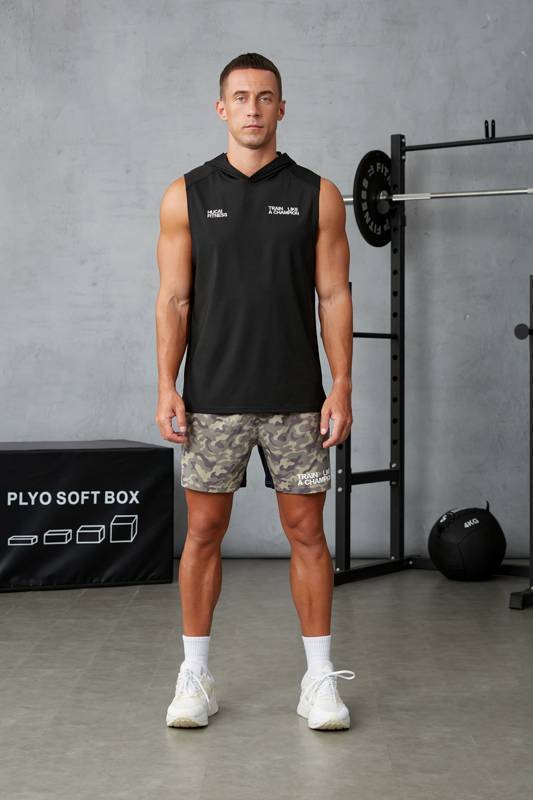
For men's activewear brands planning a multi-product capsule across run, train and recover categories, the development process starts with defining three distinct product roles, selecting compatible fabric families, sequencing sample development correctly, and confirming branding consistency before bulk production.
HCActivewear supports growing and established men's activewear brands with capsule collection development — from product role planning, fabric family selection, multi-SKU sample coordination to bulk production follow-up.
Quick Answer
A run-train-recover men's activewear capsule needs three product roles: run (performance fit, lightweight 120-160 GSM, moisture-wicking), train (mid-weight 160-200 GSM, 4-way stretch, breathable), and recover (relaxed fit, 220-280 GSM, soft fleece or French terry). Start sample development with the most technically demanding SKU, establish the fabric family with the core training piece, and confirm color and branding consistency before expanding to all sizes.
Table of Contents
Who This Article Is For
Growing men's activewear brands planning a multi-product capsule — you have a product direction but need guidance on SKU mix and sample sequence.
Startup brands with a collection direction — you need to validate capsule structure before manufacturer discussion.
Established brands expanding into hybrid training categories — you need to ensure consistency across your new product range.
Private label buyers coordinating a balanced product range for their brand launch.
1. What Is a Run-Train-Recover Capsule?
A run-train-recover capsule is a coordinated collection of men's activewear designed to cover three distinct training scenarios. Each category serves a different purpose, uses different fabric profiles, and requires different construction approaches — but all pieces must work together as a coherent product range.
Run pieces are performance-oriented, lightweight and streamline. Train pieces balance performance with comfort, using stretch fabrics for multi-directional movement. Recover pieces prioritize comfort and easy wear, using softer fabrics for post-training or everyday use.
This capsule structure is used by brands like ASRV (US), Represent 247 (UK), SAYSKY (Denmark) and LSKD (Australia) — each adapting the three-role model to their market and climate conditions.
2. Product Role Matrix: Fit, Fabric and Features
| Category | Product Examples | Target Fit | Fabric Direction | Key Features |
|---|---|---|---|---|
| Run | Singlet, Half Tight, Race Tee, Lightweight Shorts | Performance fit — close to body, streamlined, minimal fabric | Lightweight knit, 120-160 GSM, moisture-wicking, quick-dry, reflective yarn or print | Flatlock seams, phone pocket, low-bulk waistband, tagless label |
| Train | Training Tee, Gym Shorts, Quarter Zip, Compression Top | Performance to relaxed — room for movement, not oversized | Mid-weight stretch, 160-200 GSM, 4-way stretch, breathable mesh panels | Gusset, anti-chafe seam, phone pocket, silicone grip waistband |
| Recover | Joggers, Hoodie, Long Sleeve Tee, Relaxed Shorts | Relaxed fit — easy on/off, not compressed, roomy silhouette | Mid to heavyweight, 220-280 GSM, French terry or brushed fleece, soft handfeel | Easy on/off waistband, rib cuffs, kangaroo pocket, dropped shoulder option |
The three categories should share a consistent color story and design language while using different fabric weights and fits. This is how brands create visual coherence across a capsule without making every product feel identical.
3. Fabric Family Selection Across Categories
One of the most common challenges in capsule development is fabric inconsistency across SKUs. When each product category uses a completely different fabric family, the collection looks and feels disjointed.
A better approach is to select 1-2 fabric families before sampling, then specify variations by category:
- Same color story — approve color standards on each fabric type using physical swatches, not digital references, because the same color name produces different results on different knit structures
- Compatible handfeel — the run singlet should feel related to the train tee, even though they use different fabric weights
- Consistent tone — muted tones for all three categories; avoid mixing saturated neons in run with earth tones in recover
For a more detailed discussion of fabric properties across categories, review the fabric selection guide for men's activewear.
4. Sample Development Sequence for Capsule Collections
Sample sequence matters more for a capsule than for individual products. Sampling all SKUs at once causes cascading revisions — a fit change on the core piece requires pattern adjustment on every derivative product.
| Step | What to Sample First | Why This Order |
|---|---|---|
| 1 | Most technically demanding SKU (half tight with phone pocket, or compression top with bonded hem) | Highest development risk. If this SKU passes, simpler products follow faster. If it fails, the issue is isolated before affecting other SKUs. |
| 2 | Core training piece (training tee or gym shorts) | Establishes the fabric family and fit direction for the entire capsule. All other pieces should relate to this core. |
| 3 | Supporting run piece | Once core fit is confirmed, adapt the fit to a performance profile for the run category. Fabric weight changes but construction approach stays consistent. |
| 4 | Recovery piece (joggers or hoodie) | Uses a different fabric family (fleece vs knit). Confirm separately after core is approved, then coordinate color and branding. |
| 5 | Remaining sizes and colorways | Grade across size range and approve color on each fabric type only after first-sample fit is confirmed. |
5. Common Capsule Collection Development Failures
| Failure | Root Cause | Manufacturing Solution |
|---|---|---|
| Fabric inconsistency across SKUs | Each product uses unrelated fabric families. The collection lacks visual and tactile coherence. | Select 1-2 fabric families before sampling. Ensure every SKU fabric belongs to the same weight or handfeel family. |
| Fit mismatch between tops and bottoms | T-shirts use one grade rule; shorts and joggers use different rules. The combined outfit looks unbalanced. | Develop a unified grade rule for the capsule. Review the fit relationship between top and bottom during sample fitting. |
| Sample sequence too broad too early | Brand samples all SKUs at once before core fit is confirmed. Revisions cascade across every product. | Sample the most technically demanding SKU first. Expand to supporting pieces only after core fit approval. |
| Color variation across fabric types | Same color name produces different results on different knit structures due to dye absorption. | Approve color against physical swatches for each fabric type together, not one at a time. |
| Inconsistent branding placement across the capsule | Logo placement varies across T-shirts, shorts, joggers and jackets without a coordinated plan. | Create a brand placement guide showing logo position, size and method for each product category before sampling. |
6. OEM vs ODM Path for Capsule Development
| Customer Situation | Recommended Path | Manufacturer Support |
|---|---|---|
| Established Brands Complete capsule plan with tech packs for each SKU | OEM Manufacturing | Produce capsule to specs; support multi-SKU sample coordination and bulk quality checkpoints across every product |
| Growing Brands Capsule direction clear, reference images available, no complete tech packs | ODM Development | Recommend fabric families and fits for each category; develop patterns per SKU; coordinate sample sequence and review |
| Startup Brands Need collection concept validation first | ODM + Sample Development | Discuss capsule direction and target market; validate with 1-2 core SKUs first; expand after confirmation |
For established brands ready with complete specs, explore the OEM service page. For brands needing development support, the ODM service page covers how we help build capsule collections.
Manufacturer Insight: Capsule Development Sequence
At HCActivewear, we find that the most common capsule development delay comes from sampling too many SKUs too early. A brand that samples a running singlet, training tee, gym shorts and joggers in the first round — before any fit is confirmed — often needs to revise all four products when the core fit changes. Starting with one technically demanding piece and one core training piece reduces total revision cycles by approximately 40% compared to all-at-once sampling.
Planning a Men's Activewear Capsule?
Share your target product mix, reference images or collection direction. We help define product roles, fabric families, sample sequence and OEM/ODM path.
Share Your Capsule Direction Explore ODM Support View Product CategoriesFAQ
How many SKUs should a run-train-recover capsule include?
A common starting capsule has 5-7 SKUs: one run piece (singlet or half tight), two training pieces (tee and shorts), and one recovery piece (joggers or hoodie), plus one cross-category piece like a quarter zip. The exact mix depends on the brand's target market and season.
What is the most important SKU to sample first?
The most technically demanding SKU — usually the piece with the most construction complexity, such as a half tight with phone pocket or a compression top. If this piece passes sample review, simpler pieces in the capsule will follow faster with fewer revisions.
How should brands ensure fabric consistency across a capsule?
Select 1-2 fabric families before sampling. Approve color on each fabric type using physical swatches. Ensure all fabrics come from the same mill or compatible supply source. Review handfeel and drape together before starting sample development.
Can brands develop a capsule without complete tech packs?
Yes, many growing brands start with reference images and a capsule direction. An ODM development partner can recommend fabric families, fits and sample sequence — helping define specs through the development process rather than requiring them upfront.
What is the most common capsule development mistake?
Sampling all SKUs in the first round before any fit direction is confirmed. This approach means a single fit change on the core piece requires pattern adjustments on every other SKU — multiplying revision cycles across the entire capsule.
How does capsule pricing differ from single-product development?
Capsule pricing depends on total SKU count, fabric families used, construction complexity per piece, and the number of colorways per SKU. Combined MOQ across the capsule is usually lower than ordering each product individually, but the total investment scales with the number of unique products.
What should brands prepare before discussing a capsule with a manufacturer?
At minimum: target product mix (which categories), reference examples for each category, color direction, target market, target price range, and approximate timeline. The more specific the direction, the more accurate the development quote and sample timeline will be.