How to Refresh a Carryover Men's Performance Style Without Rebuilding the Whole Product
- Share
- Issue Time
- Sep 29,2026
Summary
A proven men's activewear style does not need to be rebuilt every season. This guide sets out a five-level carryover refresh ladder: lock the approved pattern, measurement spec and grading, then update colour, fabric surface, trims and branding, or low-risk construction details in ascending order of risk. It explains which changes a block can absorb and which ones force a new sample, with fabric substitution checks and own-brand embroidery, hardware, pocket and utility-cargo detail examples.
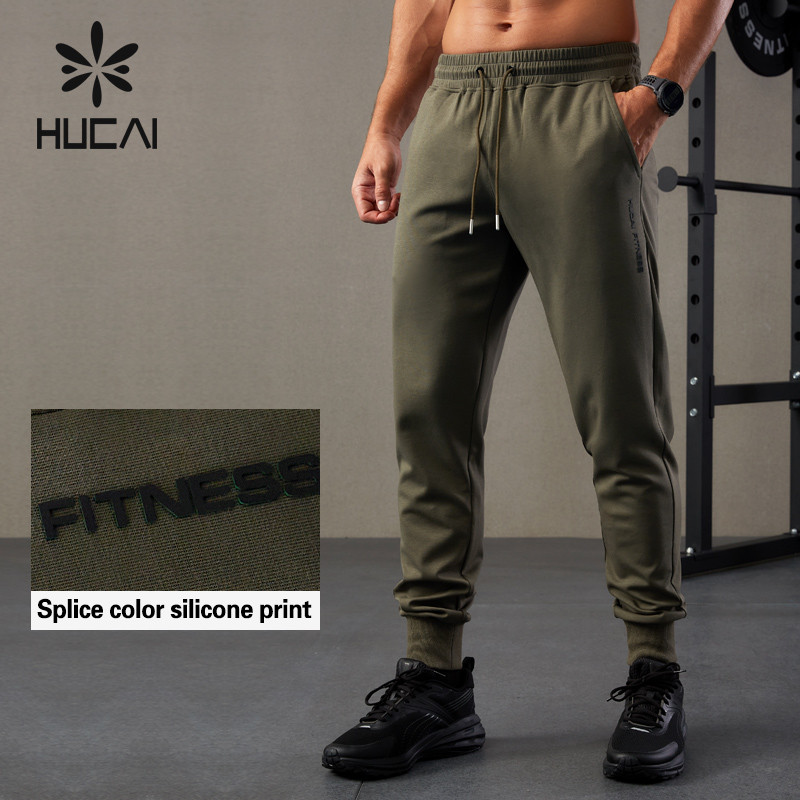
A carryover style is the most profitable garment a men's brand owns, and the easiest one to mishandle. It already sells, it already fits, and it already has a supplier history. For buyers sourcing private label activewear, the annual question is not how to replace it but how to refresh it without erasing what made it work. HUCAI activewear supports OEM and ODM development for custom men's activewear, and the pattern in a carryover block is treated as an asset to protect rather than a file to rewrite.
Rebuilding a proven style from the ground up burns development weeks, resets the size grading, and reopens risks that were already closed. Changing only the colour, on the other hand, produces a garment that looks like last season with a new name, which is a weak reason for a buyer to reorder. The workable middle ground is a ranked refresh plan: hold the block, then make the smallest set of changes that still reads as new.
Quick Answer
A carryover style is refreshed most efficiently by keeping the approved pattern, measurement spec and size grading locked, then updating in ascending order of risk: colour first, then fabric surface and hand feel, then trims, hardware and branding, then low-risk construction details such as pocket or panel changes. Every step that touches a pattern piece, a seam placement or the fabric's stretch behaviour triggers a new sample round. The practical rule is to decide the refresh level before the development calendar is set, because a level-three update planned as a level-one update is what creates avoidable revision loops.
Table of Contents
- Who This Article Is For
- What Actually Counts as a Carryover Block
- The Five-Level Refresh Ladder
- Fabric Substitution Without Re-Patterning
- Colour, Trim and Branding Updates
- Construction Changes That Force a New Sample
- Sample Requirements and Sample-to-Bulk Consistency
- Decision Check
- Founder's Insight
- FAQ
- Final Takeaway
Who This Article Is For
- Established brands with a confirmed tech pack who need to extend a proven style across seasons without resetting the block
- Growing brands managing a first repeat order who want newness without funding a full redevelopment
- Private label buyers planning a seasonal colour and trim programme on top of an approved pattern
- Product managers and merchandisers who have to explain to a commercial team why one change costs a sample and another does not
Why This Guide Matters
HUCAI activewear develops men's activewear through OEM and ODM routes, covering fabric library selection, pattern engineering, trim and branding development, sample approval and bulk production follow-up. The development team reviews which components of a carryover style can be updated independently and which ones are structurally tied to the pattern, so a brand enters a refresh cycle knowing in advance what will cost a sample round and what will not.
What Actually Counts as a Carryover Block
Experienced sportswear pattern makers and cutting technicians consistently point out that a carryover style is not protected by a folder of files. It is protected by a small number of confirmed parameters that every future version has to inherit. If those parameters are not written down, a refresh quietly becomes a redevelopment.
Four elements form the block that has to stay fixed across a refresh cycle:
- Approved pattern and pattern pieces: The actual block, including how the front, back, sleeve and leg pieces were drafted, not only the finished measurements.
- Measurement spec and tolerance: The point-of-measure list with the tolerance band that was accepted at sample approval, which is what makes a repeat order repeatable.
- Size grading and increments: The increments applied between sizes. A refresh that changes the base size without revisiting the grading will drift at the extremes of the range.
- Construction spec: Seam types, stitch density, seam allowance, waistband build, hem finish and trim placement, recorded in a way a new operator can repeat.
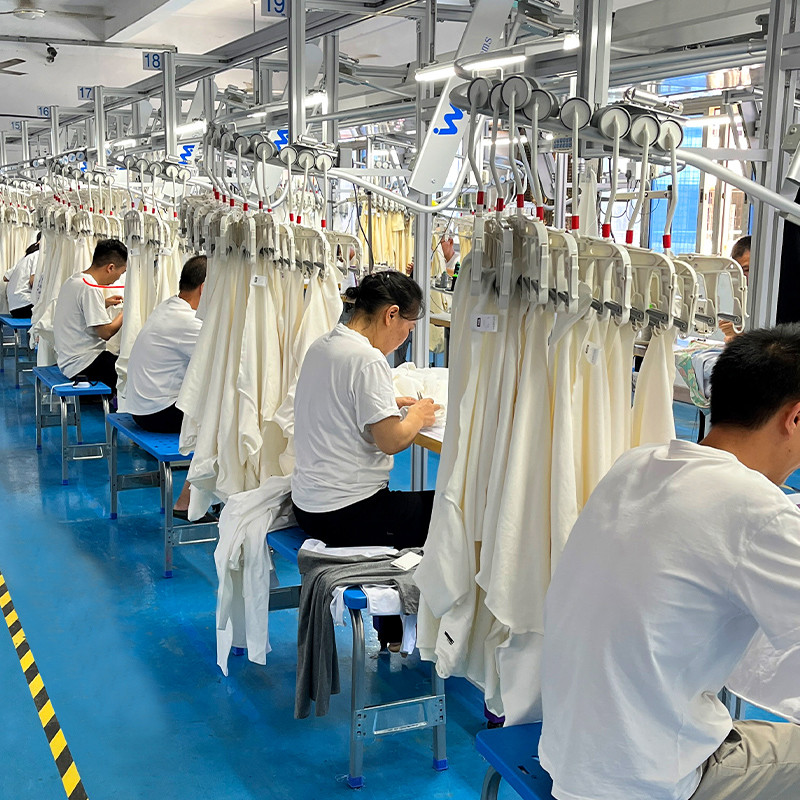
The image above is the stage where a refresh plan is usually either confirmed or quietly ignored. Garments hang on inspection rails and measurements are recorded against a spec sheet, which is the moment a brand's decision about the block becomes visible on the production floor. If the measurement spec is not part of the refresh brief, the first bulk order is where the drift appears.
Once those four elements are documented, every proposed seasonal change can be tested against a single question: does this change touch a pattern piece, a seam placement, or the fabric's mechanical behaviour? Anything that does not can be treated as a low-risk update.
The Five-Level Refresh Ladder
Observations across leading performance brands such as Gymshark, Castore and Ten Thousand show how often a carryover core is carried forward with a narrow change set while genuinely new silhouettes are reserved for a smaller number of styles. The pattern is commercially driven: the core protects volume, the newness sits on top of it.
For a men's gym wear range, those changes sort into five levels, and each level carries a different development cost:
- Level 1 - Colour only: The same fabric, the same construction, a new colourway or print placement. No pattern change. Approve a lab dip and a colour standard, then produce.
- Level 2 - Fabric surface and hand feel: Same construction family, a different surface treatment, finish or knit variant. The block usually survives, but a fit sample is still required because the fabric's stretch and recovery change how the garment sits.
- Level 3 - Trims, hardware and branding: Zipper, drawcord, stopper, woven label, heat transfer, silicone print, embroidery, logo scale. These rarely move a seam, but they change the trim spec, the application method and sometimes the placement tolerance.
- Level 4 - Low-risk construction detail: Pocket revision, added panel, hem treatment, waistband build. These alter pattern pieces, so a new fit sample and an updated construction spec are required even when the outer silhouette looks unchanged.
- Level 5 - Block change: Fit, rise, leg line, shoulder line or grading increments. This is a redevelopment, and it should be budgeted and scheduled as one rather than presented as a refresh.
Most brands that report slow or expensive carryover updates have simply planned a level-three or level-four change on a level-one timeline. Naming the level before the calendar is set removes that mismatch.
Fabric Substitution Without Re-Patterning
Fabric substitution is the most common carryover refresh and the one most often approved on the wrong evidence. According to ISO 6330 dimensional stability testing principles, synthetic activewear blends require shrinkage behaviour to be understood before lengths and tolerances are finalised, not after the first bulk delivery. A swatch that feels right in the hand is not evidence that the block will behave the same way.
Technical apparel merchandisers handling private label bulk production emphasise that a substitute fabric can be run on the existing block only when four characteristics stay close to the approved original:
- Stretch direction and modulus: How much the fabric extends at a given force. A higher modulus fabric will feel tighter across the same pattern, which reads as a fit change even though the pattern is untouched.
- Elastic recovery: How completely the fabric returns after repeated extension. Weaker recovery is what turns a clean leg line into a relaxed one within a few wears.
- Weight per square metre: A meaningful weight change alters drape, how a hem falls and how a waistband sits, even at identical measurements.
- Dimensional stability: Shrinkage after washing, which determines whether the approved body length and inseam still hold after the garment's first few laundry cycles.
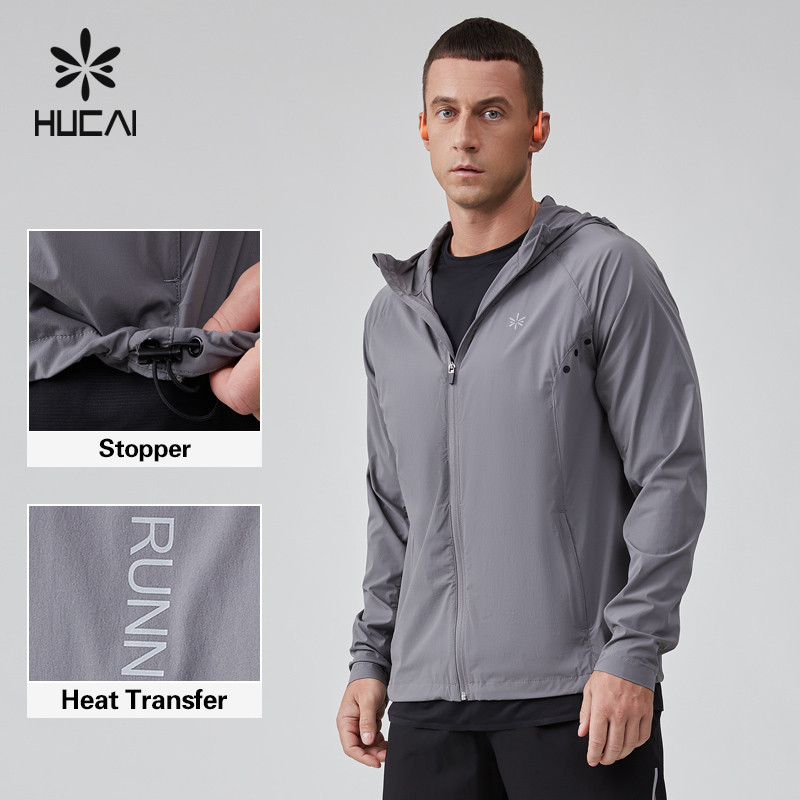
The jacket above illustrates why surface treatments belong in a separate refresh level from the block itself. The base pattern is unchanged, while the heat transfer application and the stopper hardware change what the buyer sees and what the trim spec has to record. Neither detail moves a pattern piece, but both change the specification sheet that bulk production works from.
At HUCAI activewear, fabric substitution for a carryover men's style is reviewed against the original fabric's mechanical data rather than against appearance alone. The fabric library compares weight, stretch direction, recovery and shrinkage across candidate options, and a fit sample is still produced when a substitute sits outside the confirmed tolerance band. That sample is not a redevelopment; it is the control point that keeps the block valid.
Colour, Trim and Branding Updates
Discussions across runner forums and training communities (including threads on Reddit's r/running and r/weightroom) frequently cite the same complaints about repeat purchases: colour that fades unevenly, branding that peels after a handful of washes, and hardware that stops holding. Those complaints are usually traceable to a refresh that changed the visual without restating the specification.
The changes in this level are the cheapest newness a brand can buy, provided the specification is written down again:
- Colour: A new colourway needs an approved colour standard and a lab dip, and the fabric's dyeability has to be confirmed for that specific substrate, not assumed from a different base cloth.
- Logo scale and placement: Scaling a logo up changes coverage and weight on the panel. Placement tolerance should be re-confirmed, because a larger mark amplifies any positional drift that was previously invisible.
- Application method: Embroidery, heat transfer and silicone print each behave differently on stretch knits. A method that was approved on a stable fabric may need a backing or a different stitch density on a high-elastane knit.
- Trims and hardware: Zippers, stoppers, drawcords and woven labels carry their own test expectations. Swapping a trim supplier is a specification change, not a cosmetic one.
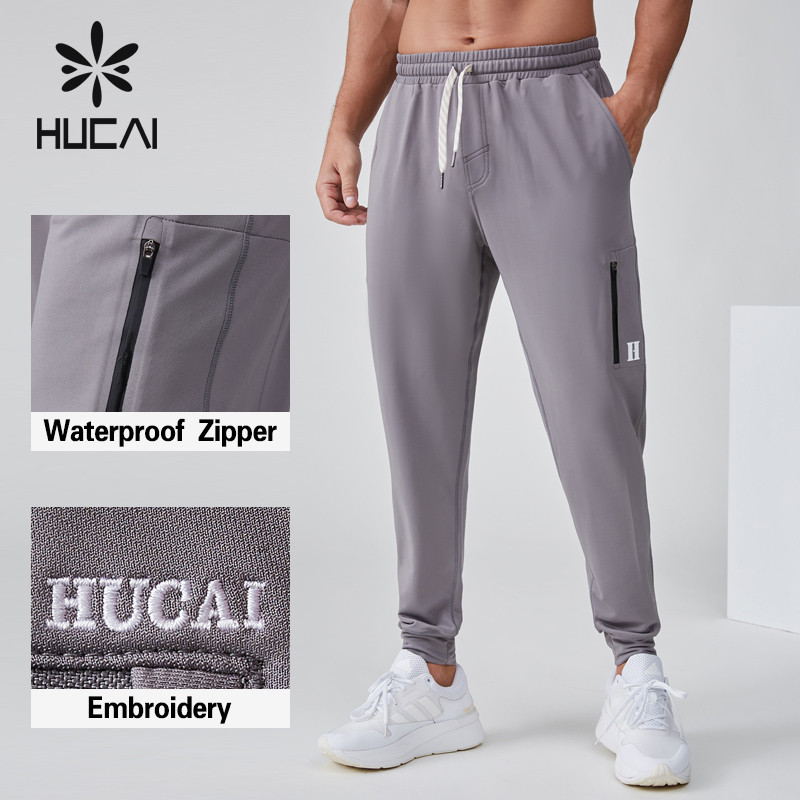
The jogger above shows the two decisions that define this level in practice. Embroidery adds surface weight and needs a backing decision, while the waterproof zipper changes both the trim specification and the pocket opening construction. Both are visible to the buyer, and both are cheap compared with a new block, as long as the specification sheet is updated at the same time.
HUCAI activewear develops logo, label, hangtag and packaging customisation alongside trim sourcing, so a branding refresh is planned with the application method and the trim standard in the same document. That is what prevents a colour-and-branding season from producing a decoration failure three months after delivery.
Construction Changes That Force a New Sample
Experienced sportswear pattern makers consistently warn that the changes buyers treat as minor are the ones that move pattern pieces. A pocket is not a detail; it is a set of additional pieces, an additional seam sequence and an additional stress point on a stretch fabric.
Four construction changes reliably push a carryover style into a new sampling round:
- Pocket revision: Adding a zip pocket, converting a patch pocket to a slash pocket, or changing pocket bag depth all require new pattern pieces and a revised sewing sequence.
- Panel changes: Introducing a side panel, a contrast yoke or a splice changes the number of cut pieces and the seam allowances that hold the silhouette.
- Waistband and cuff build: Changing band depth, adding an internal drawcord channel or moving to a different cuff construction changes the top block of a bottom and the ribbing specification.
- Hem and leg opening treatment: A bonded or narrow hem supports a continuous line differently from a double-folded hem, and it changes the finished length tolerance.
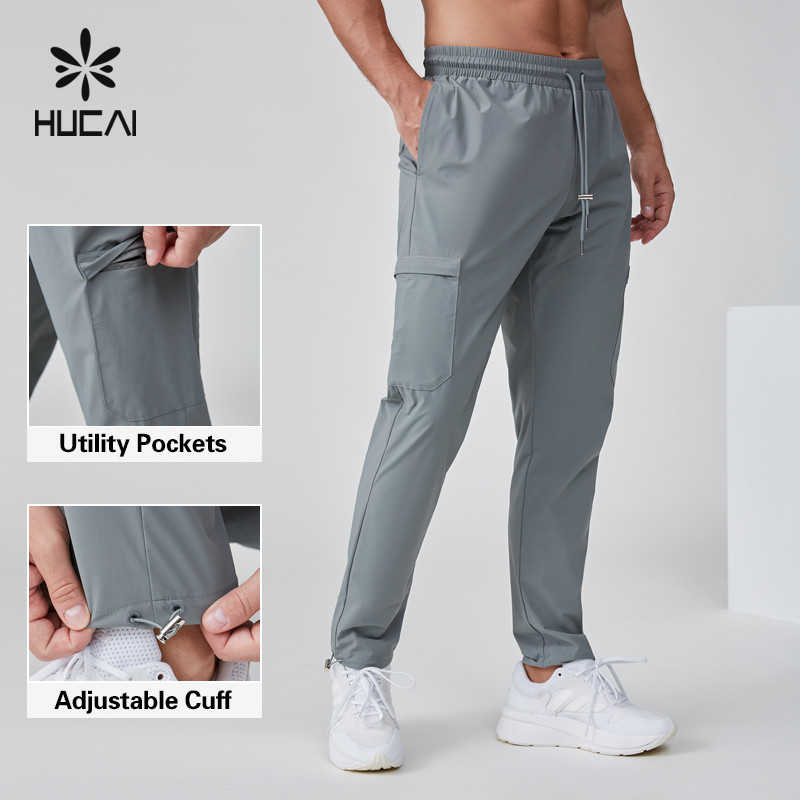
The utility pocket and adjustable cuff in the image above are exactly the kind of update that looks like a trim change and behaves like a pattern change. The pocket adds pieces and a topstitch sequence, and the adjustable cuff changes the leg opening construction and its tolerance. Neither is difficult; both need to be resourced and sampled properly.
The honest position is that a level-four update usually costs more in development time than the brand expects and less than a new style. HUCAI activewear reviews proposed construction changes against the existing pattern pieces before quoting, so the sample requirement is stated up front rather than discovered during review.
Sample Requirements and Sample-to-Bulk Consistency
The higher the refresh level, the more the approval sequence matters. A level-one colour update needs a colour approval and a trim confirmation. A level-two or level-three update needs a fabric or trim approval plus a fit sample on the production fabric. A level-four update needs a full pre-production sample with the revised construction spec.
Experienced production merchandisers emphasise that the measurements a buyer signs off at approval have to be tracked through cutting, sewing and final inspection rather than assumed to repeat. That is the difference between a refresh that lands and one that arrives slightly wrong across an entire order.
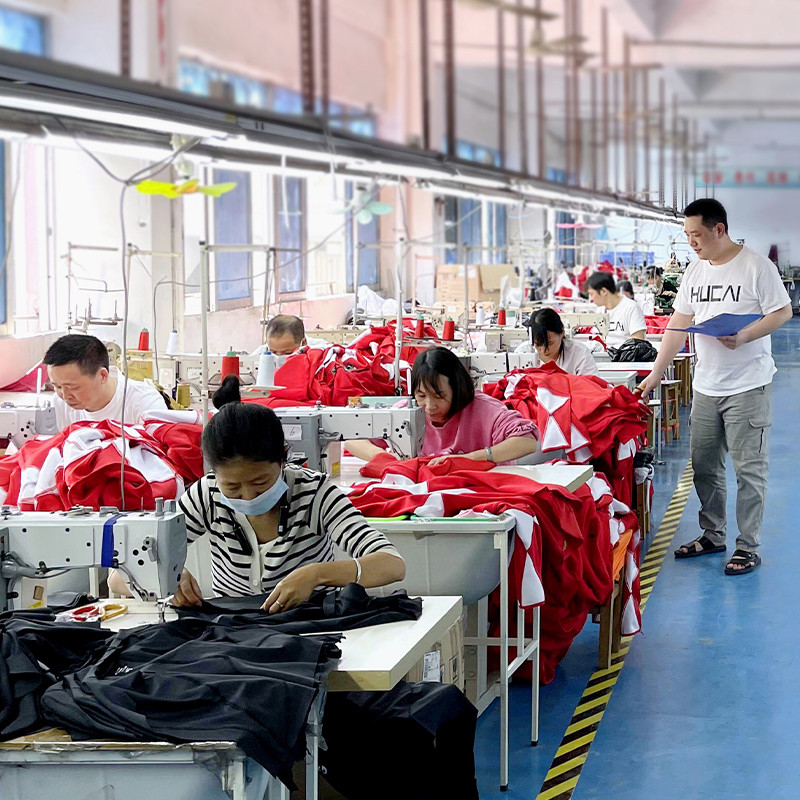
The workshop floor above is where a refresh decision becomes a delivered order. Operators work from the construction spec and specification sheet, so a changed trim, a changed pocket sequence or a changed hem finish only repeats correctly if the documentation was updated when the change was approved. This is the stage where good carryover discipline either pays off or fails quietly.
HUCAI activewear runs OEM and ODM development alongside MES and ERP production tracking, so fabric, trims, pattern, sample, bulk and QC stages stay on one visible timeline, supported by pre-production review and AQL 2.5 quality inspection. These are process capabilities rather than outcome guarantees, and they are most useful when a refresh brief states the change level clearly before scheduling begins. Buyers who want to compare routes before committing can review the ODM men's activewear development and OEM men's activewear manufacturing paths alongside the fabric guidance on men's activewear fabric choices.
Decision Check
Before committing a carryover men's style to a seasonal refresh, confirm each of the following with your manufacturing partner:
- Is the approved pattern, measurement spec, tolerance band and size grading documented well enough for a repeat order to inherit them?
- Has the refresh been classified by level, so the colour-only changes are not scheduled on the same timeline as pocket or panel changes?
- For a fabric substitution, have stretch direction, modulus, elastic recovery, weight and shrinkage been compared against the approved original rather than against appearance?
- For a logo scale or placement change, has the application method been re-tested on the actual production knit?
- Has every trim, hardware and label change been written into the specification sheet rather than agreed verbally?
- For a pocket, panel, waistband or hem change, has a new fit sample been budgeted together with an updated construction spec?
- Has the sampling sequence been confirmed, including who approves colour, fabric, trim and fit at each stage?
- Has HUCAI activewear reviewed the refresh brief against the original pattern before a bulk date was promised?
A carryover style only earns its margin if the block is defended. The cheapest newness is a change the block can absorb without moving a seam; the most expensive newness is a small change that was never resourced as a pattern change. Classify the refresh level first, then spend the development budget where the buyer will actually see it.
Founder's Insight: Jean Yuan on Protecting the Proven Block
As Jean Yuan, Founder of HUCAI activewear, often points out during pre-production reviews: "The styles that make a brand money are the ones that have already survived three orders. When a buyer tells me they want to refresh one, my first question is what they are willing to leave alone. Most teams arrive with a list of changes and no list of constants, and that is how a proven style gets rebuilt by accident. I have seen a carryover short lose its fit across the range because someone added a zipped pocket and re-cut the side panel without re-grading, and the buyer did not notice until the third bulk order."
That trade-off is the commercial heart of a refresh programme. The brands that protect their core usually accept a narrower change set per season, then release genuinely new blocks on a separate development track. It costs less, it repeats more reliably, and it keeps the styles that fund the business performing the way they did when they were approved.
Frequently Asked Questions
What is the MOQ for a carryover refresh on an existing men's activewear style?
MOQ typically starts from 100 pieces per style, and a refresh on an existing block is often more flexible than a new development because the pattern and grading are already confirmed. Final quantity still depends on fabric availability, the number of colourways, size range and the trim or branding changes involved.
Can a style be refreshed without a new sample?
A colour-only update usually needs a colour approval rather than a new fit sample. Any change to the fabric surface, trims, hardware, branding application or pattern pieces normally requires a sample, because those changes affect how the approved garment behaves or how it is assembled.
Does changing the fabric always require a new pattern?
Not always, but it always requires a review. If the substitute fabric sits close to the approved original on stretch direction, modulus, elastic recovery, weight and shrinkage, the existing block can usually carry it. Once those properties move outside the confirmed tolerance band, the pattern or the grading has to be revisited.
Why does adding a pocket sometimes lead to a full re-sample?
Because a pocket is built from additional pattern pieces, not from a decorative step. Adding a zip pocket or changing a pocket bag changes the cutting list, the sewing sequence and the stress points on a stretch fabric, so a new fit sample and an updated construction spec are required.
How much can a logo change before it affects production?
Scale and placement are the two variables that matter. Enlarging a logo increases coverage and weight on the panel, and it makes existing positional drift more visible. Changing the application method from heat transfer to embroidery or silicone print also changes the specification and may require a backing on high-elastane knits.
What should be confirmed before discussing a refresh quotation?
Confirm the current pattern status, the measurement spec and tolerance, the size grading, the construction spec and the trim list. Add the intended refresh level and the components you are willing to leave untouched. A quotation built on those inputs reflects the real development cost instead of an optimistic estimate.
How do brands keep a refreshed style consistent between sample and bulk?
By updating the specification sheet at the same time as the change is approved, then tracking the approved points of measure through cutting, sewing and final inspection. Pre-production review and a defined quality inspection framework support that tracking, and they work best when fabric, trim and branding details are confirmed before scheduling begins.
When should a brand stop refreshing a style and develop a new one?
When the required change reaches the block itself: the fit, the rise, the leg line, the shoulder line or the grading increments. At that point the work is a redevelopment, and it should be scheduled and resourced as a new style rather than folded into a seasonal refresh.
Final Takeaway
Refreshing a carryover men's performance style is a sequencing problem, not a design problem. Document the block, classify the change by level, and keep colour, surface, trim and construction updates in their correct order so each one is resourced against its real cost. The styles that stay in a range for years are the ones whose constants were protected on purpose.
HUCAI activewear helps men's gym wear brands define which components of a proven style to lock and which to refresh, with OEM and ODM development support, fabric and trim review, and production follow-up behind the carryover plan. Brands that treat the block and the refresh as one decision spend less on development and keep their proven styles selling.
How We Work
HUCAI activewear works as an integrated manufacturer for men's activewear, covering fabric and trim customisation, logo and label development, pattern and sample engineering, bulk production and logistics follow-up. Quality checkpoints and AQL 2.5 inspection support the process; they are working methods rather than absolute outcome guarantees. Send your existing pattern status, reference images or target product direction to start a carryover refresh conversation.