Oversized Gym T-Shirts and Pump Covers: GSM, Drop Shoulder, Neckline, Sleeve Shape and Branding Review
- Share
- publisher
- HUCAI activewear
- Issue Time
- Jul 21,2026
Summary
A development guide for oversized gym T-shirts and pump covers: GSM selection, drop shoulder engineering, neckline construction, sleeve shape, measurement points, development process, OEM and ODM paths.
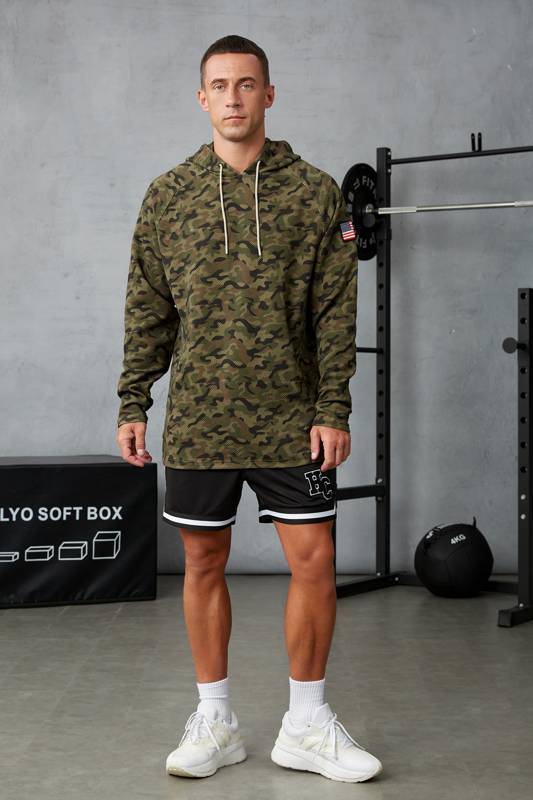
Oversized gym T-shirts and pump covers are among the most requested styles in men bodybuilding and gym wear. Getting the construction right from the first sample depends on informed decisions about fabric weight, shoulder drop, neckline stability, sleeve shape, body length and logo method compatibility.
HUCAI activewear helps bodybuilding and gym wear brands develop oversized training tops with OEM/ODM support, sample coordination and fabric and trim customization.
Quick Answer
Oversized gym T-shirt and pump cover development requires coordinated decisions on GSM (150-240 depending on product role), shoulder drop width, neckline construction and collar rib stability, sleeve shape and body length proportion, plus logo or graphic method compatibility with fabric stretch.
How Brands Should Define an Oversized Gym T-Shirt Development Direction
Before confirming GSM, shoulder drop or neckline construction, brands should clarify five development dimensions. These decisions determine whether the final garment matches the intended market position and customer expectation.
| Development Dimension | What to Define | How It Affects the Sample |
|---|---|---|
| Product Role | Is this a performance training tee, a bodybuilding pump cover, or a gym-to-street lifestyle top? | Product role determines GSM range, fit direction, fabric selection, construction approach and price target. |
| Target Fit | What is the desired silhouette? Full oversized, relaxed boxy, or structured pump cover? | Target fit drives shoulder drop amount, body length ratio, sleeve shape and grading logic across sizes. |
| Fabric Direction | Cotton for heavyweight structure? Polyester-spandex for performance stretch? Cotton-blend for balanced handfeel? | Fabric direction interacts with every other dimension - fit, drop shoulder behavior, neckline stability and logo method suitability. |
| Graphic Direction | Small heat transfer logo? Large screen print? Embroidery or applique? | Graphic direction affects fabric weight selection, placement review, wash behavior expectations and bulk consistency planning. |
| Usage Scenario | Gym training only? Gym-to-street daily wear? Bodybuilding competition or posing? | Usage scenario determines breathability requirements, movement range needs, fabric recovery expectations and durability targets. |
These five dimensions should be discussed with the manufacturer before the sample brief is finalized. A clear development direction reduces the risk of first-sample rejection and helps both the brand and the factory align on expectations from the start.
What Makes a Gym Pump Cover Different from a Standard Oversized T-Shirt?
In bodybuilding gym wear, a pump cover serves a distinct product role that separates it from a standard oversized gym T-shirt. Understanding this difference helps brands make more precise development decisions.
| Dimension | Standard Oversized Gym T-Shirt | Gym Pump Cover |
|---|---|---|
| Bodybuilding Culture Fit | General training and gym-to-street wear | Specifically designed to emphasize upper body muscle definition during and after training |
| Training Scenario | Multi-sport: running, weights, HIIT, cardio | Bodybuilding-focused: posing, pump training, upper body days, competition preparation |
| Silhouette Requirement | Relaxed and casual; moderate drop shoulder | Aggressive drop shoulder with wider body opening; neckline often wider to show upper chest |
| Fabric Choice | Lightweight to midweight (150-200 GSM) for movement and breathability | Typically heavyweight (200-240 GSM) or structured cotton for a more substantial drape and print surface |
| Branding Approach | Moderate: chest logo, small sleeve branding | Bold: large front graphics, back prints, applique patches, rubber badges - the garment itself is a statement |
| Fit Direction | Relaxed but balanced across body and sleeve | Deliberately oversized body with extended or dropped sleeves to create a V-taper illusion |
For brands developing a pump cover, the development brief should emphasize the silhouette intention, fabric weight range and graphic placement expectations more specifically than for a general oversized T-shirt. The sample review should focus on how the garment sits on the upper body during and after training.
1. Fabric Weight (GSM): How to Choose the Right Weight for Your Product Role
GSM choice depends on the product role, fabric composition, knit structure and intended drape. A lightweight knit in polyester-spandex can support a draped, flowy silhouette suitable for performance layering. A midweight cotton-jersey or poly-cotton knit offers more structure for training tees with moderate print surface stability. A heavyweight knit in structured cotton or cotton-blend provides a substantial drape that holds its shape for standalone tops and bold graphics.
Brands should confirm GSM together with the target product role, fabric composition, knit structure, drape requirement, branding method and shrinkage behavior. The same GSM can behave differently across different knit structures and fiber compositions - a 200 GSM cotton-jersey drapes differently from a 200 GSM polyester-spandex performance knit. GSM and fabric composition should be reviewed together, not independently.
The fabric choice also interacts with the drop shoulder proportion. A lightweight knit draped over a dropped shoulder creates a different silhouette from a heavyweight knit at the same shoulder drop measurement. Fabric selection and shoulder drop should be confirmed together during the pattern development stage.
2. Drop Shoulder and Silhouette
A drop shoulder shifts the shoulder seam below the natural shoulder line, creating a wider, relaxed silhouette. Drop shoulder width affects sleeve length, chest volume, body shape and how the T-shirt fits across sizes. The drop amount should be reviewed on body, not only on a flat lay. A drop that looks good on size M may look too wide or too narrow on other sizes if grading is not adjusted.
3. Neckline and Collar Rib Stability
The neckline is a common revision point in oversized gym T-shirts. A collar rib that is too tight can cause the neckline to gap or distort, especially on stretchy performance fabrics. A rib that is too loose can cause the neckline to stretch out during wear. Collar rib width, stretch direction and sewing tension should be reviewed together with fabric weight and body length to prevent neckline distortion after washing.
Manufacturer Insight
HUCAI activewear reviews neckline stability together with fabric GSM, collar rib width, stretch direction and sewing tension during the first sample fitting. A neckline that looks acceptable on a flat sample may distort after washing or during wear if the fabric shrinkage and rib recovery are not aligned. This is especially important for oversized gym T-shirts where the wider body creates different tension distribution across the neckline.
4. Sleeve Shape: Muscle Fit, Dropped and Extended
Sleeve shape determines the overall look of an oversized gym T-shirt. A muscle fit sleeve follows the arm more closely and is common for performance tees. A dropped sleeve extends below the shoulder for a relaxed look. An extended sleeve creates a longer sleeve line for a streetwear-inspired silhouette. Each sleeve type uses a different armhole depth, sleeve width and hem finish, which should be confirmed during pattern review.
Key Measurement Points for Oversized Gym T-Shirts
Oversized gym T-shirts require different measurement points and tolerances than standard T-shirts. The following measurements should be confirmed during pattern review and checked during sample fitting.
| Measurement Point | Why It Matters | Development Risk |
|---|---|---|
| Shoulder Drop | Determines where the sleeve attaches below the natural shoulder. Controls the entire oversized silhouette. | A drop that looks correct on a flat pattern may feel restrictive or unbalanced on body. Must be reviewed across size range. |
| Chest Width (1 below armhole) | Controls body volume and how the garment drapes across the chest. | If chest width is too narrow relative to shoulder drop, the T-shirt pulls at the armhole. If too wide, the silhouette loses structure. |
| Body Length (from HPS) | Determines how the T-shirt sits on the torso relative to waist and hip. | Oversized body length must be proportional to width. A wide body with insufficient length creates an unbalanced cropped look. |
| Sleeve Length (from shoulder drop) | Controls how far the sleeve extends past the shoulder drop point. | Measured from the dropped seam, not the natural shoulder. Incorrect baseline causes sleeve proportions that look off. |
| Sleeve Opening | Determines the hem circumference at the end of the sleeve. | A sleeve opening that is too tight relative to bicep circumference restricts movement. Too loose causes the sleeve to look floppy. |
| Armhole Depth (curved) | Controls how much the armhole drops below the shoulder point. Affects lift and reach. | A deep armhole on an oversized fit can create excessive side body exposure during overhead movement. |
| Neck Opening (width + drop) | Determines how the neckline sits on the body and whether it gaps or stays flat. | Oversized shoulder width creates different tension across the neckline. A neck opening that works on standard fit may distort on an oversized body. |
These measurement points should be included in the tech pack or sample brief. If the brand does not have a complete measurement specification, the manufacturer can work from reference garments and development samples during the ODM process.
5. Logo and Graphic Placement on Oversized Fits
Logo placement on oversized gym T-shirts requires different review from standard T-shirts because the wider body, drop shoulder and relaxed fit change how graphics sit on the body. A chest graphic that looks centered on a flat sample may shift to one side or sit too low on body due to the relaxed silhouette. Heat transfer, screen print, embroidery and applique each interact differently with oversized fit, fabric stretch and wash behavior. For a broader overview of custom branding options, see men sportswear craftsmanship page.
Manufacturer Insight
HUCAI activewear reviews logo placement on oversized gym T-shirts together with fabric GSM, shoulder drop, body length and sample fitting. A print that looks good on a flat sample may shift during body movement if the fabric stretch and graphic placement are not reviewed together.
Common Development Failures and How Manufacturers Solve Them
The following development failures appear frequently in oversized gym T-shirt projects. Each has identifiable causes and practical solutions that manufacturers apply during sample and bulk production stages.
| Development Failure | Root Cause | Manufacturing Solution |
|---|---|---|
| Neckline distortion after washing | Collar rib and shell fabric have different shrinkage rates. The rib recovers differently from the body fabric after washing, causing the neckline to ripple, wave or gap. | Pre-shrink both fabrics before cutting. Adjust rib width and stretch direction to match fabric behavior. Test wash during sample stage before bulk production approval. |
| Incorrect grading across sizes | Standard T-shirt grade rules applied to an oversized fit. Shoulder drop, body length and sleeve width increments not adjusted for the relaxed silhouette. | Use oversized-specific grade rules where shoulder drop increment is proportional to chest increment. Review fit on each size before bulk marker making. |
| Fabric and pattern mismatch | Pattern developed for one fabric weight but produced in another. Lightweight fabric behaves differently from heavyweight fabric at the same drop shoulder and body length measurements. | Confirm fabric GSM and knit structure before pattern grading. If fabric changes during development, re-review the pattern fit before cutting the next sample. |
| Logo placement shifting on body | Flat artwork placement approved on a garment that looks different when worn. The relaxed body width and dropped shoulder change how graphics sit on the body. | Review logo placement on body during sample fitting. Create a placement chart that accounts for body position across sizes. Approve placement on a physical sample, not a digital mockup. |
| Sleeve hem roll or curl | Sleeve hem finish not compatible with fabric weight and stretch direction. Lightweight knits curl more easily than heavyweight structures. | Select hem finish (coverstitch, hem tape, bonded hem) according to fabric behavior. Test hem flatness after washing before bulk approval. |
For established brands with confirmed specifications, the OEM manufacturing path supports direct application of these solutions within the existing quality framework. For growing brands that need development support before finalizing specifications, the ODM development path allows the manufacturer to review fabric, fit and construction during sample stages before moving to bulk production.
Oversized Gym T-Shirt Development Process
The following development sequence reflects a standard manufacturer workflow for oversized gym T-shirts. Each stage requires specific inputs from the brand and specific controls from the manufacturer.
| Stage | What the Brand Needs to Confirm | What the Manufacturer Controls |
|---|---|---|
| Reference Review | Provide reference images, target GSM direction, fit preference and brand positioning | Review feasibility of silhouette, fabric availability and construction approach |
| Fabric Selection | Confirm composition direction (cotton, poly-spandex, blend), weight range and color direction | Source fabric options, submit swatches for GSM, handfeel, stretch and shrinkage review |
| Pattern Development | Review initial pattern measurements: shoulder drop, chest width, body length, sleeve dimensions | Develop pattern based on reference + confirmed specs; adjust for oversized grade rules |
| First Sample | Review fit on body; check silhouette, proportion, movement comfort and neckline stability | Cut and sew first sample using selected fabric; submit for fit review and comments |
| Fit Review | Test movement range: squat, overhead reach, lateral stretch; check neckline and sleeve behavior | Review fit comments and provide pattern adjustment options if needed |
| Wash Test | Review shrinkage, neckline distortion, hem curl and print behavior after first wash | Conduct wash test per brand standard; measure before and after; report results |
| Size Grading | Confirm grade rules maintain proportional oversized look across full size range | Develop grade rules for oversized fit; submit graded measurement spec for approval |
| PP Sample Approval | Approve final sample with confirmed fabric, fit, trims, labels, placement and packaging | Produce pre-production sample using bulk fabric and bulk production methods |
| Bulk Production | Confirm approved PP sample as bulk standard; review QC checkpoints and delivery timeline | Coordinate bulk cutting, sewing, finishing, inspection and shipment per approved standard |
This sequence applies to both OEM and ODM paths. For OEM, the brand provides more specifications at the Reference Review stage. For ODM, the manufacturer provides more development support during Fabric Selection and Pattern Development. The stage progression remains the same regardless of the development path.
OEM vs ODM Development Approach for Oversized Gym T-Shirts
The right development path depends on the brand current situation. The following table helps brands identify which approach matches their project readiness.
| Customer Situation | Recommended Path | Manufacturer Support |
|---|---|---|
| Established Brands Have complete tech packs, confirmed measurements and ready material specifications | OEM Manufacturing | Review tech pack, produce first sample against existing specs, support sample-to-bulk consistency with quality checkpoints and production follow-up |
| Growing Brands Have reference images, competitor samples or product direction but no complete tech pack | ODM Development | Review reference direction, recommend fabric and fit options, develop pattern, coordinate first sample and adjust through fit review stages |
| Startup Brands Need to validate product direction before committing to a full collection | ODM + Sample Development | Discuss target market and product role, suggest GSM and fit direction, develop one sample style first, validate before expanding to additional SKUs |
| Existing Brands Expanding Collection Adding oversized T-shirts or pump covers to an existing activewear line | OEM/Collection Development | Review existing brand fit standards, adapt oversized specifications to match current collection identity, coordinate sample development within existing production framework |
For a complete overview of the OEM manufacturing process for men activewear, brands can review the OEM men activewear manufacturing page. For brands that need development support before finalizing specifications, the ODM men activewear development page provides more detail on how reference images and product direction can be translated into sample-ready specifications.
Sample Review Checklist for Oversized Gym T-Shirts
| Review Point | What to Check | Why It Matters |
|---|---|---|
| Fabric GSM | Confirm weight matches product role and print method | Wrong GSM affects drape, shoulder drop behavior and logo method suitability |
| Drop shoulder width | Check fit on body across size range | Same drop looks different on S vs XL; grading must be reviewed |
| Neckline stability | Review after wash for distortion or gap | Neckline distortion is the most common revision point in oversized T-shirts |
| Sleeve shape | Confirm armhole depth, sleeve length and hem finish | Sleeve that fits flat may restrict arm movement during training |
| Body length proportion | Check ratio with shoulder drop and body width | Oversized silhouette must maintain length-to-width ratio across sizes |
| Logo placement | Review on body, not just flat lay; check size range | Relaxed fit shifts graphic position; must be tested on actual garment |
| Wash test result | Check shrinkage, neckline distortion, hem curl after wash | Wash behavior affects fit consistency and customer satisfaction |
| Fabric handfeel | Review softness, stretch, recovery and moisture feel | Fabric feel affects how the oversized garment drapes and performs |
Developing Oversized Gym T-Shirts?
HUCAI activewear supports brands with OEM/ODM development for oversized gym T-shirts, pump covers and custom men training tops. Share your target GSM, fit direction and reference styles.
Start Your Project View T-Shirts CategoryFAQ
What GSM is best for oversized gym T-shirts?
150-180 GSM for lightweight performance layering, 180-200 for midweight training, 200-240 for heavyweight pump covers. GSM should match the product role and print method.
How does drop shoulder affect fit?
Drop shoulder creates a wider silhouette by shifting the shoulder seam below the natural line. It affects sleeve length, chest width and size grading across sizes.
Can heat transfer work on oversized gym T-shirts?
Yes, but fabric weight, stretch and texture must be reviewed. A lightweight performance tee and a heavyweight cotton pump cover need different logo method reviews.
Can manufacturers develop oversized gym T-shirts without a complete tech pack?
Yes. Many brands start oversized T-shirt development without a full tech pack. Through ODM development, the manufacturer can review reference images, target fabric direction, preferred fit and graphic placement ideas, then develop the pattern, select the fabric and coordinate the first sample. A complete tech pack helps for faster OEM production but is not required for initial development.
How should oversized gym T-shirts be graded across sizes?
Oversized T-shirts should use adjusted grade rules. Standard T-shirt grading adds consistent increments per size, which can cause the oversized proportion to look wrong on smaller or larger sizes. For oversized fits, the shoulder drop increment should be proportional to the chest increment, and the body length should be adjusted to maintain the width-to-length ratio across the size range.
What should brands check before bulk approval for oversized gym T-shirts?
Before bulk approval, brands should confirm: approved sample measurements match the spec sheet, neckline stability after wash test, drop shoulder proportion across the size range, logo placement on body for two sizes minimum, shrinkage within target tolerance, fabric handfeel and color standard approved, and pre-production sample reviewed with final trims and labels.
How does shrinkage affect oversized gym T-shirt development?
Shrinkage affects oversized T-shirts more noticeably than standard fits because the relaxed silhouette depends on precise length-to-width ratios. If the body length shrinks more than expected, the dropped shoulder may sit higher than designed, and the proportional balance of the oversized fit can shift. Fabric shrinkage should be tested during the sample stage and accounted for in the marker making before bulk production.
What is the typical sample timeline for oversized gym T-shirt development?
The timeline depends on fabric availability, pattern complexity and logo method. A first sample after brief confirmation typically takes 2-3 weeks, followed by fit review and possible revision. If fabric needs to be sourced or custom-developed, the timeline extends accordingly. Once the sample is approved, bulk production planning follows.