What Affects Men's Hoodie Development: Hood Structure, Kangaroo Pocket and Drawcord Details
- Share
- Issue Time
- Aug 26,2026
Summary
Learn what affects men's hoodie development for growing brands: hood structure and volume, kangaroo pocket construction, drawcord hardware and channel design, fabric weight selection, and cuff-hem finishing. A practical B2B development guide from HUCAI activewear.
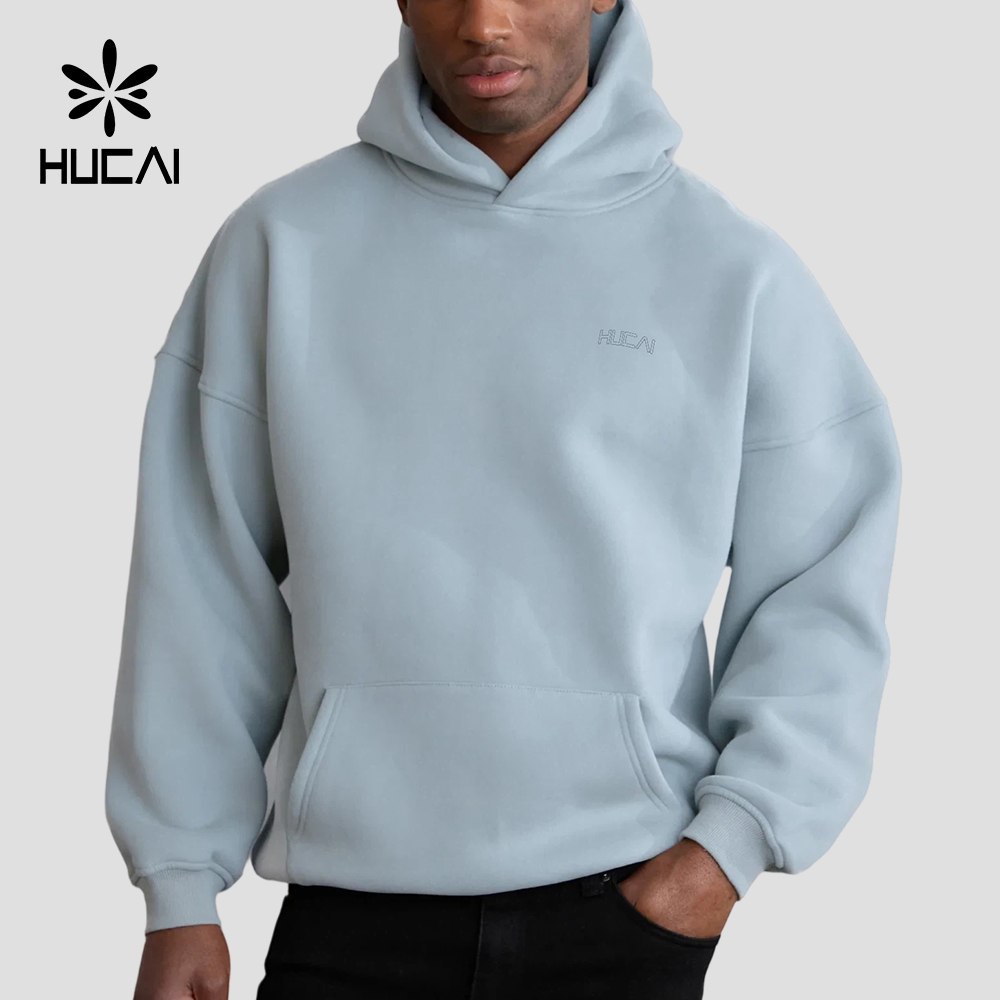
Hoodies have become a year-round staple in men's activewear collections, not just a cold-weather add-on. For growing brands working with a men's activewear manufacturer, hoodie development involves more than picking a fleece weight. Hood structure and volume, kangaroo pocket construction, drawcord channel design, cuff and hem finishing, and fabric handfeel all determine whether the piece works for training, gym-to-street layering, or recovery wear. HUCAI activewear helps brands navigate these details during sample development so that the final hoodie matches both functional goals and brand positioning.
Quick Answer
A well-developed men's performance hoodie depends on five key areas: hood structure that maintains shape without collapsing or flopping, kangaroo pocket construction that holds up to repeated use, drawcord hardware and channel design that function smoothly, fabric weight and composition that match the intended season and use case, and cuff and hem finishing that retain elasticity through washing. For brands, these details should be locked during sample review before bulk fabric is committed.
Table of Contents
- Who This Article Is For
- Why This Matters for Your Collection
- 1. Hood Structure: Volume, Shape and Stability
- 2. Kangaroo Pocket: Construction, Durability and Function
- 3. Drawcord Design: Channel, Tip and Exit Point Details
- 4. Fabric Weight and Composition for Different Hoodie Roles
- 5. Cuff, Hem and Rib Finishing That Lasts
- Decision Check: Is Your Hoodie Spec Ready?
- Manufacturer Insight: Common Development Mistakes
- FAQ
- Final Takeaway
- Related Paths
Who This Article Is For
- Growing brands adding hoodies to their men's activewear collection
- Private label buyers developing gym-to-street or recovery-focused lines
- Product teams evaluating manufacturer capabilities for fleece and knit construction
- Designers planning hoodie families that span training, layering, and casual wear
Why This Matters for Your Collection
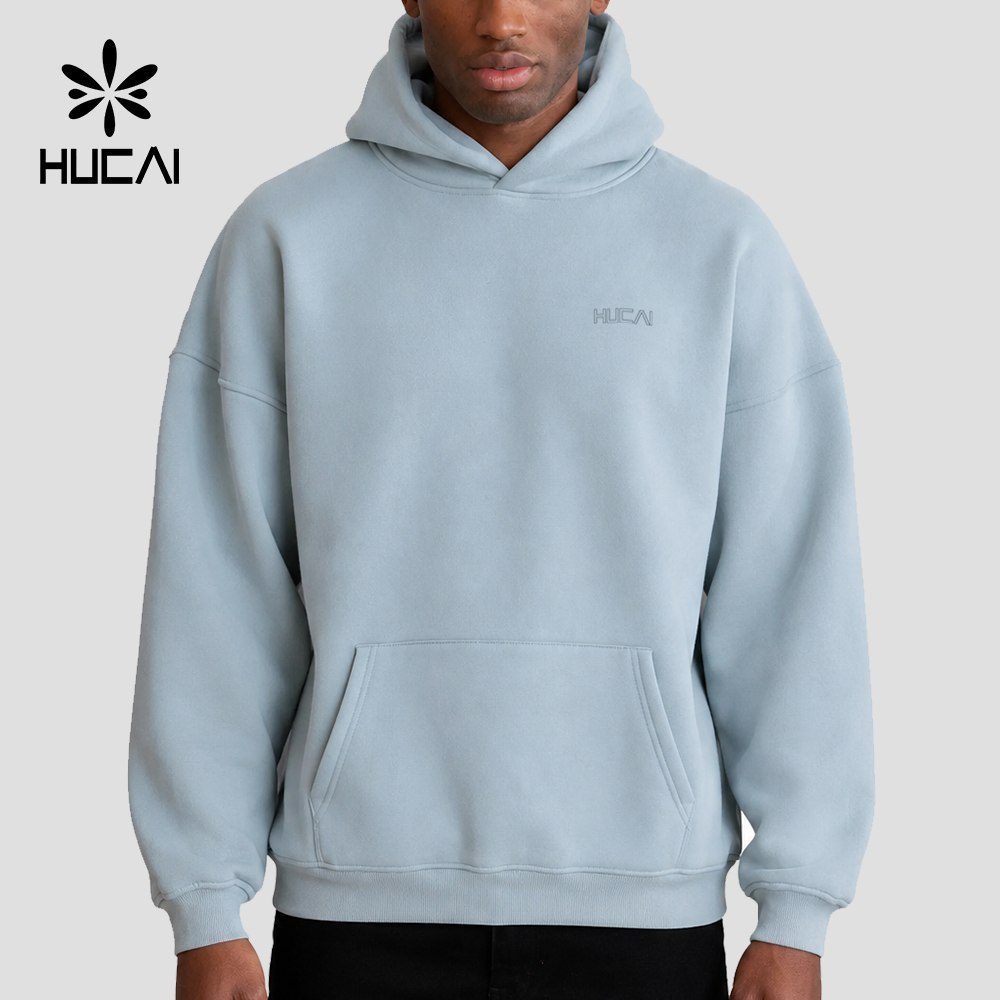
A hoodie is often the highest-margin, most frequently worn piece in a men's activewear collection. When developed well, it becomes a signature item that customers return for in multiple colors. When developed poorly, it suffers from hood collapse, pocket sag, drawcord fraying, and cuff stretch-out that undermines brand perception before the second wash cycle. HUCAI activewear supports hoodie development through fabric library access, pattern and sample review, construction feedback, and quality checkpoints that protect these details from sample through bulk.
1. Hood Structure: Volume, Shape and Stability
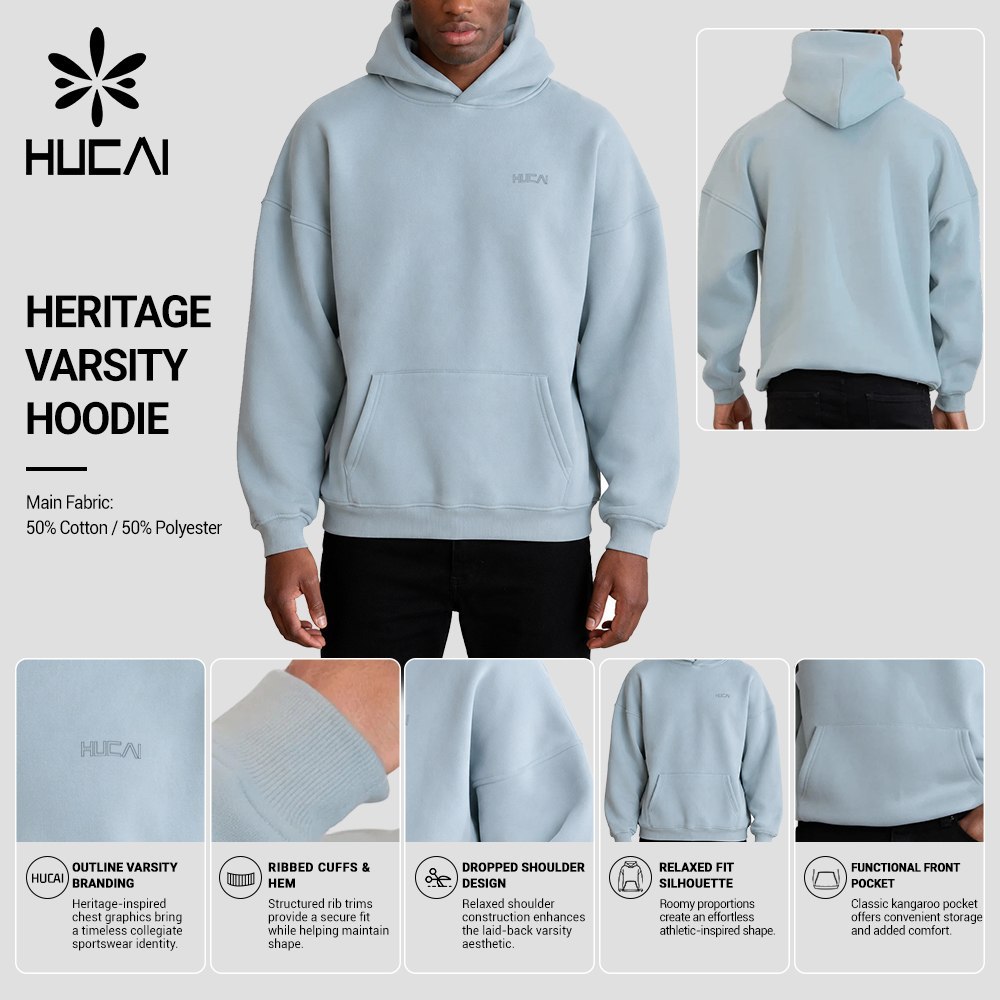
The hood is the most visible and most technically demanding part of a hoodie. It needs enough volume to fit over a cap or beanie, enough structure to hold its shape when not in use, and enough drape to avoid looking like a rigid shell.
Key hood development decisions:
- Hood volume: A hood that is too shallow sits awkwardly on the head and pulls the neckline back. A hood that is too deep flops forward and blocks peripheral vision. The right volume depends on the brand's target headwear (bare head, cap, or beanie) and should be tested during sample fitting.
- Face opening shape: A rounded face opening works for casual and streetwear positioning. A more structured opening with a slight brim or reinforced edge performs better for outdoor and training use. The opening width also affects how the hood sits on the shoulders when down.
- Center seam vs. panel construction: A center seam down the back of the hood adds structure and helps the hood hold its shape. Panel construction (three-panel hoods) offers more shaping control and reduces bulk at the crown but adds pattern complexity and cost.
- Lining choice: Unlined hoods are lighter and more packable but rely entirely on the shell fabric for shape. Lined hoods (with matching fleece or a lighter jersey) add structure, comfort, and a cleaner interior finish.
HUCAI activewear reviews hood shape and volume during first-sample fitting, checking fit with and without headwear so that brands can confirm direction before bulk cutting.
2. Kangaroo Pocket: Construction, Durability and Function
The kangaroo pocket is a defining feature of most men's hoodies. It also takes the most abuse. Hands go in and out repeatedly. Phones, keys, and gym cards add weight and stress. Poor construction leads to sagging, tearing at the corners, and seam failure.
Pocket construction details that matter:
- Pocket bag depth and width: A pocket that is too shallow cannot hold a phone securely during movement. A pocket that is too deep makes items hard to reach. Standard practice is to design the pocket bag so that a standard smartphone sits securely without shifting during training.
- Corner reinforcement: The bottom corners of a kangaroo pocket are stress concentration points. Bar-tacking or reinforced stitching at these corners prevents tearing. Some brands add small triangular reinforcement panels for extra durability.
- Entry curve and hand comfort: The pocket entry should be wide enough for easy hand insertion but not so wide that items fall out. A slight curve at the entry reduces abrasion on the back of the hands during repeated use.
- Interior finish: The back of the pocket bag is visible from inside the hoodie when the garment is hung or laid flat. A clean overlock or coverstitch finish looks more professional than raw edges.
During sample development, we test pocket construction by loading the pocket with typical contents and checking stress points after simulated movement. This reveals construction weaknesses that are not visible in a static sample.
3. Drawcord Design: Channel, Tip and Exit Point Details
Drawcords are small details with outsized impact on user experience. A cord that is too thin cuts into the hands. A tip that falls off in the first wash looks cheap. An exit point that gapes or frays ruins the clean front profile.
Drawcord specification for men's hoodies:
- Cord material and diameter: Flat cotton cords offer a classic look and soft handfeel. Round polyester cords are more durable and dry faster but can feel technical. Diameter typically ranges from 5mm to 8mm. Thicker cords are easier to grip but add bulk at the channel.
- Channel construction: The channel must be wide enough for the cord to move freely but not so wide that the cord bunches or twists. A channel that is too narrow causes the cord to jam. Channel stitching needs to be straight and consistent so the cord does not catch.
- Exit point reinforcement: The holes where the cord exits the channel are high-stress points. Metal eyelets, reinforced stitch boxes, or bar-tacked openings prevent the fabric from tearing. Unreinforced exit points will fray and enlarge over time.
- Tip type: Metal tips (aglets) are durable but can rust if not plated properly. Plastic tips are lighter and corrosion-proof but can crack in cold conditions. Dip-coated tips offer a middle ground but add cost. Tip attachment method matters: glued tips fall off. Crimped or stitched tips last longer.
HUCAI activewear sources drawcord hardware from verified trim suppliers and confirms tip attachment strength during pre-production review so that small details do not become quality complaints in bulk.
4. Fabric Weight and Composition for Different Hoodie Roles
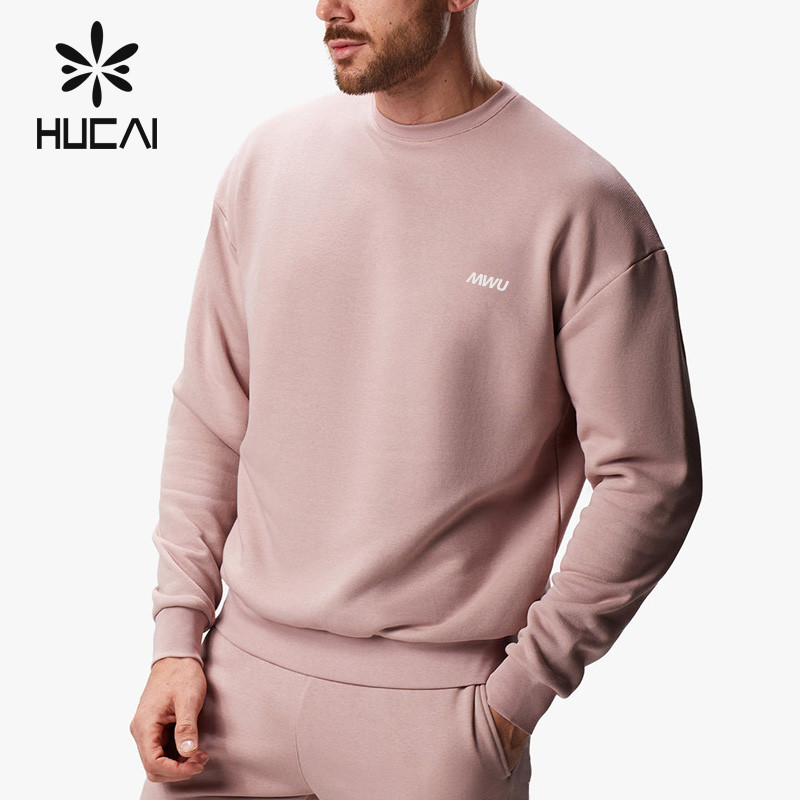
Not all hoodies serve the same purpose. A gym-to-street hoodie needs a different fabric than a recovery-focused oversized piece or a lightweight training layer. Fabric selection should match the product role, not just the seasonal temperature.
Common hoodie fabric profiles:
- Lightweight training hoodie (240-280 GSM): Used for warm-ups, outdoor runs, and gym sessions where breathability matters. Usually French terry or lightweight fleece-back. These hoodies layer easily and do not overheat during activity.
- Mid-weight everyday hoodie (280-340 GSM): The most versatile weight for gym-to-street brands. Offers enough substance for standalone wear without feeling heavy. Cotton-polyester blends are common for softness and shape retention.
- Heavyweight oversized hoodie (340-420 GSM): Popular for streetwear and bodybuilding markets. The heavier weight creates the structured drape that oversized fits require. These hoodies prioritize presence and warmth over training mobility.
- Performance fleece with stretch (with spandex blend): Adds mobility for training-focused hoodies. The stretch allows overhead movement without the hem riding up. Recovery (how well the fabric returns to shape after stretching) should be confirmed during sample review.
Fabric handfeel, shrinkage potential, and pilling tendency should all be tested during sample development. HUCAI activewear provides fabric swatch cards and wash-test feedback so brands understand how the fabric behaves before committing to bulk.
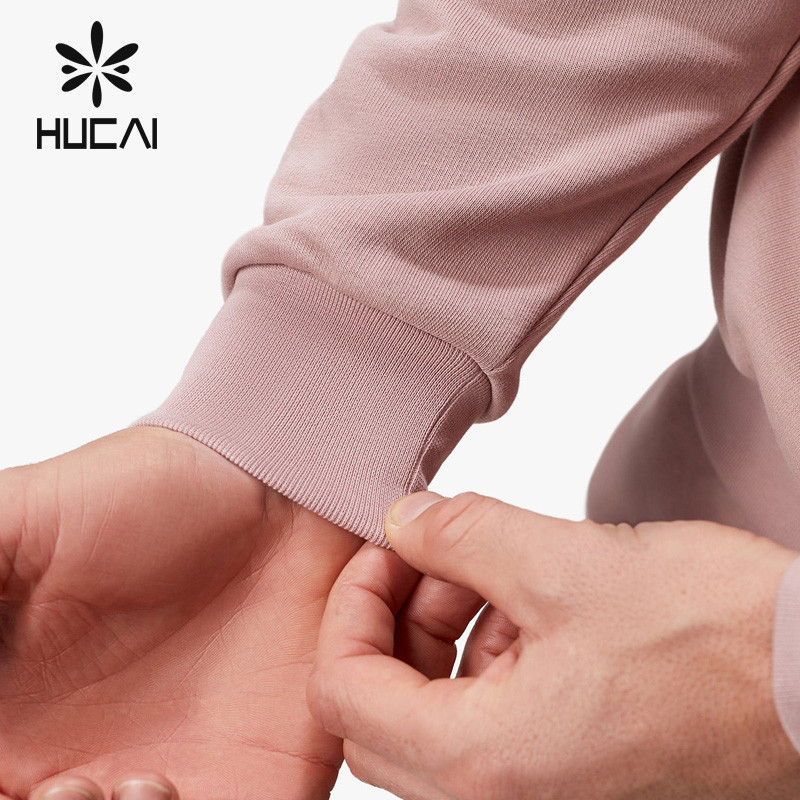
5. Cuff, Hem and Rib Finishing That Lasts
Cuffs and hems are the first places customers notice quality issues. A cuff that stretches out after three washes. A hem that rolls or twists. These details signal construction quality faster than any logo or label.
Cuff and hem construction priorities:
- Rib composition and recovery: Cuffs and hem bands are typically 1x1 or 2x2 rib knit. The rib needs enough elastane or spandex content to recover after stretching. A common specification is 95% cotton, 5% elastane for rib, but this varies by fabric weight and desired compression.
- Rib attachment: The rib should be attached with a coverstitch or twin-needle stitch that stretches with the rib without popping. A standard straight stitch will break when the cuff is stretched during wear.
- Hem width and proportion: A hem band that is too wide relative to the body looks unbalanced. A hem band that is too narrow does not provide enough structure to hold the body shape. Proportion should be confirmed during sample review on a real body, not just a flat table.
- Side seam split or straight hem: Some hoodies include a small side seam split for mobility and layering ease. This detail needs clean overlock finishing and reinforcement at the split point to prevent tearing.
During sample development, we stretch-test cuffs and hems repeatedly to check stitch integrity and rib recovery. If a cuff loses shape after simulated wear cycles, we adjust the rib spec or attachment method before bulk.
Decision Check: Is Your Hoodie Spec Ready?
If two or more items are not yet confirmed, sample development is the right stage to lock these details before bulk commitment.
Manufacturer Insight: Common Development Mistakes
In many early-stage men's activewear projects, hoodies are treated as a simple fleece cut-and-sew item. This assumption leads to predictable bulk problems.
The most common mistakes we see:
- Hood volume guessed, not tested: A hood drawn on a tech pack without fitting over real headwear often ends up too shallow or too deep. The first sample round is the cheapest place to fix this.
- Pocket construction left to default: Manufacturers may default to the simplest pocket construction unless the brand specifies corner reinforcement, entry curve, and bag depth. These defaults often fail under real use.
- Drawcord tips chosen for looks, not durability: Glued metal tips look premium but fall off. Brands should confirm tip attachment method and test wash durability during sample review.
- Fabric weight chosen from a swatch photo: A fabric that looks right in a photo may feel too heavy for training or too light for streetwear. Handfeel and drape should be confirmed with physical swatches.
- Cuff rib copied from a previous style without testing: Rib from a tee or a different fleece weight may not recover properly on a heavier hoodie body. Rib should be matched to the body fabric weight and tested for recovery.
HUCAI activewear addresses these risks through structured sample review, pre-production checkpoints, and AQL 2.5 quality inspection that focuses on the construction details buyers notice first.
FAQ
What is the MOQ for custom men's hoodie development?
MOQ depends on fabric type, color count, size range, and customization level. For many growing brands, MOQ starts from 100 pieces per style. Hoodies that share fleece fabric with joggers or tracksuits in the same collection can sometimes consolidate fabric orders.
Can you develop hoodie samples if we only have reference images?
Yes. We work with reference images, target price points, and fit descriptions to develop first-round samples. For hoodies, we focus the first sample on hood shape, pocket construction, fabric handfeel, and cuff recovery so you can evaluate direction before detailed revisions.
Do we need a full tech pack before starting OEM development?
A complete tech pack speeds up sampling, but it is not required to start. For ODM support, we can help define measurements, hood shape, pocket details, fabric direction, and trim specifications based on your target aesthetic and use case.
How do you ensure sample construction matches bulk production?
Approved samples become the production standard. Pattern files, measurement sheets, construction notes, and fabric approvals are transferred to the bulk production line. Pre-production review confirms that all specifications match the approved sample before cutting begins. MES tracking follows the order through production stages.
What fabric weight works best for gym-to-street hoodies?
For gym-to-street positioning, 280-340 GSM cotton-polyester fleece or French terry is the most versatile range. It provides enough substance for standalone wear without overheating during light training. Brands targeting pure performance may go lighter; streetwear-focused brands may go heavier.
How should brands choose between French terry and fleece-back for hoodies?
French terry has a smooth face and looped back, making it lighter and more breathable. Fleece-back has a brushed interior that adds warmth and softness. French terry works for training and layering. Fleece-back works for recovery, casual wear, and colder climates.
What customization options do you support for hoodies?
We support fabric customization, color matching, logo placement (embroidery, heat transfer, woven labels, screen print), drawcord and trim selection, pocket configuration, hood lining options, custom care labels, and hangtag design. Customization scope is confirmed during sample development.
How long does sample development usually take for a men's hoodie?
Sample timing depends on fabric sourcing, pattern work, trim availability, revision rounds, and fit adjustments. A typical first sample round for a focused hoodie style takes several weeks. Subsequent revision rounds are usually shorter once fabric and construction direction are confirmed.

Final Takeaway
A men's hoodie is not a simple fleece cut-and-sew product. The hood structure, pocket construction, drawcord details, fabric choice, and cuff finishing all determine whether the piece becomes a collection favorite or a quality complaint. For growing brands, getting these details right during sample development prevents costly corrections in bulk and builds long-term customer trust.
HUCAI activewear supports hoodie development through fabric library access, pattern and sample review, construction feedback, and quality checkpoints that protect the technical integrity these pieces require.