What Makes Men's Athletic Shorts Durable: Stitch Type, Stress Point Reinforcement and Wash Testing
- Share
- Issue Time
- Sep 3,2026
Summary
A B2B guide on what makes men's athletic shorts durable. Covers stitch type, stress point reinforcement, fabric selection, and wash testing for brands preparing bulk production.
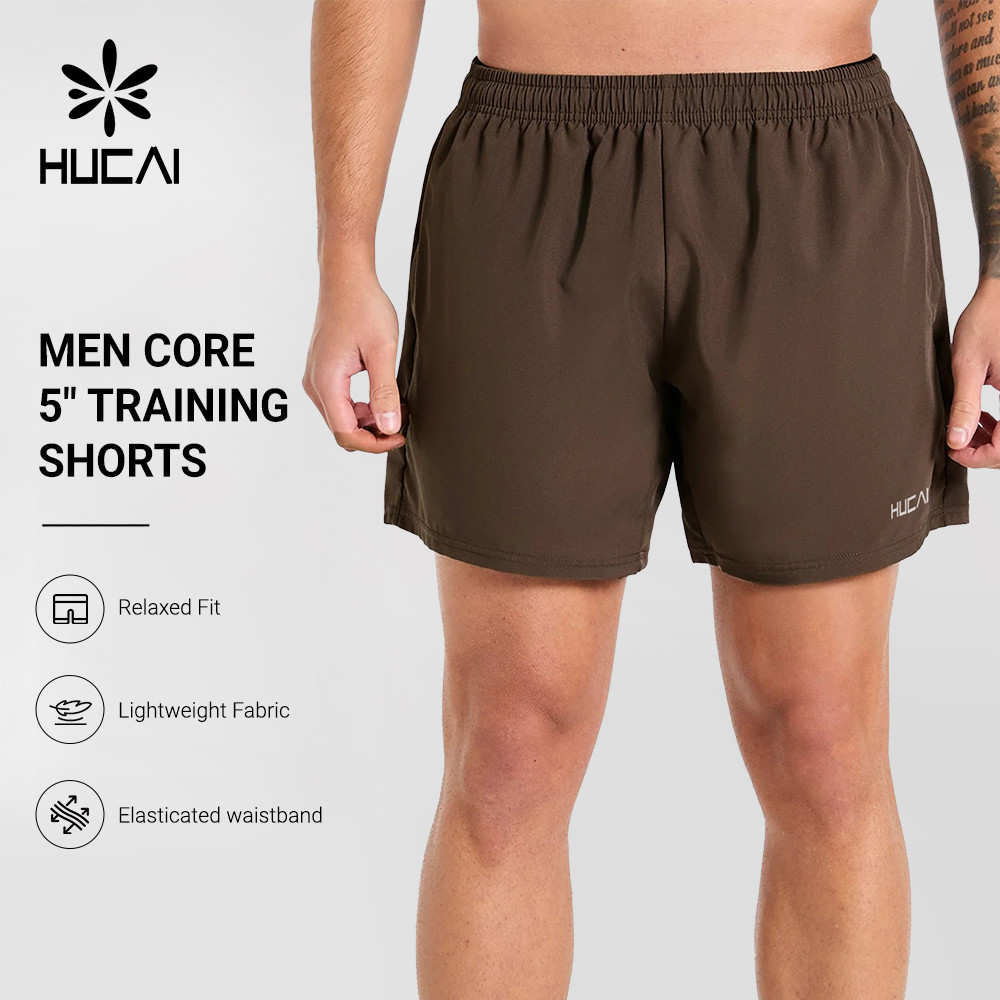
Men's athletic shorts take more abuse than almost any other piece in a training wardrobe. Squats, sprints, repeated washing, and contact with gym equipment all place stress on seams, fabric, and hardware. For brands ordering custom men's gym wear in bulk, durability problems do not surface in the sample room. They show up after twenty washes, three months of retail wear, or the first social media complaint about split seams.
This guide explains what makes men's athletic shorts durable from a manufacturing perspective. HUCAI activewear examines stitch type, stress point reinforcement, fabric selection, and wash testing so brands can confirm construction standards before bulk production rather than react to returns after launch.
Quick Answer
Durable men's athletic shorts depend on four construction pillars: stitch type matched to fabric stretch, reinforcement at stress points like crotch and pocket corners, fabric with adequate tensile strength and recovery, and pre-bulk wash testing that validates color fastness and seam integrity. Brands should confirm each pillar with their manufacturer during sample development.
Table of Contents
Who This Article Is For
This article is written for established men's activewear brands, private label buyers, and product teams who have moved past design approval and are preparing for bulk production. It is especially relevant if your line includes training shorts, running shorts, or gym shorts where seam failure directly affects brand reputation.
What You Will Gain
- Understanding of which stitch types hold up under stretch and repeated strain
- Clear guidance on where stress points occur and how to reinforce them
- Fabric property checkpoints that affect long-term durability
- Wash testing standards that protect against post-launch surprises
- A practical framework for durability discussions with your manufacturer
Stitch Type and Seam Construction
Not all seams perform equally under the forces created by training movement. A standard lockstitch works for woven fabrics but can pop under the lateral stretch of a deep squat or lunge. Four-thread overlock seams distribute tension across multiple threads and allow the seam to stretch with the fabric rather than fighting against it.
Coverstitch hems are common on athletic shorts because they lay flat and stretch without puckering. However, coverstitch machines require proper thread tension and needle alignment. A poorly adjusted coverstitch creates skipped stitches that become failure lines after washing.
Brands should confirm stitch specifications with their manufacturer during sample review. HUCAI activewear checks seam stretch recovery on sample garments before approving construction details for bulk. Switching stitch type after sample approval usually requires new pattern work and timing adjustments.
Stress Point Reinforcement
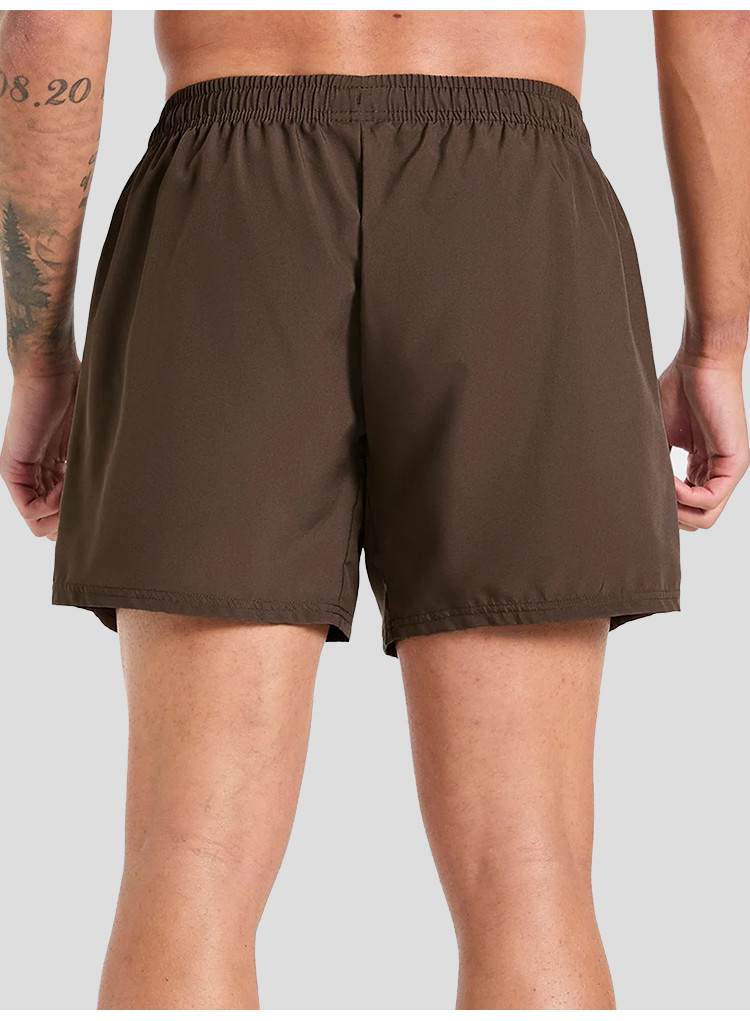
Stress points on men's athletic shorts concentrate in predictable areas: the crotch seam, pocket corners, waistband attachment, and hemline. Each area carries different loads and needs a different reinforcement strategy.
The crotch seam experiences the highest stretch during leg movement. A bartack or reinforced box stitch at the crotch intersection prevents seam separation. Some manufacturers add a gusset panel to distribute stress across a wider area, which also improves range of motion.
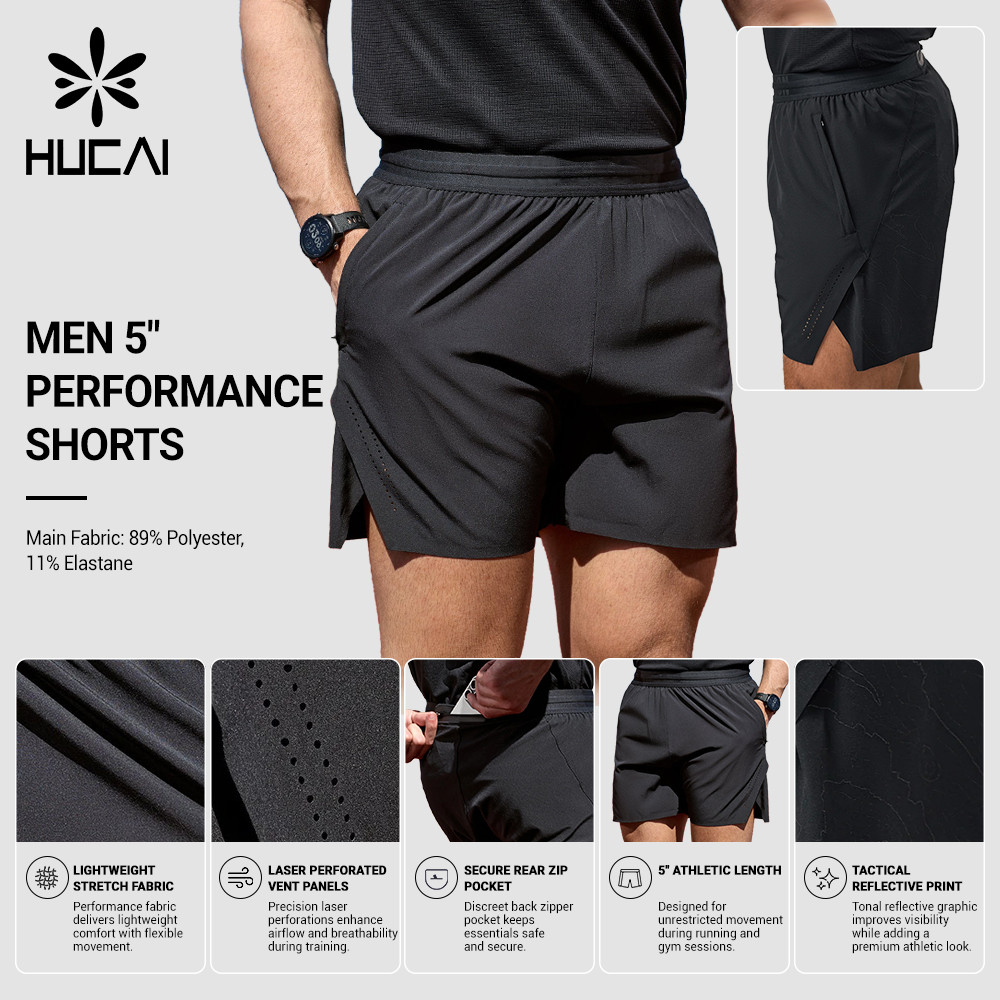
Pocket corners tear when users place phones, keys, or wallets inside. Bar-tacking at the upper pocket corners adds strength without visible bulk. Waistband attachment points need double-needle stitching or reinforced taping to handle the tension from drawcord adjustment and body movement.
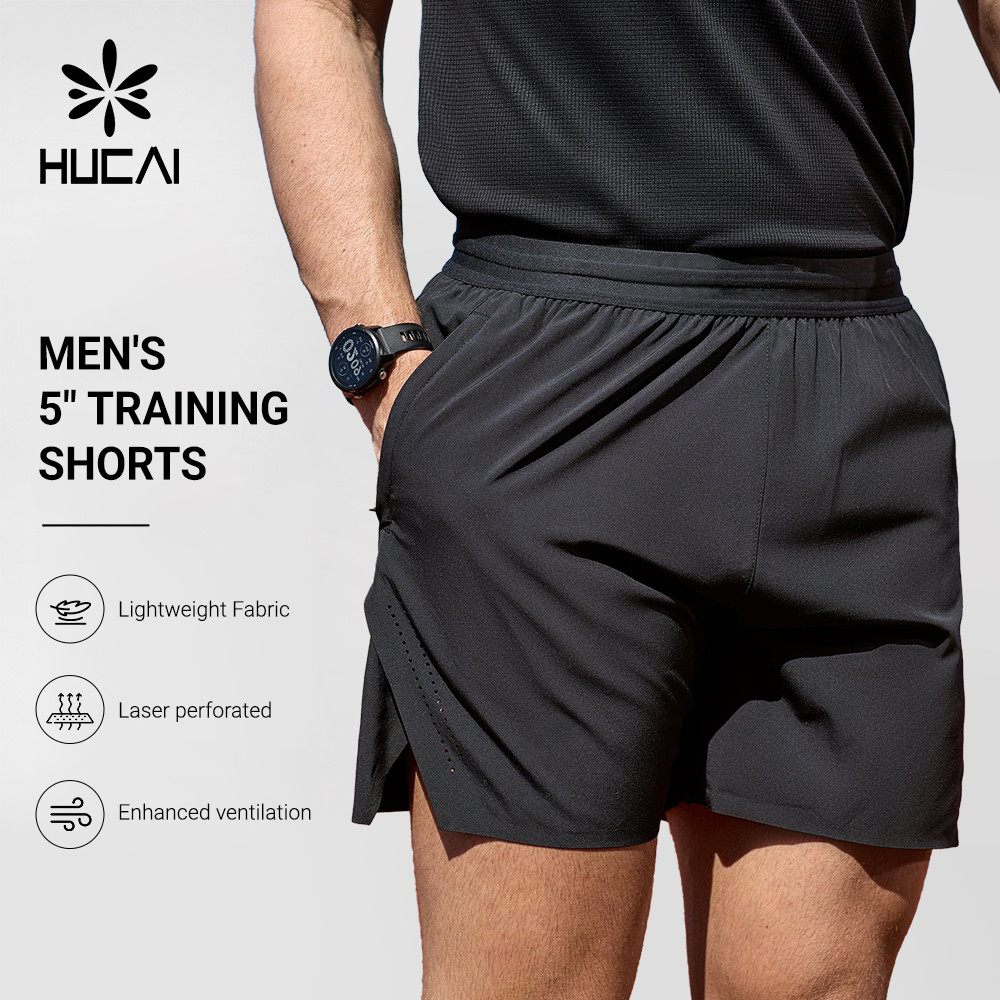
Hemlines on shorts with side slits see extra stress during lateral movement. Reinforcing the slit base with a small bartack prevents the hem from unraveling over time.
Fabric Selection for Durability
Fabric choice is the foundation of short durability. Tensile strength, tear resistance, and abrasion resistance all determine how the garment performs under real training conditions. A fabric that feels soft in the sample room may pill or thin after repeated friction against gym benches and barbells.
Polyester-dominant blends typically outperform cotton in abrasion resistance and recovery. Adding a small percentage of spandex or elastane improves stretch but increases the importance of stitch compatibility. Too much elastic content without matching seam construction leads to popped stitches.
Fabric weight also matters. Lightweight fabrics under 180 GSM work for running and warm-weather training but may lack the body needed for heavy gym use. Mid-weight fabrics between 200 and 280 GSM offer a balance of durability and breathability for most training applications.
HUCAI activewear reviews fabric behavior during sample development to confirm that the chosen weight and composition match the intended training use. A fabric selected for running shorts should not be forced into a heavy-lifting short without adjusting construction details.
Wash Testing and Color Fastness
Wash testing reveals problems that physical inspection misses. Shrinkage, color migration, seam twist, and hardware corrosion all surface after repeated washing cycles. Brands planning bulk orders should request wash testing data or conduct their own testing on approval samples.
Color fastness testing checks whether dye holds through washing, sweating, and rubbing. Dark colors, especially black and navy, are more prone to fading and crocking. If shorts are sold as part of a matched set with tees or hoodies, color consistency across fabric types becomes critical.
Shrinkage testing should measure both length and width after multiple wash cycles. A short that shrinks unevenly distorts the fit and can pull seams out of alignment. Pre-shrunk fabrics reduce this risk but must be confirmed batch by batch.
HUCAI activewear includes wash testing checkpoints in pre-production review for brands that specify durability requirements. Catching shrinkage or color issues before bulk cutting avoids costly rework or write-offs.
Common Failure Patterns
Understanding how shorts fail helps brands ask the right questions before production. The most common failures trace back to construction decisions made during sampling.
Seam popping at the crotch usually means the stitch type was not matched to fabric stretch, or the crotch curve was not adjusted for the intended fit. This failure is expensive because it often affects an entire size run.
Pocket corner tearing indicates missing or inadequate bar-tacking. It is a small detail that is easy to overlook in sample review but becomes visible after a few wears.
Hemline rolling or unraveling often results from coverstitch tension problems or insufficient hem allowance. Shorts with side slits are especially vulnerable if the slit base is not reinforced.
Color fading or bleeding points to dye selection or finishing processes that were not validated for the fabric type. This is particularly problematic for brands selling coordinated sets where color matching matters.
Decision Check
Before approving your men's athletic shorts for bulk production, confirm the following:
- Stitch type is matched to fabric stretch and intended training use
- Crotch seam, pocket corners, waistband, and hem are reinforced
- Fabric tensile strength and abrasion resistance match the product role
- Wash testing data covers shrinkage, color fastness, and seam integrity
- Sample fit and construction have been reviewed across all sizes
- Quality checkpoints are defined for bulk inspection
Related reading: explore men's activewear development guides and gym shorts product pages for additional construction references. For brands ready to move from sampling to bulk, send an inquiry with your confirmed specs and target quantities.
Manufacturer Insight
A common issue we see in men's shorts development is brands selecting a lightweight running fabric for a heavy-gym short because the hand feel is appealing in the sample. The result is a product that looks good on a hanger but fails within weeks of gym use. Fabric behavior and training intent must align from the first sample.
Another frequent revision point is pocket depth and placement. Reference images rarely show internal pocket bags or reinforcement details. Specifying pocket dimensions, bag fabric, and corner reinforcement during pattern review prevents surprises in the first sample.
HUCAI activewear handles shorts development through fabric testing, pattern review, and construction confirmation. AQL 2.5 inspection and MES production tracking keep durability standards consistent across bulk batches.
Frequently Asked Questions
What is the MOQ for custom men's athletic shorts?
MOQ depends on fabric, color, size range, and customization level. For many private label projects, MOQ starts from 100 pieces per style. Exact numbers are confirmed after reviewing construction details and fabric selection.
Can you help if we only have reference images and no tech pack?
Yes. HUCAI activewear supports ODM development from reference images, target market direction, and fit preferences. Our sample team translates references into patterns, fabric recommendations, and construction specs for approval.
What should be confirmed before discussing MOQ or quotation?
Fabric composition and weight, stitch type and seam construction, reinforcement points, pocket specifications, waistband and drawcord details, branding placement, and size range. Confirmed details lead to more accurate pricing and fewer sample revisions.
How should brands choose stitch type for stretch fabrics?
Four-thread overlock is standard for side seams on stretch shorts. Coverstitch works well for hems. The key is matching thread elasticity to fabric recovery. A non-stretch thread on a high-stretch fabric creates seam failure under load.
What affects pocket durability most in men's gym shorts?
Corner reinforcement, pocket bag fabric strength, and opening width relative to hand size. Bar-tacking at the upper corners is the minimum. For heavy-use shorts, reinforcing the entire pocket bag attachment adds longevity.
Why do some shorts fade faster than others?
Dye selection, fabric fiber content, and finishing processes all affect color fastness. Polyester holds dye differently than cotton. Dark colors on cotton-dominant fabrics often fade faster unless treated with color-fixing finishes.
How do brands validate wash testing without a lab?
Request wash testing data from your manufacturer. HUCAI activewear provides shrinkage and color fastness results as part of pre-production review for brands that specify durability requirements. Independent third-party testing is also an option for larger orders.
What should be checked during bulk quality inspection?
Stitch consistency, reinforcement placement, fabric defects, color uniformity, measurement accuracy, and hardware function. AQL 2.5 inspection covers these points systematically. Pre-shipment review catches issues before goods leave the factory.
Final Takeaway
Durability in men's athletic shorts is not a single feature. It is the result of coordinated decisions across stitch type, stress point reinforcement, fabric selection, and wash validation. Brands that treat each decision as connected rather than independent build shorts that hold up through real training use.
The best time to confirm durability is during sample development, not after bulk delivery. Working with a manufacturer that understands construction logic, fabric behavior, and quality checkpoints makes the process predictable from first sample to final shipment.