When Advanced Performance Fabrics Require Pattern and Construction Changes
- Share
- publisher
- HUCAI activewear
- Issue Time
- Sep 30,2026
Summary
Fabric substitution is a pattern decision, not only a sourcing decision. When stretch, recovery, GSM, shrinkage or drape change, what moves is pattern ease, seam allowance, seam type, binding and elastic tension, waistband structure and stitch density. Five scenarios follow - lighter fabric, higher stretch, lower recovery, thicker spacer and mesh panelling - with the pattern response each triggers and a rule for when a new sample is needed before bulk.
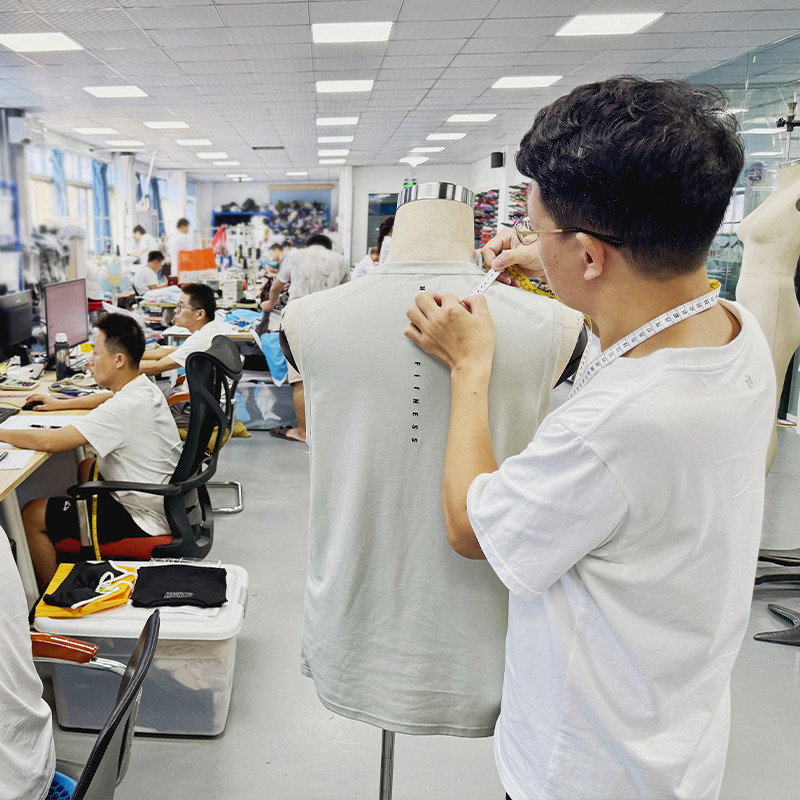
A fabric substitution usually arrives as a sourcing decision, and it leaves as a pattern problem. Men's activewear brands approve a new knit for its hand feel, weight or price, then expect the existing block to behave exactly as before. It rarely does. For buyers sourcing private label activewear and planning OEM or ODM development for custom men's activewear, this gap between the fabric file and the pattern file is one of the most expensive misunderstandings in the development calendar: the fabric changes, the garment changes, and the sample round nobody budgeted for lands late. HUCAI activewear treats fabric substitution as a pattern decision, because stretch, recovery, thickness and drape are not sourcing details, they are the mechanical inputs a pattern was built around.
The practical consequence is simple. A brand that swaps fabric and keeps the pattern is not saving a sample round. It is moving that sample round to bulk, where it costs far more, arrives after the order is placed, and lands on a consumer who has already paid.
Quick Answer
Advanced performance fabrics carry different mechanical behaviour, so a substitution is a pattern and construction decision, not only a sourcing decision. When stretch percentage, elastic recovery, GSM, shrinkage or drape move, the affected areas are pattern ease, seam allowance, seam type, binding and elastic tension, waistband structure, liner geometry and stitch density. Lightweight fabrics usually need less ease and tighter seam control, higher stretch fabrics usually need reduced ease and a re-checked gusset, lower recovery fabrics usually need a re-specced waistband and binding, and thicker spacer or heavier knits usually need a different seam and stitch setup. Any change that moves a pattern piece, a seam position or the fabric's stretch behaviour requires a new fit sample before bulk. A colour-only change from the same mill with the same construction does not.
Table of Contents
- Who This Article Is For
- Why a Fabric Change Is a Pattern Decision
- Read the Fabric Data Before You Touch the Pattern
- Scenario One and Two: Lighter Fabric and Higher Stretch
- Scenario Three: Lower Recovery, Waistbands and Binding Tension
- Scenario Four: Thicker Spacer and Heavier Knit
- Scenario Five: Mesh Panels and Multi-Fabric Construction
- When a New Sample Round Is Non-Negotiable
- Fabric Change to Pattern Response
- Decision Check
- Founder's Insight
- FAQ
- Final Takeaway
Who This Article Is For
- Established brands with an approved tech pack who want to substitute a performance fabric without resetting a proven block
- Growing brands comparing two fabric options and trying to work out why one of them needs a full re-sample
- Private label buyers managing seasonal fabric programmes across training shorts, compression tights, performance tees and joggers
- Product developers and merchandisers who have to explain to a commercial team why a fabric swap is not a free change
Why This Guide Is Worth Your Time
This is written from the sample room rather than from a trend report. It gives you the mechanical checks to run on a candidate fabric before design sign-off, the pattern and construction responses each fabric change usually triggers, and a plain rule for deciding when a new sample round is required. If you are comparing fabric quotations, this guide is intended to help you compare the total development cost rather than the fabric cost alone.
Why a Fabric Change Is a Pattern Decision
A pattern is a set of assumptions about how a fabric moves. Pattern ease assumes a certain stretch and a certain drape. Seam allowance assumes a certain bulk and a certain friction. A waistband assumes a certain elastic recovery. Stitch density assumes a certain thickness and a certain needle penetration behaviour. Change the fabric and every one of those assumptions is now unverified.
Observation across leading performance activewear brands shows that fabric updates are usually paired with a construction update, not released on an unchanged block. Recent product work across premium men's training lines shows a consistent pattern: when a brand moves to a lighter or more open knit in a training tee, the neckline binding, the hem finish and the stitch density on the side seams move with it in the same release.
Feedback across training communities and running forums frequently reports the same symptom set after an unreviewed fabric change: shoulders that were once snug now gape, a waistband that once held now rolls, and a seam that was invisible under load now shows through as a ridge. None of those are fabric defects. They are the pattern meeting a fabric it was not drafted for.
This is where HUCAI activewear starts substitution reviews: at the pattern engineering desk, comparing the new fabric's mechanical data against the data the current block was built on, before any new swatch is approved for development.
Read the Fabric Data Before You Touch the Pattern
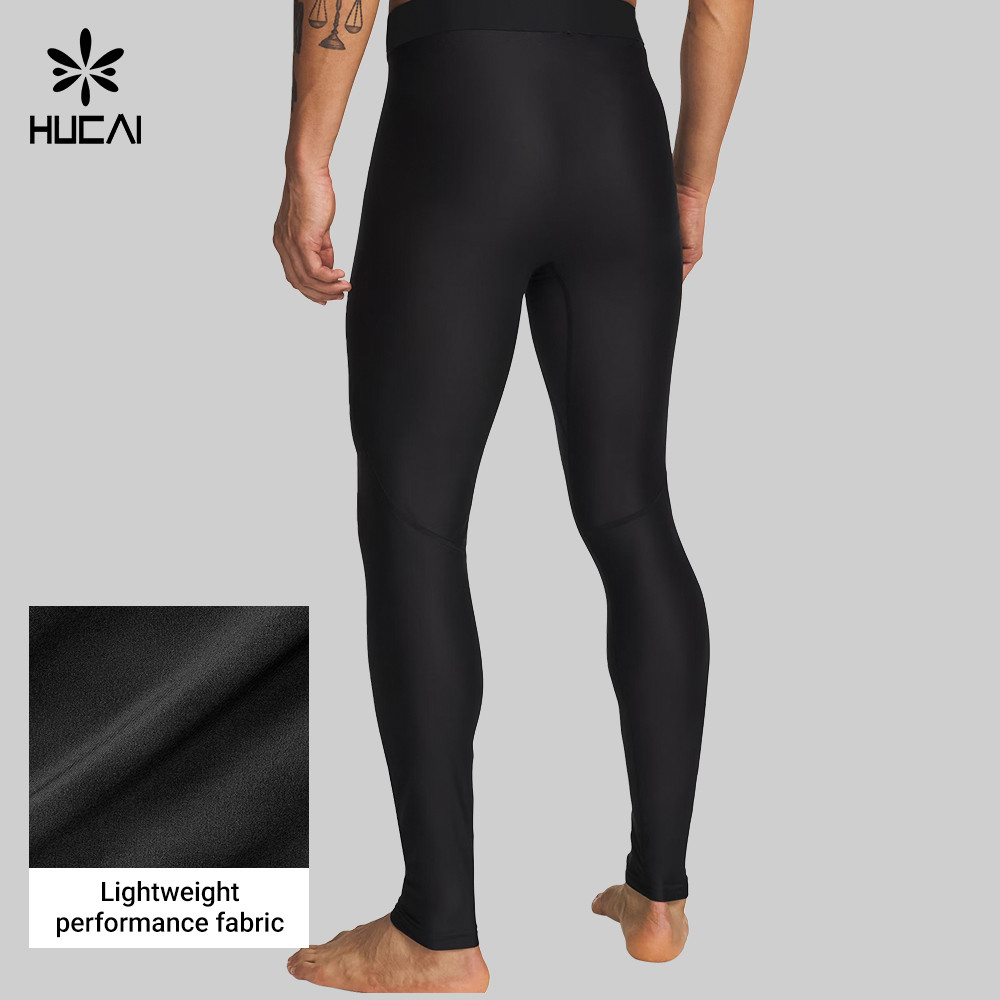
Substitution reviews go wrong when the conversation is about hand feel only. Hand feel is real, but it is subjective and it does not tell a pattern maker what to change. The five numbers that do are stretch percentage, elastic recovery, GSM, shrinkage and drape.
Stretch percentage, measured in both directions, tells you how much the fabric extends under a defined load. Higher stretch on the same pattern means the garment will extend further than drafted, which usually reads on the body as a looser fit even though nothing was changed. Elastic recovery tells you whether the fabric returns to its drafted dimensions after extension. A fabric with strong stretch and weak recovery extends well and then stays extended, which is what produces knee bagging, seat droop and waistband roll.
GSM sets the weight class and, with it, the drape and the seam bulk. Under standard ISO 6330 dimensional stability testing logic, shrinkage behaviour is verified before length and tolerance are fixed, because a fabric that moves after the first wash invalidates any measurement taken from an unwashed sample. Experienced pattern makers and cutting technicians emphasise the same point from the floor: the pattern is only as stable as the fabric's post-wash dimensions.
HUCAI activewear documents these five values for each candidate fabric and holds them against the current block's assumptions, so the substitution decision is made on comparable numbers rather than on two swatches held side by side.
Scenario One and Two: Lighter Fabric and Higher Stretch
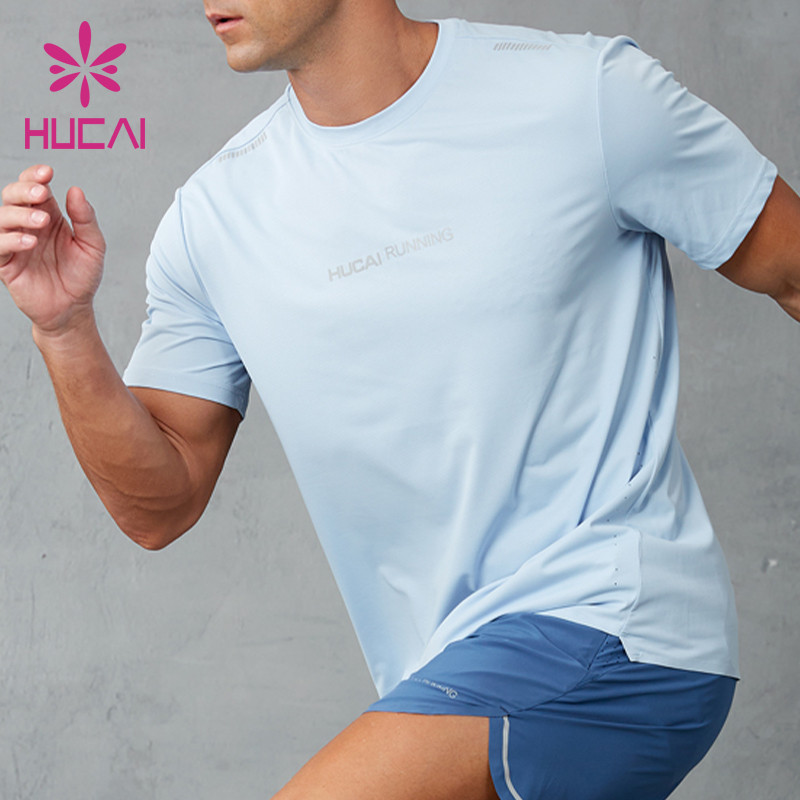
A move from a mid-weight training knit to a lighter, more open knit is often treated as a straightforward upgrade for warm-weather ranges. On the pattern side it usually changes three things at once: opacity, drape and seam stability.
Lighter fabric has less body, so a relaxed block that draped cleanly in a heavier knit can start to collapse or cling. The usual response is a small ease reduction through the body and a review of hem depth, because a lighter fabric under a lighter hem finish rolls more easily. Cover-stitch and flatlock settings also come back into scope: the same stitch that sat flat in a heavier knit can pull the seam edge in a lighter one.
Higher stretch creates the opposite problem. If a fabric stretches more than the block assumes, every relaxed area becomes looser under load and every fitted area becomes tighter than the wearer expected. Pattern ease is normally reduced, the underarm gusset is re-checked for arm lift, and seam allowance is re-set so that the seam does not extend past its designed limit when the fabric is at full stretch. Zoned panels and lighter garment sections are often built on a lighter fabric base, which is why the build below is a useful reference point for both scenarios.
Scenario Three: Lower Recovery, Waistbands and Binding Tension
Lower elastic recovery is the fabric change that does the most damage to a proven style, because it fails gradually rather than immediately. The sample looks correct in the sample room and the complaint arrives three weeks into wear.
Typical symptoms are knee bagging in compression tights and lined shorts, a waistband that rolls rather than holds, and seam grin in areas under tension. Each of those points back to a construction decision rather than to the yarn alone.
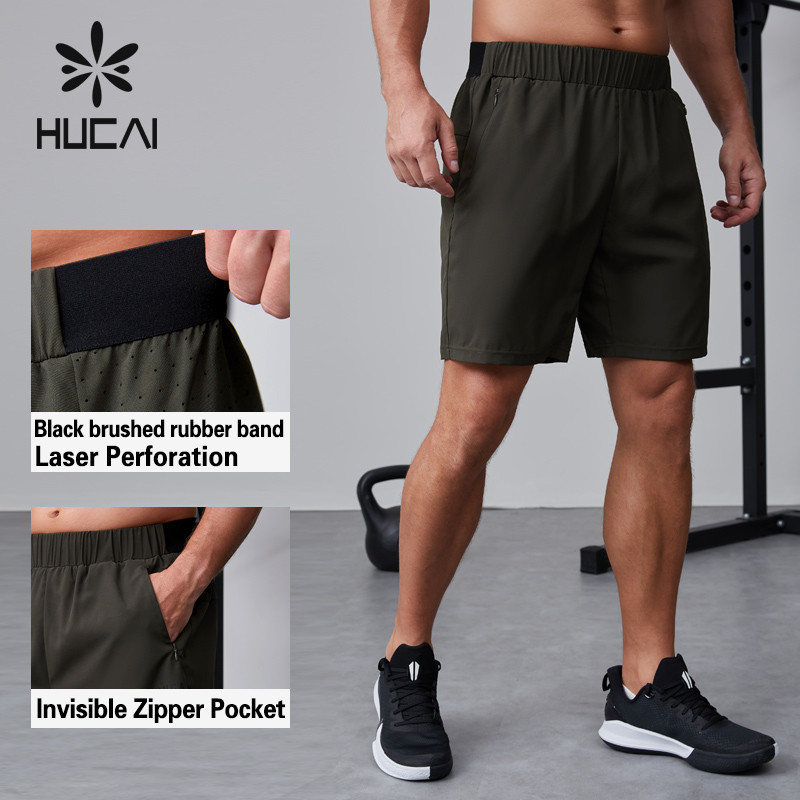
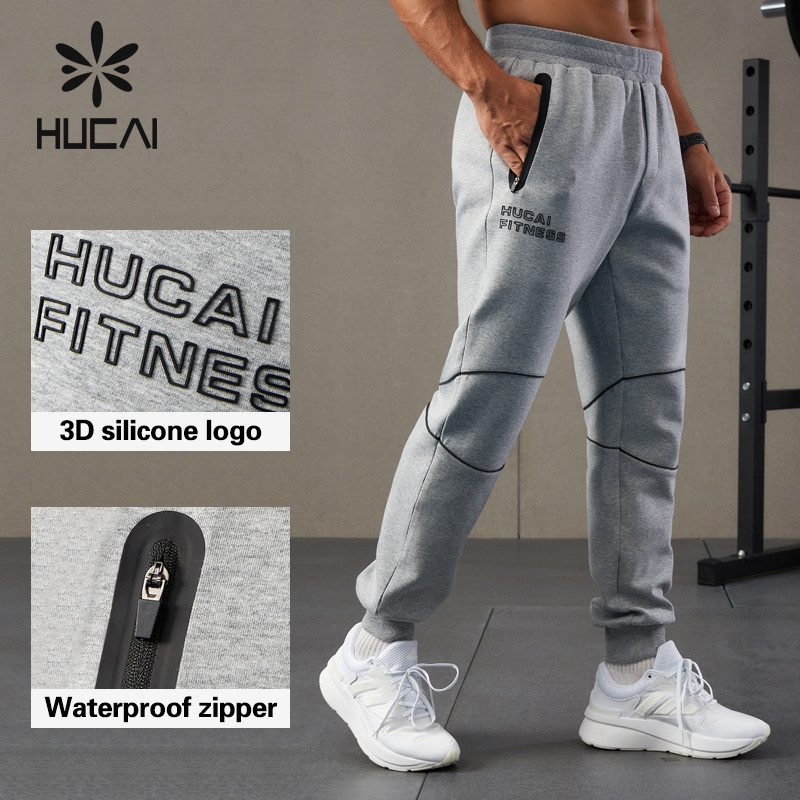
Waistbands are the first place to re-specify. A brushed elastic band and a plain elastic band behave differently against a low-recovery shell, and the band tension has to be matched to the shell's extensibility so that the waistband does not take all the load. Binding tension is the second: a binding that was drafted to compress a stable knit will flatten a low-recovery knit and produce a wavy edge. The third is the waistband and pocket assembly, where invisible zipper pockets and internal drawcords add local stiffness that has to be accounted for in the surrounding fit.
The reference build below shows a brushed rubber waistband, laser perforation and an invisible zipper pocket in the same short. When the shell fabric changes, all three of those assemblies need to be re-checked together rather than one at a time.
Scenario Four: Thicker Spacer and Heavier Knit
Moving up in weight, from a single knit to a spacer or a heavier fleece-faced knit, is usually presented as a premium upgrade for gym-to-street ranges. On the pattern side it is a seam and stitch problem before it is anything else.
Thicker fabric increases seam bulk. A four-needle six-thread flatlock that sat flat on a light knit can become a visible ridge on a thick one, which changes the silhouette at the side seam, the shoulder and the armhole. In heavier constructions the seam type often has to change, not just the seam allowance: bonded or taped seams replace stitched seams, or the stitch count and stitch length are re-set to match the fabric's thickness and needle penetration behaviour.
Drape moves too. A spacer holds structure, so a block drafted for a soft drape will hang stiffly and lose the intended line at the hem, the cuff and the waist. Rib cuffs and rib waistbands, which rely on recovering against the shell, need re-checking because the shell is now heavier. Zippers and other trim are a final constraint: a waterproof zipper applied to a heavy knit has a different local stiffness than the same zipper on a light knit, and that changes how the panel under it moves.
HUCAI activewear reviews spacer and heavier-knit substitutions against seam type, stitch density, rib tension and trim compatibility together, because a weight change that is approved on swatch alone typically returns as a silhouette problem in the first fit sample.
Scenario Five: Mesh Panels and Multi-Fabric Construction
Mesh is the case where the fabric change is deliberately partial. A brand adds a mesh panel to a proven top or short, expecting the base garment to carry on unchanged. Structurally that is not what happens, because the panel and the base fabric do not stretch at the same rate.
Two matched fabrics behave as one garment only when their stretch and recovery are close. When they are not, the panel becomes the weakest point in the load path: it either resists the base fabric and creates a hard edge, or it gives first and pulls the surrounding stitch line out of line. The standard responses are to re-position the panel so its edges follow the least-loaded seams, to change the seam type at the fabric transition to a flatlock or a bonded join, and to re-check pattern ease in the mixed zone rather than only in the single-fabric zone.
Panel placement also changes seam count, and seam count changes how the garment grades. A panel that is placed correctly in a medium size can sit in the wrong position in a large or extra large, so any panel addition forces a grading review as well as a fit review.
When a New Sample Round Is Non-Negotiable
The commercial argument against a re-sample is usually framed as time. In practice, the pattern-level rule is easier to defend than a judgement call, because it removes the debate about whether a change is big enough to matter.
A new fit sample is required whenever a change moves a pattern piece, a seam position, a stitch type or the fabric's stretch and recovery behaviour. That covers a fabric substitution with different stretch or recovery, a GSM move of more than a marginal step, a change from stitched to bonded construction, a panel or pocket addition, a waistband or binding re-specification, and any trim change that alters local stiffness.
A new fit sample is not required for a colour change from the same mill on the same construction, a branding change that does not move a seam, or a like-for-like fabric re-order. Those still need shade approval and a wash check, but they do not reopen the block.
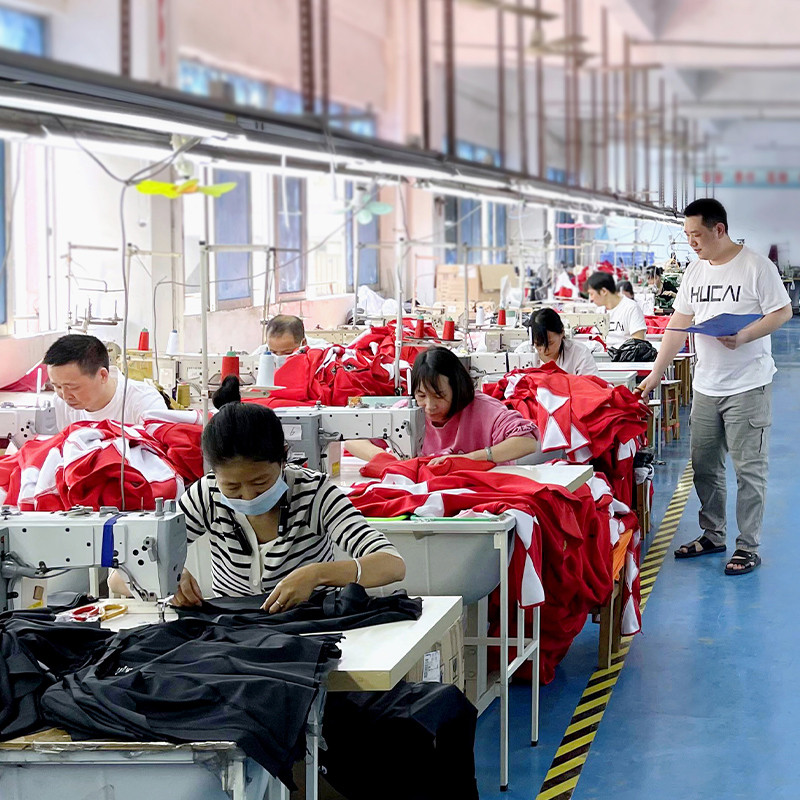
Once a substitution passes review, sample-to-bulk control is what protects it. A pre-production review confirms that the approved fabric, trim, pattern and measurement set are the ones entering the line, and an AQL 2.5 inspection stage gives the buyer a defined check rather than an informal look at the finished goods. Article-level tracking across fabric, trim, pattern, sample and bulk keeps the substitution visible through the whole run, which is where most fabric-change surprises are caught before they reach a carton.
The enormous shift is not in the sewing itself but in whether the sample room and the production floor are working from the same spec. Experienced technical merchandisers handling private label bulk production make the same observation repeatedly: substitution failures are usually document failures, not machine failures.
Fabric Change to Pattern Response
The table below summarises the five substitution scenarios covered above and the pattern or construction response each one usually triggers. It is a starting point for a development review, not a substitute for testing the actual fabric.
| Fabric change | Usually affects first | Pattern or construction response | New fit sample |
|---|---|---|---|
| Lighter knit, lower GSM | Opacity, drape, hem behaviour | Small ease reduction, hem depth review, cover-stitch and flatlock re-set | Yes |
| Higher stretch percentage | Fit under load, seam extension | Reduce pattern ease, re-set seam allowance, re-check underarm gusset | Yes |
| Lower elastic recovery | Knee bagging, waistband roll, seam grin | Re-specify elastic band, re-balance waistband tension, re-set binding tension | Yes |
| Thicker spacer or heavier knit | Seam bulk, drape, rib recovery | Change seam type, re-set stitch count and stitch length, review rib and zipper trim | Yes |
| Mesh panel or zoned construction | Seam count, stretching mismatch between fabrics | Re-position panels, switch to flatlock or bonded join, re-grade the mixed zone | Yes |
| Colour change, same mill, same construction | Shade consistency only | No pattern change; shade approval and wash check only | No |
Decision Check
Run this list before approving a fabric substitution for a proven men's activewear style. If any answer is unclear, the substitution is not ready for development sign-off.
- Is the new fabric's stretch percentage documented in both directions and compared with the fabric the block was drafted for
- Is elastic recovery documented, and has it been tested after repeat extension rather than on a single pull
- Is GSM confirmed, and is the weight step small enough that drape and seam bulk stay within the existing construction
- Is shrinkage behaviour verified through the site's agreed dimensional stability procedure before length and tolerance are fixed
- Has the pattern ease been reviewed for body, sleeve and leg, rather than only at the chest or waist reference point
- Have waistband, binding and elastic tension been re-balanced for the new shell fabric
- Has the seam type and stitch density been confirmed against the new fabric's thickness and surface
- Has HUCAI activewear confirmed which pattern pieces, seams and trims move, and does the buyer agree with the resulting sample plan before the calendar is locked
Substitution reviews move faster when the fabric data arrives with the swatch. If you are comparing two mills, send both specification sheets with the enquiry so the pattern review can run alongside the fabric choice review and the ODM development route rather than after it.
Founder's Insight: Jean Yuan on Substituting Fabric Without Reopening the Block
As Jean Yuan, Founder of HUCAI activewear, puts it from more than two decades on the pattern table and the production floor: the fabric change is almost never the problem by itself, the problem is that nobody re-read the assumptions underneath the pattern.
"When a brand brings us a lighter knit for a training short that already sells, the conversation usually starts with price and hand feel," Jean Yuan notes. "The conversation we need to have is about what the old fabric was doing quietly. It was holding the waistband at a certain tension. It was keeping the side seam flat. It was recovering the knee after a set. If the new fabric does those three jobs differently, the pattern has to answer, and that answer costs a sample."
The trade-off is deliberate. A tighter ease range, a re-specced elastic band or a different seam type usually adds a development round and can add a small cost per unit. The alternative is discovering the same three problems across a full size run after the order is placed. "The cheaper decision is almost never the one that skips the sample," Jean Yuan adds. "It is the one that decides which sample to take."
FAQ
What is the minimum order quantity for custom men's activewear?
MOQ typically starts from 100 pieces per style, and the final number depends on the fabric, the colour, the size range, the level of customisation, the trims, the logo method and the structure of the order. A substitution onto an existing style usually sits at the lower end of that range, because the pattern and the grading already exist.
Can we substitute a fabric and keep the existing pattern exactly as it is?
Only when the new fabric matches the old one closely on stretch percentage, elastic recovery, GSM and shrinkage, and when the construction does not change. If any of those move, the pattern assumptions are no longer verified and a new fit sample is required before bulk.
Do we need a tech pack before starting OEM or ODM development?
For OEM, a tech pack with measurements, construction and confirmed specs lets development start directly. For ODM, reference images, a market direction or a collection idea are enough to begin, and the technical specification is built with the factory as part of development. A fabric specification sheet is useful in both routes.
What should be confirmed before MOQ or quotation discussion?
Product role, target fabric or fabric family, stretch and recovery expectations, GSM range, colour reference, size range, logo and label method, packaging requirement and expected order structure. Substitution enquiries should also include the current fabric specification, because the difference between the old and the new fabric is what drives the development work.
How long does a sample round usually take for men's activewear?
Sample timing depends on fabric availability, the amount of pattern work, the logo method, fit adjustment and the number of revision rounds. A substitution that touches only one panel is usually quicker than one that changes the shell fabric across the whole style, so the schedule is set after the substitution scope is agreed rather than before.
Why does a lighter fabric feel bigger on the body when nothing changed in the pattern?
Because stretch percentage and drape changed while the pattern did not. A more extensible fabric extends further under the same load, so the garment reads as looser even though the pattern is identical, and a lighter fabric collapses rather than holds the drafted line.
Our waistband rolls after the fabric change. Is that a fabric defect?
Usually not. It is more often an elastic recovery and tension mismatch: the waistband was drafted against a shell fabric with a different recovery, so the band is now taking more or less of the load than it was designed for. The response is to re-specify the elastic band and re-balance the tension against the new shell rather than to change the fabric back.
Can a mesh panel be added to an existing style without a new sample?
No. A panel addition changes the seam count, the load path between two fabrics and the grading of the affected zone. Even when the panel is visually small, it introduces a fabric transition that has to be tested in the actual size range, so a new fit sample is required.
Final Takeaway
A fabric substitution is a pattern decision because a pattern is a set of assumptions about stretch, recovery, thickness and drape, and a new fabric replaces all four inputs at once. Review the five fabric values before design sign-off, expect lighter fabrics to need less ease and tighter seam control, expect higher stretch to need reduced ease and a re-checked gusset, expect lower recovery to need a re-specced waistband and binding, and expect thicker spacer or heavier knits to need a different seam and stitch setup. Then treat the sample round as part of the substitution cost rather than as an optional extra. HUCAI activewear supports that review as part of OEM and ODM development for custom men's activewear, so the fabric decision and the pattern decision are made together instead of in sequence.
How We Work
HUCAI activewear is a B2B men's activewear manufacturer supporting OEM, ODM, private label, sample development and bulk production. Substitution reviews run through the pattern engineering desk, the fabric library and the sample team, with a pre-production review and an AQL 2.5 inspection stage between approval and shipment. Specification control is tracked across fabric, trim, pattern, sample and bulk so that the fabric that was approved is the fabric that ships. MOQ typically starts from 100 pieces per style and remains subject to fabric, colour, size range, customisation, trims and logo method.