Why Men’s Training Tank Tops Are Harder to Scale Than They Look
- Share
- publisher
- 然
- Issue Time
- Feb 4,2026
Summary
This article explains why a men’s training tank top is harder to scale than it appears, focusing on fit stability, sweat zones, and production consistency.
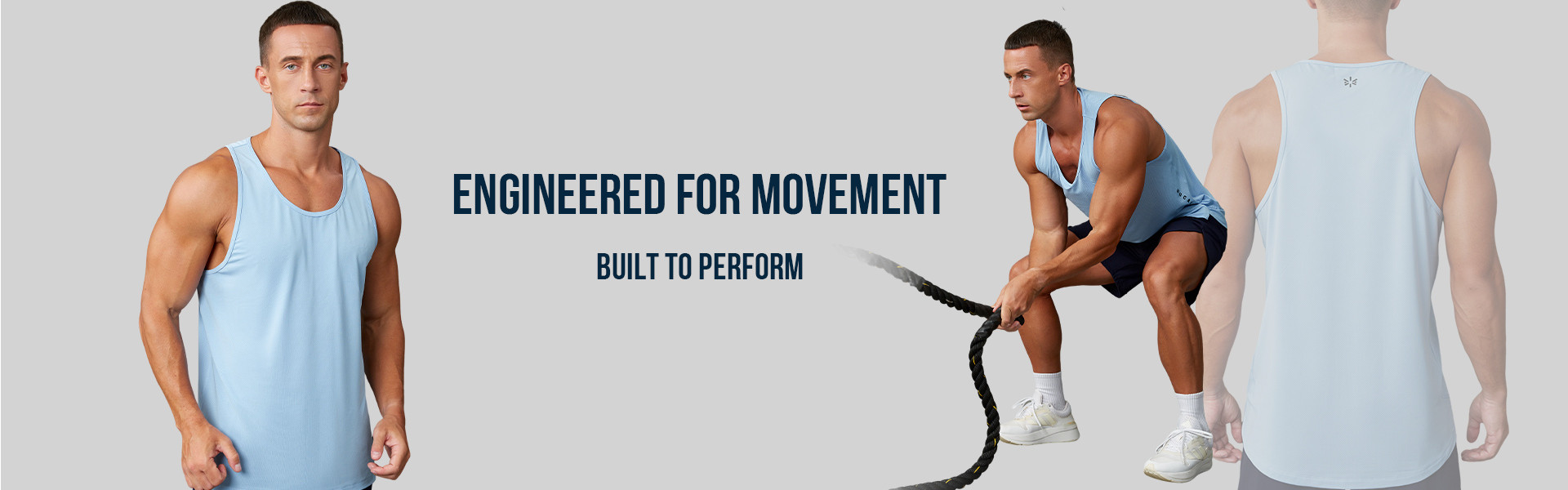
Why Men’s Training Tank Tops Are Often Misjudged in Development
In many activewear collections, the men’s training tank top is treated as a low-risk item. The silhouette looks simple, material usage seems minimal, and development timelines are often shorter than for jackets or bottoms. This perception leads brands to underestimate how sensitive this product is once it moves beyond sampling.
In real training scenarios, a men’s training tank top operates with very little structural tolerance. There is no sleeve to stabilize the shoulder, limited side support, and large exposed areas where heat and sweat concentrate. When development decisions are made based only on appearance or sample fit, small misjudgments in pattern balance or fabric behavior are carried directly into production. These issues rarely show up in the first sample but become increasingly visible as volumes scale.
Where Men’s Training Tank Tops Usually Fail at Scale
Most problems with a men’s training tank top do not appear during sampling. They emerge after reorders begin. As sizes expand and production batches increase, inconsistencies in fit and performance start to surface. Common symptoms include neckline deformation, instability around the armhole, and uneven comfort feedback across sizes.
The underlying reason is structural. During high-intensity training, men generate concentrated heat and moisture across the chest, upper back, and underarm areas. A tank top lacks the built-in support that exists in T-shirts or long-sleeve tops, so any weakness in pattern control or fabric recovery is amplified during movement. What looks acceptable in a controlled fitting environment can behave very differently during repeated workouts and washes.
For brands, this often creates hesitation. Products sell well initially, but teams become cautious about expanding colors, markets, or volumes because performance feels unpredictable beyond the first order.
How Manufacturers Reduce Risk in Men’s Training Tank Top Production
From a manufacturing perspective, a stable men’s training tank top is not achieved through styling changes, but through development discipline. Experienced sportswear manufacturers approach this product as a structural item rather than a basic top. The focus is placed on maintaining pattern stability, controlling stress points around the shoulder and armhole, and ensuring that fabric behavior remains consistent across production runs.
Equally important is planning for repeatability. The goal is not simply to pass the first order, but to ensure that the second and third reorders perform the same way as the original sample. When a men’s training tank top can be reproduced consistently at scale, it becomes a reliable core product rather than a one-season risk.
This level of control is often what separates suppliers who can handle complex men’s training categories from those who can only support limited runs.
Work With an Experienced Activewear Manufacturer
Developing a men’s training tank top that performs consistently at scale requires more than a good sample—it requires manufacturing experience and production control.
As a sportswear manufacturer and activewear supplier focused on custom sportswear, OEM sportswear, and ODM sportswear development, HUCAI supports brands in building stable, repeatable men’s training products.
You are welcome to learn more about our manufacturing approach here:
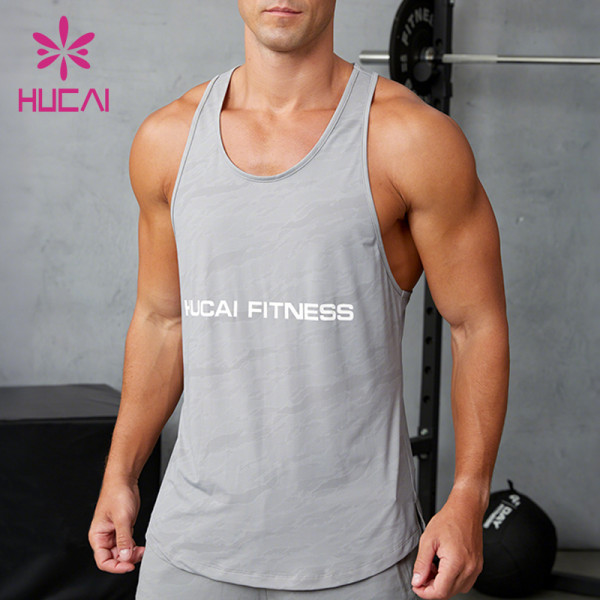
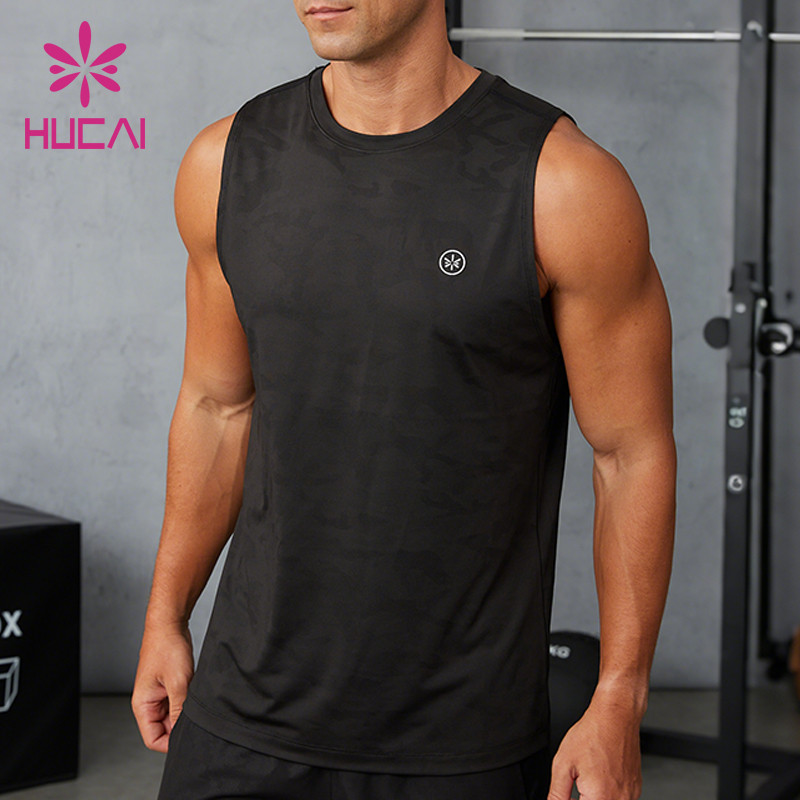
Lightweight camo-pattern gym tank made from cooling mesh fabric with white rubber logo print.
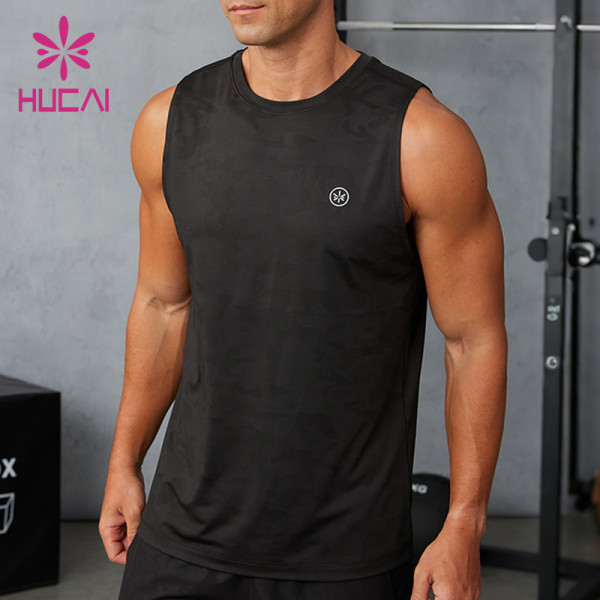
Camouflage jacquard training tank with 3D silicone logo and slim athletic fit.
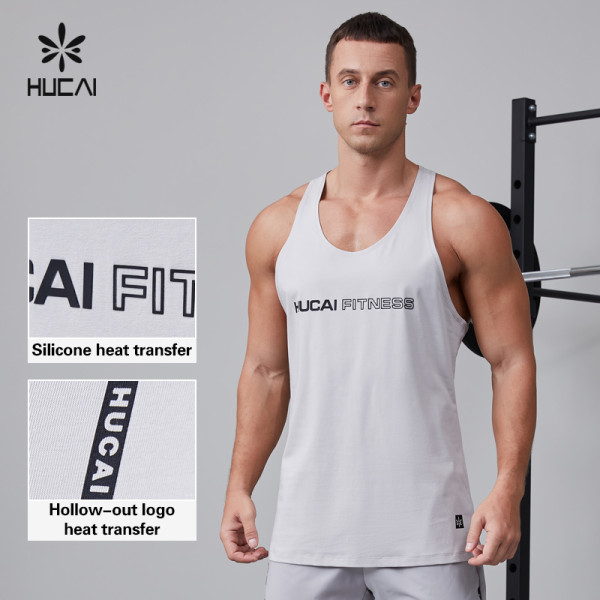
HUCAI activewear OEM fitness tank top cotton spandex,silicone heat transfer logo.
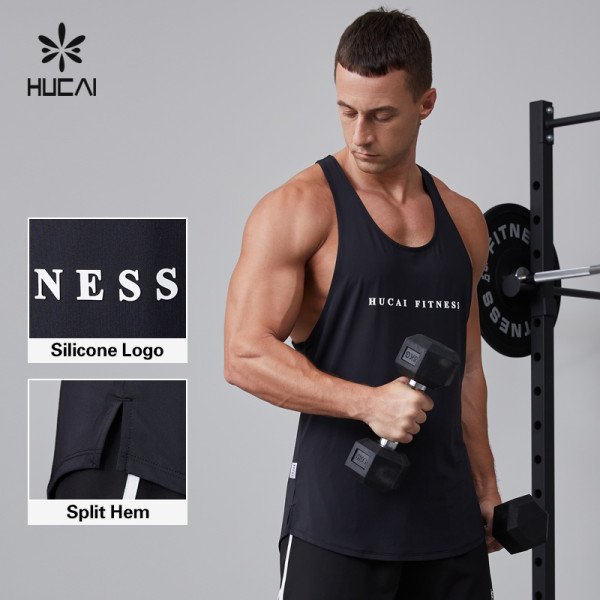
HUCAI activewear OEM fitness tank top polyester spandex,silicone heat transfer logo.