How to Build a Men's Base Layer Collection for Cold-Weather Training Brands
- Share
- publisher
- HUCAI activewear
- Issue Time
- Sep 23,2026
Summary
A manufacturer-level guide for growing brands and private label buyers planning men's base layer collections for cold-weather training. Covers compression levels, fabric weights, coverage variants, seam logic and layering compatibility.
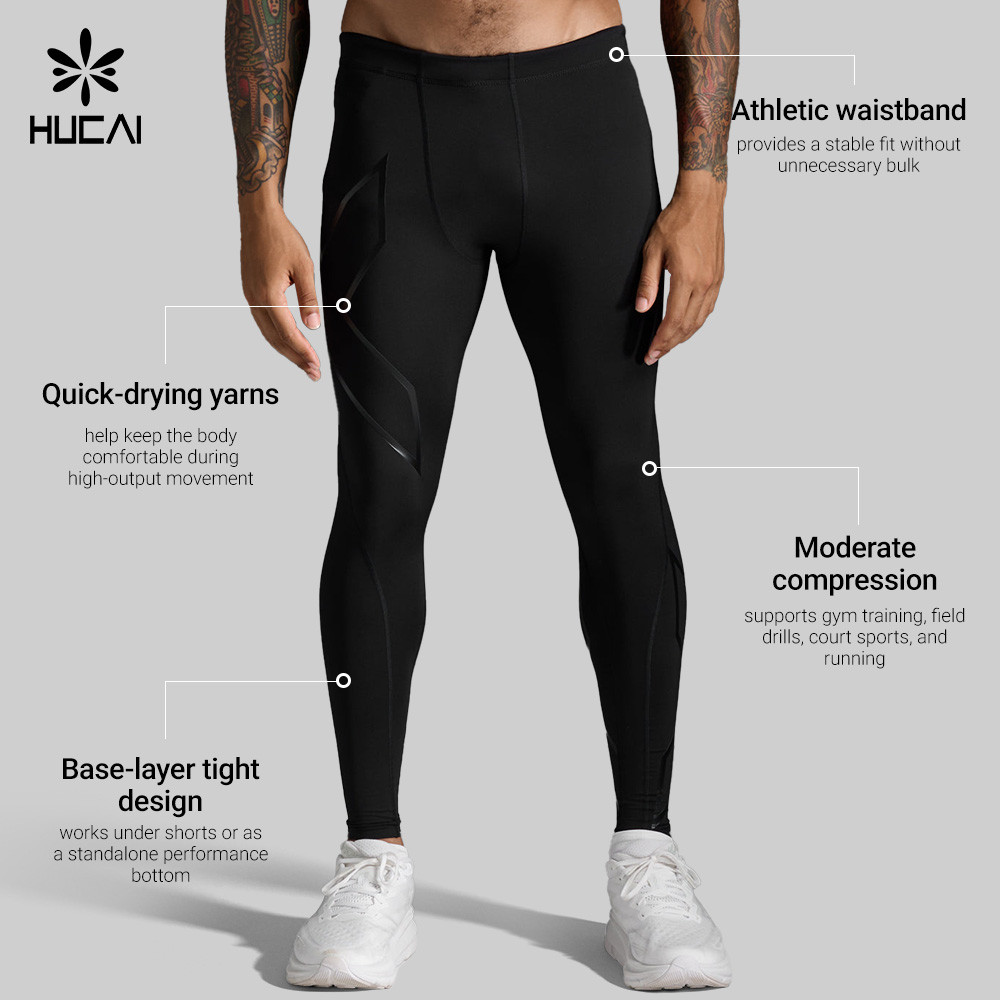
When private label buyers and growing brands plan cold-weather training lines, the base layer is often treated as an afterthought. That is a costly mistake. Men's base layer collection planning affects fabric recovery, compression consistency, thermal regulation and how the rest of the capsule layers together. At HUCAI activewear, we help men's activewear manufacturers' partners decide which base layer constructions make sense for their target climate, training intensity and price position before sampling begins.
Quick Answer
A men's base layer collection for cold-weather training should include multiple compression levels, fabric weights and coverage options. The right mix depends on your market's winter temperatures, the training modalities your customers prioritize and how base layers integrate with midlayers and outer shells in your overall collection.
In This Guide
Who This Article Is For
This guide is written for growing brands, private label buyers and established labels expanding into cold-weather training apparel. If you are deciding how many base layer SKUs to launch, which fabric weights to specify and how base layers fit into a larger autumn or winter drop, this article gives you a manufacturer-level framework.
What You Get From This Guide
- A clear structure for planning men's base layer collections by compression, fabric weight and coverage
- Practical criteria for matching base layers to cold-weather training use cases
- Decision checkpoints you can use before requesting samples or discussing MOQ
- Insight into how HUCAI activewear approaches sample-to-bulk consistency for compression and thermal fabrics
Core Collection Modules
A base layer collection is not simply "tights and long-sleeve tops." Cold-weather training brands need a system of pieces that work together across temperature ranges, training intensities and layering preferences. The following six modules cover the decisions that most affect development cost, sample rounds and bulk consistency.
Compression Level and Muscle Group Focus
Base layers fall into three compression tiers: light, moderate and firm. Light compression works for all-day wear and low-intensity recovery sessions. Moderate compression suits gym training, trail running and hybrid workouts in cold conditions. Firm compression is typically reserved for high-output training and recovery-focused products.
The mistake many brands make is specifying one compression level for every piece. A better collection plans compression by muscle group and product role. Tights may use moderate compression through the quads and calves with lighter compression at the waist for comfort. Long-sleeve tops may vary compression through the shoulders, chest and arms depending on the training use case.
Fabric Weight and Thermal Regulation
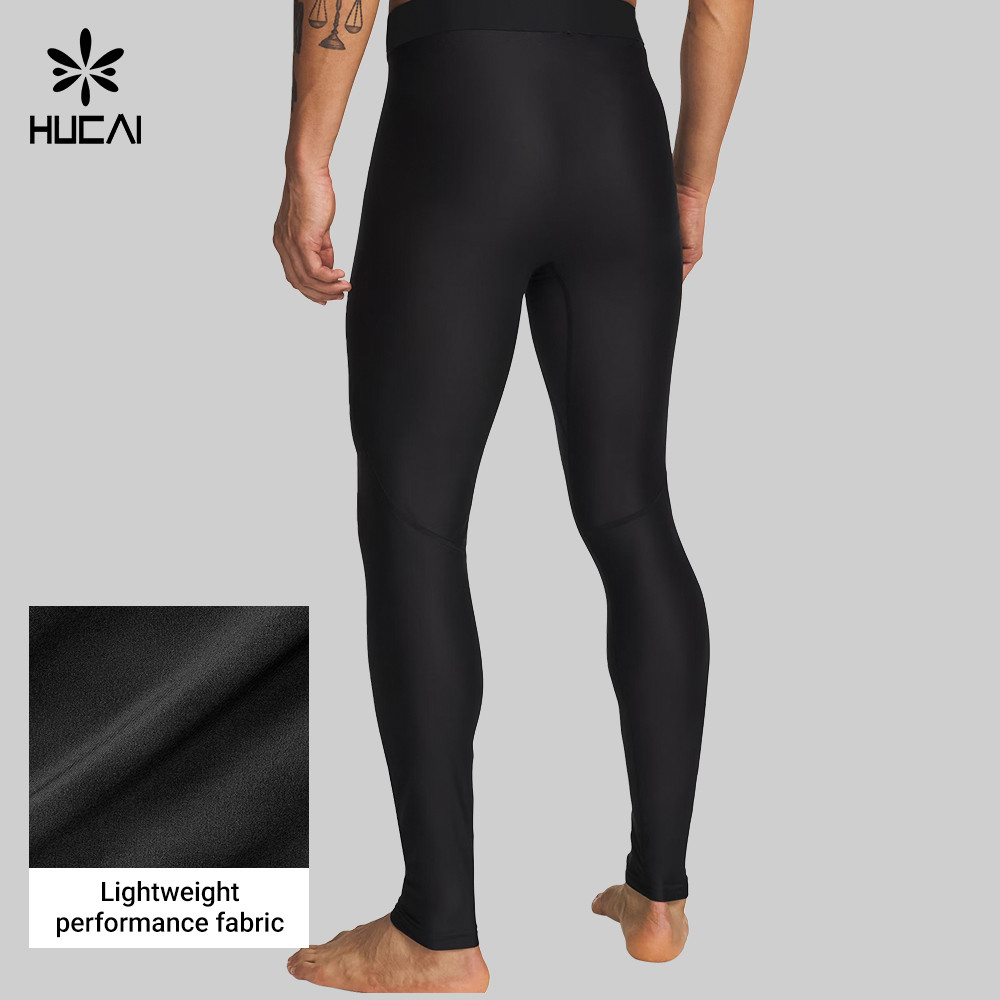
Fabric weight for men's base layers typically ranges from 180 GSM for lightweight options to 280 GSM for thermal-heavy constructions. The right weight depends on your target climate and whether the piece is designed as a standalone layer or strictly for insulation under shorts, joggers or a training jacket.
Thermal regulation is not only about GSM. Brushed interiors trap heat. Mesh panels or lighter knit zones vent high-sweat areas. The balance between insulation and breathability determines whether athletes overheat during interval work or stay comfortable on long, steady runs. HUCAI activewear typically reviews fabric behavior at sample stage across static, low-output and high-output test conditions before confirming bulk specifications.
Coverage and Length Variants
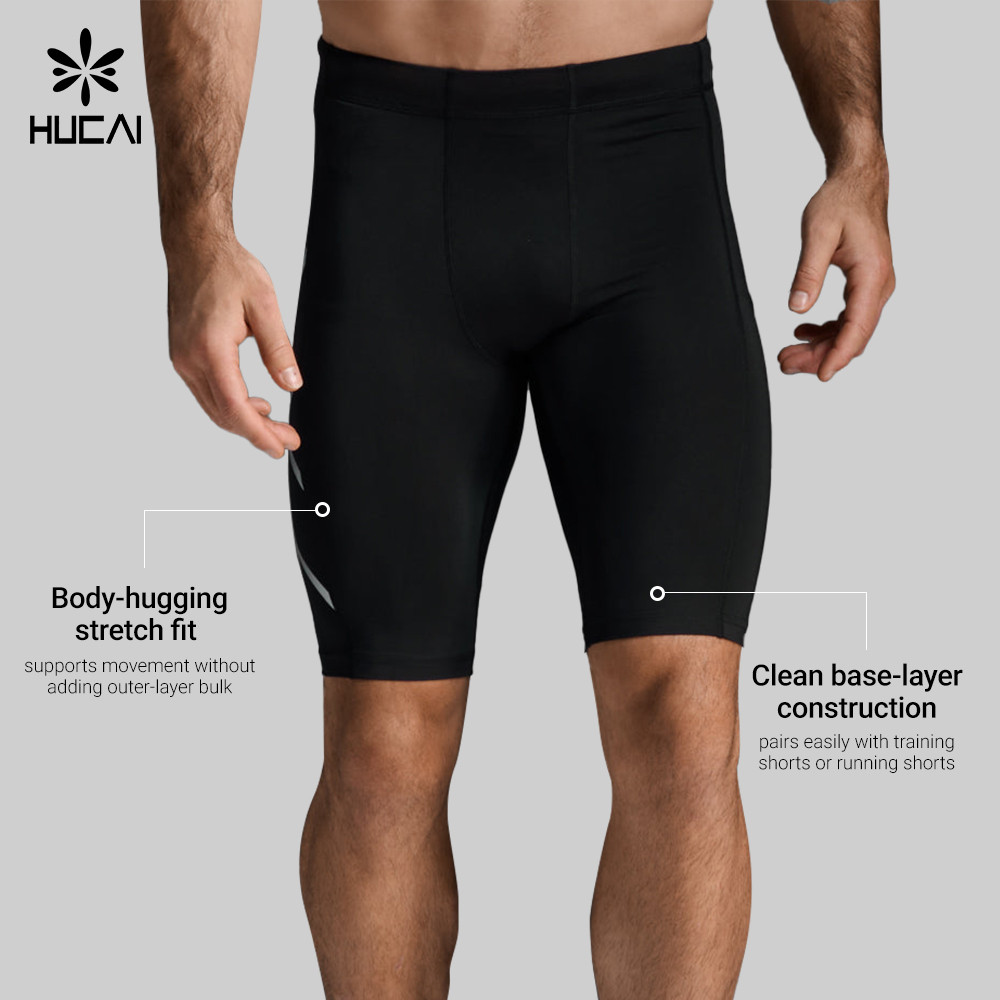
A complete men's base layer collection should offer multiple coverage options. Full-length tights and long-sleeve tops are standard for cold climates. Three-quarter tights and short-sleeve compression tops serve transitional weather and indoor training. Some brands also add compression shorts and sleeveless base layers for gym-specific layering under hoodies or tracksuits.
Each length variant requires its own pattern work and fit review. A three-quarter tight is not just a shortened full-length tight. The leg opening, calf tension and fabric recovery at the hem all change. Planning these variants early prevents sample surprises and keeps size grading consistent across the collection.
Seam Placement and Chafe Control
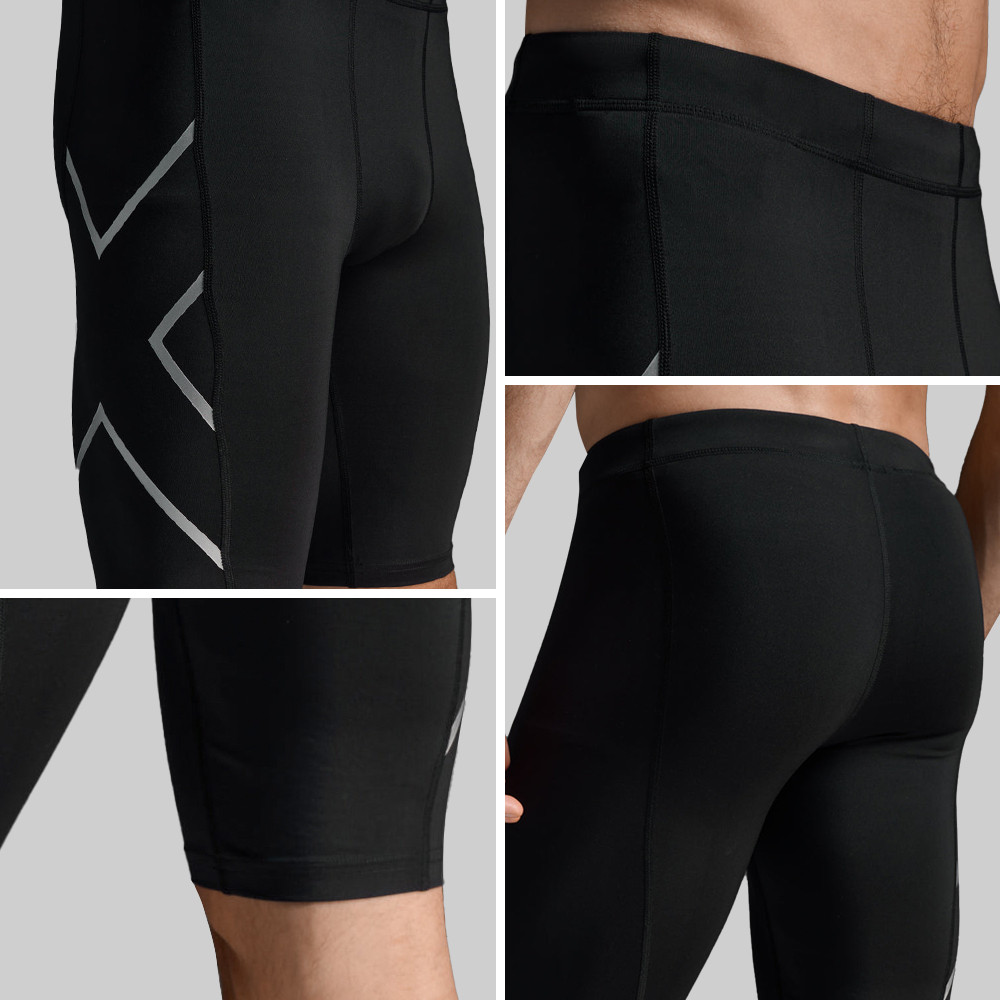
Base layers sit directly against the skin, so seam placement is critical. Flatlock seams reduce bulk and friction. Strategic seam positioning away from high-movement zones like the inner thigh, underarm and shoulder blade improves comfort during repetitive motion.
For brands targeting running and high-output training, gusseted crotches in tights and underarm gussets in tops improve mobility and reduce seam stress. These details add construction complexity but meaningfully affect how the product performs in real training conditions.
Waistband and Grip Systems
Waistband design in men's base layer tights affects both comfort and function. Wide elastic waistbands distribute pressure and reduce rolling. Internal drawcords allow adjustment. Silicone grip strips at the leg openings prevent ride-up during movement.
The waistband construction also affects how the tights layer under shorts or joggers. A bulky waistband creates visible lines and discomfort when layered. Planning the waistband profile with the full layering system in mind avoids compromises at sample stage.
Layering Compatibility
Base layers do not exist in isolation. They must work with the midlayers, shorts, joggers and outer shells in the same collection. Color consistency, fabric family coordination and fit ease all affect whether the layering system feels intentional or accidental.
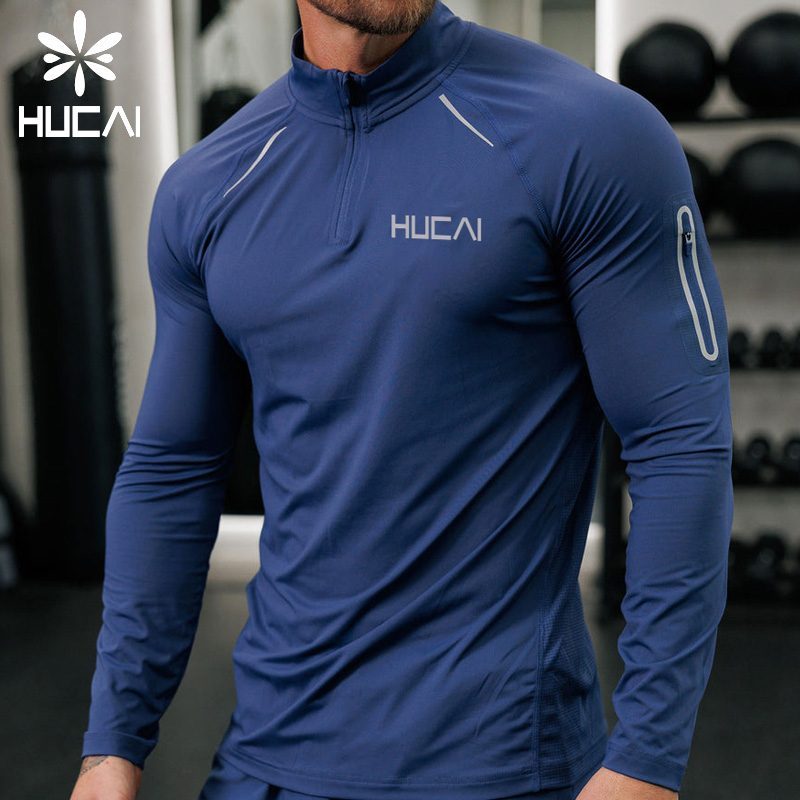
HUCAI activewear recommends planning base layers alongside the rest of the cold-weather capsule. If your midlayer is a slim-fit quarter-zip, the base layer underneath should have minimal bulk at the collar and sleeves. If your outer short is a relaxed-fit training short, the compression tight underneath needs a leg opening that stays put without visible bunching.
Decision Check
Before moving to sampling or bulk discussion, confirm the following:
- Have you defined the target temperature range and training intensity for each base layer piece?
- Have you selected compression levels by product role, not by guess?
- Does your fabric weight plan account for both insulation and breathability?
- Have you planned length variants that match your customers' layering habits?
- Are seam placements and gusset decisions confirmed in the tech pack or reference?
- Have you reviewed waistband and grip details for layering compatibility?
- Does the color story work across base layers, midlayers and outer pieces?
- Have you confirmed sample-to-bulk consistency plans for compression and thermal fabrics?
Manufacturer Insight
Base layer development presents specific challenges that surface during sampling. Compression fabrics with high elastane content behave differently in bulk cutting and sewing than standard activewear knits. Thermal brushed fabrics can show shade variation between rolls. Seam stretch and recovery must be tested under load, not just visually inspected.
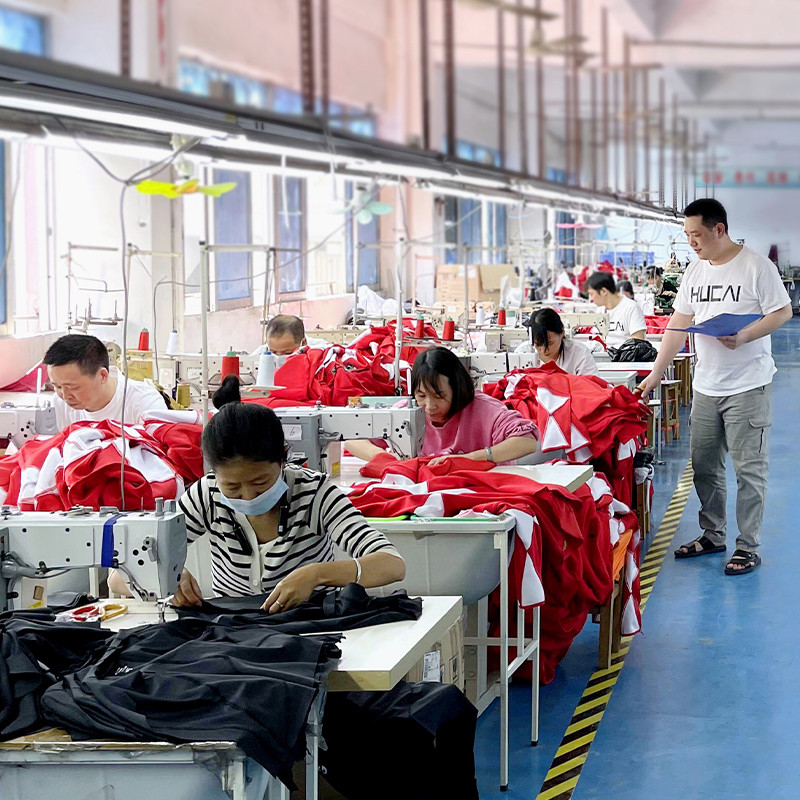
At HUCAI activewear, we address these risks through pre-production review, AQL 2.5 inspection and MES-tracked sample-to-bulk coordination. Fabric rolls are checked for weight and shade consistency before cutting. Sewing parameters are confirmed on the first production sample and tracked through the run. This level of follow-through matters especially for base layers, where fit and feel under movement are the entire product promise.
FAQ
What is the MOQ for custom men's base layer development?
MOQ typically starts from 200 pcs per style, though the exact number depends on fabric choice, color count, size range, compression specifications and custom trim requirements.
How long does a base layer sample round usually take?
Sample timing depends on fabric sourcing, pattern work, compression testing and any fit revisions. After reference images or tech packs are confirmed, the first sample usually takes several weeks depending on fabric availability.
Can you help if we only have reference images and no tech pack?
Yes. HUCAI activewear supports ODM development for growing brands that have direction but not full technical documentation. We help translate reference products into buildable specifications.
What should be confirmed before discussing base layer bulk production?
Confirm compression level, fabric weight and composition, seam type and placement, waistband construction, length variants, color consistency across the collection and how base layers layer with other pieces in the capsule.
How should brands choose between brushed thermal and smooth compression fabrics?
Brushed thermal fabrics prioritize warmth and are ideal for outdoor training in cold climates. Smooth compression fabrics prioritize muscle support and moisture management, working better for high-output indoor sessions or milder cold conditions. Many collections include both.
What usually causes repeated revisions in base layer sampling?
Common issues include compression level mismatch, waistband rolling or digging, seam irritation during movement, leg opening ride-up and fabric recovery loss after washing. Addressing these in the first sample spec reduces revision rounds.
How do brands balance fit, fabric recovery and bulk consistency?
Fit targets should be confirmed with fabric behavior in mind. High-elastane fabrics recover differently than low-stretch knits. Sample approved fit should be documented with specific measurements, and bulk fabric should be tested for recovery before cutting.
Should base layers be developed before or after midlayers and outer shells?
Ideally, base layers are developed alongside the rest of the collection. Their fit and fabric thickness affect how midlayers and outer pieces layer on top. Developing them in isolation often leads to fit mismatches at final styling.
Final Takeaway
Men's base layer collection planning is a structural decision, not a fabric selection exercise. The brands that get it right plan compression levels, fabric weights, coverage variants, seam logic and layering compatibility as one system. Starting with a clear product role for each piece and confirming sample-to-bulk consistency through tracked development keeps the project on schedule and the final collection coherent.
HUCAI activewear combines OEM/ODM development support with quality checkpoints and production follow-up for private label men's activewear projects. From fabric selection through sample approval and bulk coordination, we work with brands to build base layer collections that perform in real training conditions.