Men's Training Sets: How to Plan MOQ 100 Without Excess SKU Complexity
- Share
- Issue Time
- Nov 23,2026
Summary
A men's training set stays inside MOQ 100 pcs/style when the pair counts as one style: one fabric article, one color standard and matched quantities. The guide covers the style definition, a 100-piece color-size matrix, shared material decisions that remove SKUs, cutting and packing costs of small cells, and the PPS to shipment gates that hold one version.
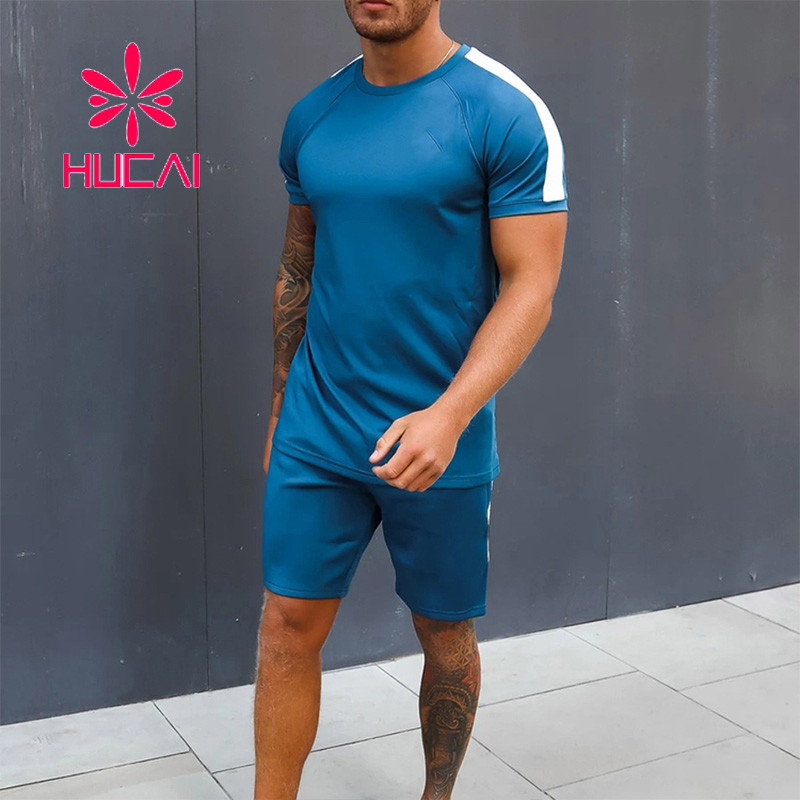
A men's training set looks like the easiest way to lift order value: one top, one bottom, one color, sold together. Then the order sheet opens and the same idea has become nine styles, four colorways and a size curve nobody can cut. The set is rarely the problem; planning it as a styling decision before an order structure is.
This guide is for brand owners, product developers and sourcing managers launching a men's training set at MOQ from 100 pcs/style without turning it into a SKU catalog. It covers how a set counts as a style, how to lay out a 100-piece color-size matrix, which material decisions remove SKUs, what small cells cost in cutting and packing, and the gates that hold one version from PPS to shipment. HUCAI activewear develops these programs as OEM and ODM work for private label buyers, so the order structure is reviewed with the fabric, block and color decisions rather than after them.
Quick Answer
A men's training set stays inside MOQ 100 pcs/style when the pair is defined as one style, not two: one top block, one bottom block, one fabric article, one color standard and one branding method, ordered as matched quantities. Plan one colorway against a full size curve first, so every size cell carries enough pieces to cut and pack. Add a second colorway only when each cell clears the agreed cut floor. SKU complexity comes from three late decisions: selling the pair as separates, adding colorways before the curve is proven, and letting top and bottom drift onto different fabrics or lots.
Table of Contents
- Who This Article Is For
- Why a Set Multiplies SKUs Faster Than a Single Piece
- Define One Style Before You Count Anything
- The 100-Piece Color-Size Matrix
- Shared Materials: Where SKU Reduction Comes From
- Cutting, Packing and the Cost of Small Cells
- Gates From PPS to Shipment
- Decision Check
- Founder's Technical Insight (Jean Yuan)
- FAQ
- Final Takeaway
Who This Article Is For
- Primary reader: product developers and sourcing managers building a men's training set program against a fixed opening budget.
- Secondary reader: brand owners and private label buyers moving from single-piece orders into matched sets, and established brands pruning a set range that grew one colorway at a time.
- Product stage: from brief and style count through quotation, PPS, first cut and the first reorder.
- Problem being solved: a set program that meets the minimum on paper but fragments into too many colorways, size cells and top-bottom combinations to cut, approve and reorder cleanly.
- Who may not need this article: teams still deciding whether to sell sets at all, or still mapping product roles for a first capsule. Those decisions come earlier and are covered in the linked guides.
What you gain from this article: a definition of "one style" for a set that you can put into a purchase order, a color-size matrix you can fill in before requesting a quotation, the material decisions that remove whole SKUs from the program, and the gate list that stops colorway two from becoming an unapproved version of colorway one.
Why a Set Multiplies SKUs Faster Than a Single Piece
A single tee is easy to count: one style, one fabric, one block, one pattern. A set is harder, because the unit of sale and the unit of production are not automatically the same thing.
Sold as a pair, one style means one top block plus one bottom block in one fabric and one color standard, ordered as matched quantities. Sold as separates, the same two garments become three items: the top, the bottom and the pair.
Public ranges across leading performance brands show both models: some sell a matched tee and short as one buy unit, others sell the blocks as separates. Both work. What does not work is deciding which applies after the purchase order is issued.
The table counts the same design three ways.
| Order structure | Styles counted for the 100 pcs minimum | Total pieces at minimum | What it buys you |
|---|---|---|---|
| Pair sold as one unit, one colorway | 1 | 100 | Full size curve inside one style, one dye lot, one approval |
| Pair sold as one unit, three colorways | 3 | 300 | Three dye lots, three approvals, same blocks |
| Separates, one colorway | 2 | 200 | Independent replenishment, separate sell-through data |
| Separates, three colorways | 6 | 600 | Maximum shelf coverage, maximum approval load |
| Pair plus separates, two colorways | 6 | 600 | Sold both ways, with pairing risk carried by the brand |
None of these structures is wrong. The last is simply the most expensive to run: the same two blocks need three approval routes, and the pair must still match when a customer buys across colorway rows. Choosing the structure at brief stage, and writing it into the pre-production file, keeps a 100-piece program simple later.

Define One Style Before You Count Anything
The word style carries three meanings in a set program: a design, a purchase order line and a unit of approval. They have to be the same thing, or the count will not hold. Write the definition into both the purchase order and the pre-production file.
A workable definition lists the block IDs for both pieces, the fabric article number, the color standard, the branding method and placement, the thread shade, the trim list and the label set. Anything that changes one of those fields is a new style. Anything that does not is a change to an existing one.
- New colorway on the same blocks: a new style for minimum and dye lot purposes, even though the pattern is unchanged.
- New inseam or leg opening: a new bottom style, because the marker and measurement sheet change.
- New neckline, sleeve or body length: a new top style, for the same reason.
- Top from one program with a bottom from another: a new pair style, needing its own paired wash and PPS even if both pieces were approved separately.
- Trim or label substitution: not a new style, but a re-approval, because branding and hand feel change.
At HUCAI activewear this definition sits at the top of the pre-production file, so the pattern room, the cutting order and the inspection checklist reference one style number instead of three readings of the same brief. How the two pieces are held together technically is covered in the guide to developing a training set as a coordinated product system; this article counts what that coordination costs.

The 100-Piece Color-Size Matrix
The artifact that actually controls SKU complexity is not the range plan. It is a matrix: colorways down the side, sizes across the top, pieces in each cell, and 100 at the foot of every style column.
Three allocations of the same 100 pieces show the trade-off. The numbers are illustrative; the shape of the cells is the point.
| Allocation | S | M | L | XL | XXL | Pieces per cell |
|---|---|---|---|---|---|---|
| One colorway, 100 pcs | 10 | 24 | 28 | 24 | 14 | 10 to 28 |
| Two colorways, 50 pcs each | 5 | 12 | 14 | 12 | 7 | 5 to 14 |
| Three colorways, 33 to 34 pcs each | 3 | 8 | 10 | 8 | 4 to 5 | 3 to 10 |
The total is identical in all three rows. What changes is whether each cell is large enough to cut, pack and inspect without extra handling: a cell of three pieces usually means a separate spread for that size and a partial roll for one color.
Four things set the practical floor for a cell, and all four should be agreed before the matrix is signed:
- Cutting: how many pieces per size one spread carries without wasting fabric at the ends of the marker.
- Fabric booking: the minimum a knitter or dyehouse will run in one color, and whether top and bottom can share that booking.
- Packing ratio: whether cartons are solid size, solid color or assorted, and what the distribution partner accepts.
- Inspection: whether the sample size for the AQL 2.5 check can represent a cell at all when that cell is a handful of pieces.
The recommendation is unglamorous: launch one colorway against a complete size curve, then add color when sell-through data exists and the second colorway still clears the floor. A colorway is easy to approve and hard to unwind, because it carries a dye lot, a lab dip, a shade approval and its own inspection sample. HUCAI activewear reviews the matrix against the fabric booking before quotation, which is where three colorways usually become two.

Shared Materials: Where SKU Reduction Comes From
Most SKU reduction in a set does not come from cutting styles. It comes from consolidating materials, because every extra fabric, trim or label carries its own minimum and approval.
The strongest consolidation is one fabric article for both pieces. Where the training role allows it, the tee and the short come from the same quality, weight band and, ideally, the same dye lot. That removes a second booking, a second set of shrinkage and recovery data, and the most common set complaint: two pieces that were meant to match and do not after five washes.
Where the bottom genuinely needs more abrasion resistance, accept the second article but cost it honestly: two lab dip rounds per colorway, two test sets, two cutting parameter sets. Training communities regularly report shorts that faded or pilled faster than the tee; the cause is usually two qualities with different dye affinity rather than a weak dyehouse.
| Shared material decision | What it removes from the program | What it still requires |
|---|---|---|
| One fabric article for top and bottom | Second booking, second test set, second shrinkage profile | One weight agreed against the training role |
| One dye lot per colorway across both pieces | Shade band approval, top-bottom mismatch risk | Lot reservation at booking stage |
| One consolidated trim bill of materials | Duplicate trims, duplicate trim minimums, mismatched hardware | Trim approval on the assembled set |
| One label and hangtag set | Second artwork proof, second print run | Placement check on both pieces |
| One packaging specification | Mixed carton logic, separate polybag sizes | Packing ratio agreed with the size matrix |
The fabric library at HUCAI activewear pairs top and bottom by article number rather than by appearance, so a set is quoted on one lot wherever the dyehouse minimum allows it. The reading on bulk consistency and dye lot control explains why that holds in repeat orders, and the note on the hidden cost of custom dye shows what a third colorway really adds to a small order.

Cutting, Packing and the Cost of Small Cells
Cutting is where a neat matrix becomes a real cost. Every colorway is a separate spread, and every size needs enough pieces to justify its place in the marker. One hundred across five sizes averages twenty per size; the same hundred across three colorways averages six or seven per size.
Small cells cost money in three places that rarely appear on the quotation: fabric wasted at the ends of short markers, cutting room time per spread, and the minimum lot charge for a small color run. Individually these are modest. Together they decide whether colorway three earns its place.
Packing adds a fourth constraint. Solid-size cartons are simple to check, but each size cell must fill a carton ratio. Assorted cartons solve that and create a new problem: a partner ordering one size cannot be served from stock.
Keep every cell at or above the number that supports one marker placement per size and one carton ratio. That number is not universal. Agree it with the supplier in writing at quotation and treat it as a hard constraint on colorway count.
Gates From PPS to Shipment
A set drifts when the top and bottom are approved on different days, in different colorways, or against different lots. These gates keep one version in production.
At PPS, measure both pieces against the same block sheet and confirm the paired measurements: tee hem against short waistband, side seam relationship, panel alignment at the seam. Wash the pair together under the protocol used for fabric approval, following ISO 6330 or AATCC 135 dimensional change logic, then re-measure both. A pair that shrinks by different amounts reads as mismatched even when each garment is inside tolerance.
Assess color on both pieces under D65 against the approved lab dip, not the office light. At first cut, pull the first pieces of both garments and check that the side seam and any contrast panel align in wear, since a stripe that matches flat on the table can step at the seam.

Before shipment, the HUCAI activewear QC team runs the set through the AQL 2.5 inspection with both pieces sampled from the same order line, so a color or measurement issue is caught as a set problem. Change control closes the loop: a colorway swap after PPS is a new PPS for that colorway, a lot substitution needs a shade band check, and both are logged against the order.
| Failure mode | Where it shows up | Gate that catches it |
|---|---|---|
| Colorway split below the cut floor | Short markers, partial rolls, uneven packing | Matrix review at quotation |
| Top and bottom shrink differently | Set looks mismatched after first wash | Paired wash and re-measure at PPS |
| Two fabric lots on one colorway | Visible shade step between pieces | Lot reservation and D65 shade check |
| Separates added after launch | Pairing conflicts, duplicate approvals | Order structure fixed at brief |
| Size curve narrower than the market | Stockouts at M and L, dead stock at the tails | Grading review before matrix sign-off |
| Trim or label substitution | Hand feel and branding drift between orders | Trim approval on the assembled set |
Decision Check: Is the Set Program Ready for a 100-Piece Order?
Before requesting samples or confirming a quotation, confirm the following:
- Style definition: top block, bottom block, fabric article, color standard and branding method are written into one style number.
- Order structure: the program is declared as a pair, as separates, or as both, and the style count follows that declaration.
- Matrix completed: every colorway and size cell is filled in and the columns total the minimum per style.
- Cell floor agreed: the supplier has confirmed in writing the smallest cell that can be cut and packed without a surcharge.
- Fabric consolidation: one article is used where the training role allows, and any second article is costed with its own test set.
- Lot strategy: one dye lot per colorway is reserved across both pieces, or a shade band approval route is agreed.
- Packing ratio: carton logic is decided against the size cells rather than after production.
- Change control: the rule for colorway swaps, lot substitutions and trim changes is written into the order file.
If six or more are confirmed, the program is ready for a structured sample request and a firm quotation. If fewer are resolved, the cheapest next step is a matrix review with the supplier, not another sample round. At HUCAI activewear the list is reviewed with the tech pack, because matrix and block sheet constrain each other.
Founder's Technical Insight: Jean Yuan's Development Note
"The most expensive colorway in a small set program is usually the third one," says Jean Yuan, Founder of HUCAI activewear, from more than two decades of pattern room and bulk delivery work. "By then the first two colors have consumed the fabric booking, the lab dip rounds and the approval calendar. The third arrives as a small dye lot, sometimes below the minimum that lets us reserve one lot for both pieces, so top and bottom may need a shade band approval before anything is cut."
His advice is to buy coverage rather than variety in the first order. "A set with one colorway and a complete size curve sells the fit. A set with three colorways and two pieces per size sells nothing, because nobody can reorder a size that no longer exists. Put the money into the curve, the paired wash and the trim approval, then add color on the reorder."
He also asks buyers to bring the cut floor into the conversation early. "Ask what the smallest cell is that we can cut without a separate spread and a partial roll. That number, not the design, decides how many colors a hundred pieces can carry."
FAQ
What is the MOQ for custom men's training sets?
MOQ is from 100 pcs/style. A set counts as one style when the top and bottom share one block set, one fabric article and one color standard and are ordered as matched quantities. Final quantity can still be affected by fabric, color, size range, customization, trims, logo method and order structure, so agree the matrix before quotation.
Does a second colorway double the minimum?
It usually does, because a new colorway is a new style for minimum and dye lot purposes. The blocks do not change, but the fabric booking, lab dip, shade approval and inspection sample do. That is why one colorway with a complete curve is the more efficient first order.
How long does a sample round take for a training set?
Sample timing is usually about 10 to 15 days, depending on fabric availability, pattern work, logo method, fit adjustment and revision rounds. Bulk timing is often about 25 to 30 days after approval, depending on the approved sample, fabric and trim readiness, quantity, scheduling and QC checkpoints.
Should the top and bottom use the same fabric weight?
Not necessarily. A short often needs more abrasion resistance than a tee, and forcing one weight can weaken one role. The requirement is transparency: if two articles are used, both need their own test data, and the pair still needs a paired wash because the risk is differential shrinkage.
Can we order the set and also sell the pieces separately?
Yes, but count it honestly. A pair plus separates is three items per colorway, so two colorways become six styles under the minimum, and pairing risk moves to the customer. Decide the model at brief stage and keep color standards identical across both routes.
What should be confirmed before we discuss MOQ or quotation?
The style definition, the order structure, the completed color-size matrix, the cell floor the supplier can cut, the fabric article decision, the lot strategy and the packing ratio. Without these, a quotation is only a guess at a different program.
What causes a set to look mismatched after washing?
Two causes dominate: pieces cut from different fabric lots, or two fabrics that shrink differently even when each passes its own tolerance. A paired wash at PPS plus one reserved lot per colorway removes most of that risk.
Final Takeaway
MOQ 100 pcs/style is not a limit on design. It is a limit on how many decisions one order can carry. A men's training set stays simple when the pair is one style, the first order runs one colorway against a complete size curve, and materials consolidate to one fabric article, one lot per colorway and one trim bill. Complexity arrives through late decisions: separates added after the PO, colorways added before the curve is proven, top-bottom drift onto different lots. Count the style properly, fill the matrix before quotation, and the set stays a set instead of becoming a catalog.
Next Steps
- Ready to develop a set line? Share your tech pack, reference images or target training role, and the team will review the style definition and order structure before quoting.
- Have confirmed specs and a matrix? Start with OEM men's sportswear production, where blocks, fabric and color standards are produced to specification with QC checkpoints.
- Still shaping the range? Explore ODM men's sportswear development for fabric, fit and sample support, or review the set and tracksuit category and the FAQ before sending an inquiry.
About HUCAI activewear
- B2B men's activewear manufacturer supporting OEM, ODM and private label development, from sample to bulk
- In-house pattern, sample and production teams, with fabric, trim and pattern libraries used to align a set before cutting
- Style definitions, matrices and change records tracked through MES and ERP order and production management
- AQL 2.5 based inspection as part of the quality workflow, with pre-production review and inspection before shipment
- Product scope includes men's training sets, T-shirts, shorts, joggers, hoodies, tracksuits and compression wear
MOQ from 100 pcs/style. Current certification information can be reviewed during supplier evaluation based on the project and documentation requirements.