Men's Training Shorts Fabric Selection: Woven Stretch vs Knit
- Share
- publisher
- HUCAI activewear
- Issue Time
- Nov 16,2026
Summary
Men's training shorts fail in bulk when the shell is approved on handfeel instead of measurable fields. This guide compares knit and stretch woven architectures on recovery, drape, abrasion and stretch, sets out the fabric data to request for each, shows how pattern, seam and trim must change when a program switches architecture, and lists the bulk gates that catch seat growth, torn pocket corners and wash skew before shipment.

A men's training shorts program rarely fails at the sewing floor. It fails earlier, when the shell is approved on handfeel and the fabric's behavior under load is never written into the specification. Seat sag, a torn pocket corner or a shine along the inner thigh usually traces back to a fabric decision, not a sewing defect.
Woven stretch or knit is the first structural decision in custom men's training shorts, and it is not a matter of taste. The two architectures carry stretch, recover it, drape and resist abrasion differently, and each needs its own block, seam set and test fields. At HUCAI activewear, shell selection for OEM and ODM shorts programs starts from the movement pattern and the abrasion map of the garment, then moves to the swatch table. This guide compares both paths on recovery, drape, abrasion and stretch, and shows what to specify for each.
Quick Answer
Choose a knit when the short's job is unrestricted range, soft skin contact and fluid drape. Loop structures stretch through geometry, so the fabric moves with the body and needs little pattern engineering; the risks sit in recovery and surface durability.
Choose a stretch woven when the job is shape retention, a clean silhouette and contact with floors, ropes or equipment. Interlaced yarns hold a line and take abrasion better, but reach their range through elastane and panel engineering, which puts tear strength, seam slippage and skew under scrutiny.
Compare the two at equal garment weight and equal product role. A 200 GSM knit against a 130 GSM woven describes two different garments, not two architectures.
Table of Contents
- Who This Article Is For
- Define the Product Role Before You Compare Fabrics
- Knit Shells: Where Recovery and Drape Come From
- Stretch Woven Shells: Where Shape and Abrasion Resistance Come From
- The Four Decision Axes and How to Measure Each
- Pattern, Seam and Trim Conversion When You Switch Architecture
- Bulk Failure Modes by Architecture and the Gates That Catch Them
- Decision Check
- Founder's Technical Insight (Jean Yuan)
- FAQ
- Final Takeaway
Who This Article Is For
- Primary reader: product developers and sourcing managers with a men's training shorts program moving from line plan into sampling, where the shell still has two candidate directions.
- Secondary reader: private label buyers and brand founders who have reference shorts in hand but no fabric specification behind them.
- Product stage: fabric brief and first sample round, before the pre-production sample is signed off.
- Problem being solved: the sample looks right and the bulk does not, because recovery, drape, abrasion and stretch were never written as measurable fields.
- Who may not need this article: teams that already run a locked fabric platform with a current test report and only need a color or logo change on an existing style.
What you gain from this article: a role-based way to choose between knit and stretch woven, the test fields to request for each, the construction changes a fabric switch forces, and the bulk gates that catch architecture-level failures before shipment.
Define the Product Role Before You Compare Fabrics
The useful question is not which architecture is better in general, but which stress the garment meets most often. A short used for sled pushes, rope climbs and floor work lives in a different surface environment than one used for treadmill intervals and machine circuits.
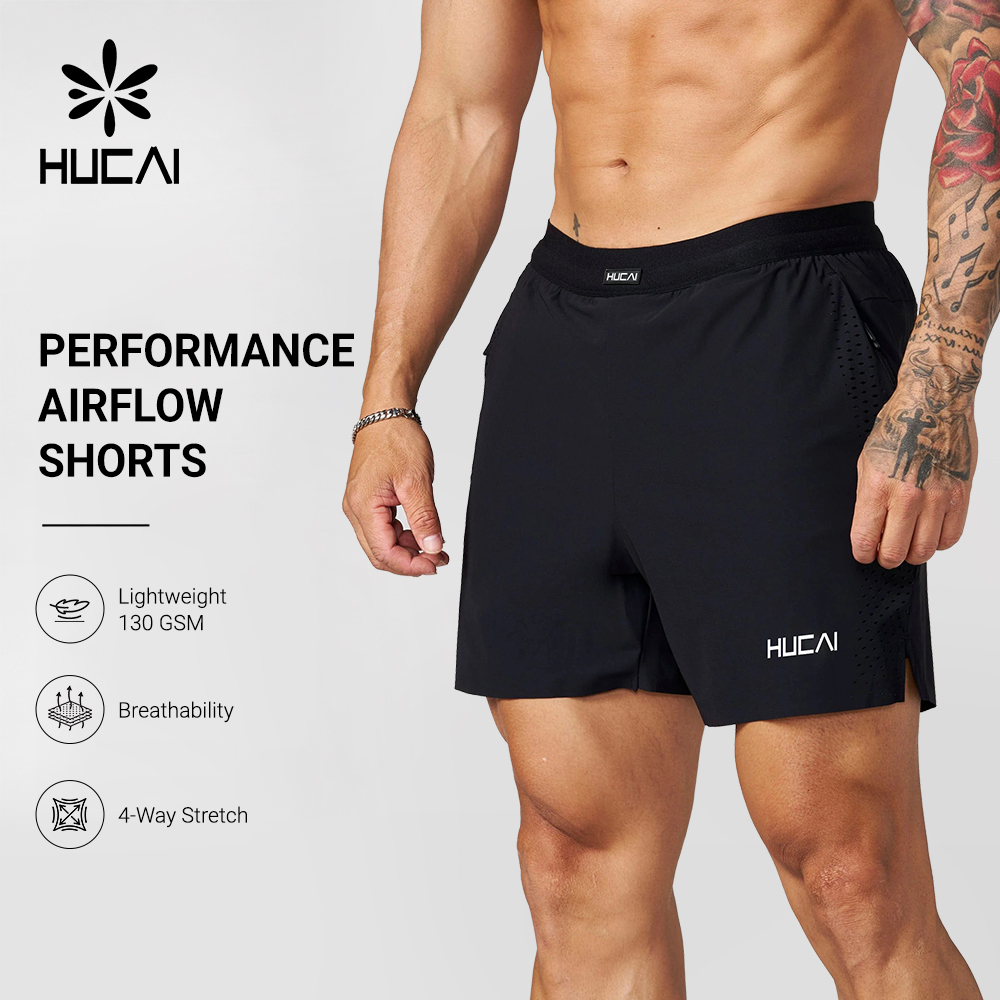
Three roles cover most men's programs: unrestricted range with skin contact, where inner-thigh comfort dominates; structure and surface durability, where the short must hold a clean line and survive equipment contact; and a hybrid of both. Fabric family selection inside the woven path is covered in our guide to stretch woven shell and liner compatibility; this article stays on the architecture decision and the specification each path needs.
| Product role | Architecture that usually fits | What the buyer must control |
|---|---|---|
| All-direction range, skin contact, worn for long sessions | Knit: jersey, interlock, pique, mesh | Growth after washing, modulus, opacity, pilling |
| Shape retention, clean silhouette, floor and equipment contact | Stretch woven: plain, twill, ripstop | Tear strength, seam slippage, stretch direction, skew |
| Structured look with free movement | 4-way stretch woven, or knit body with woven panels | Panel seam strength, differential shrinkage between components |
| Compression layer under a loose shell | Knit with controlled modulus | Modulus curve, seam pressure, recovery after repeat wear |
A common mistake is choosing the architecture from a competitor sample without identifying the role that sample was built for. A structured woven short that photographs well is often the wrong shell for customers who train five times a week, and the reverse holds too.
Knit Shells: Where Recovery and Drape Come From
A knit is built from interlocking loops, so stretch is a property of the structure rather than an additive. That is why jersey or interlock extends comfortably with modest elastane and returns without fighting the wearer. The trade-off is compression: once loop geometry is exhausted, the fabric grows.
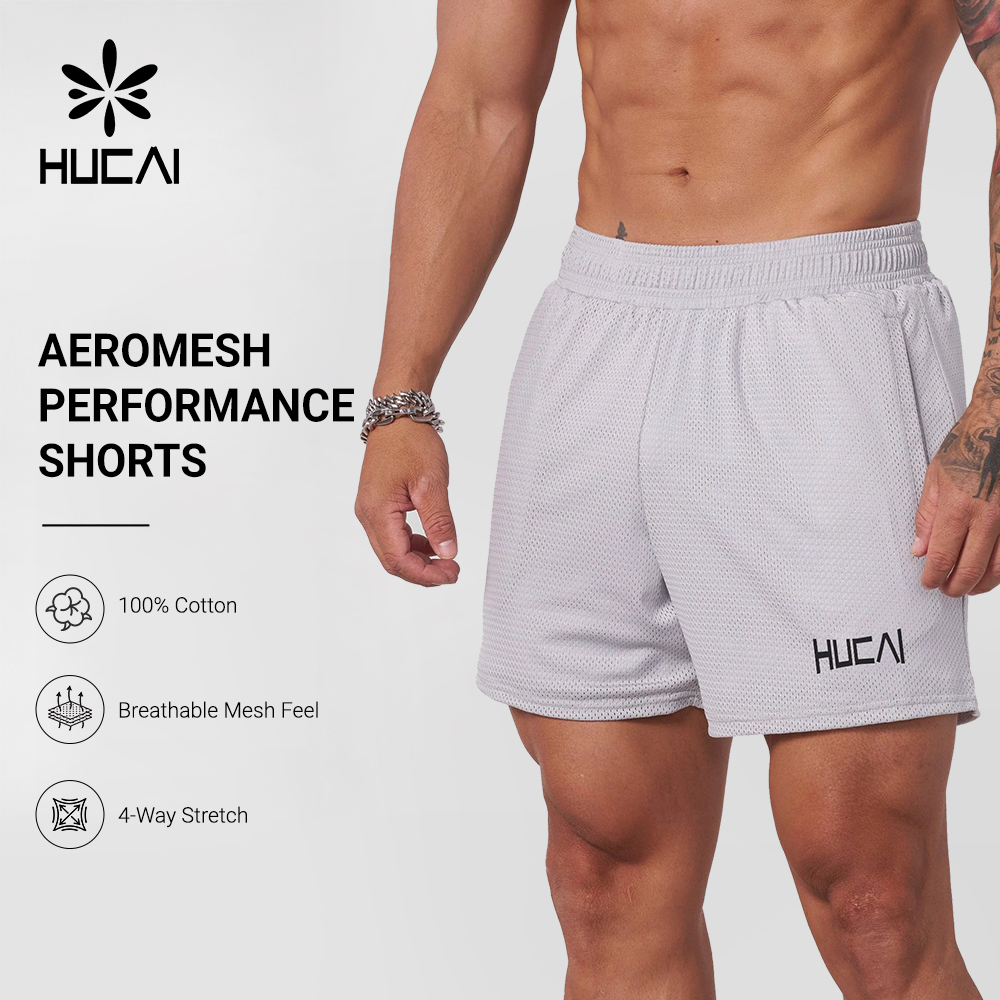
Structure sets much of the behavior. Single jersey is light and fluid and depends on opacity control. Interlock is denser and more stable on both faces. Pique and mesh build surface texture and ventilation paths. Spacer and double-knit add thickness but change drape, so a jersey block needs re-checking at seat and thigh.
The field that separates a workable knit from a problem knit is growth, not elongation. A fabric that stretches to 80 percent and returns to 60 percent passes a hand-pull test and still sags at the seat within weeks. At HUCAI activewear, knit approval sheets pair elongation and residual growth with modulus, so the force needed to reach working extension is read alongside recovery rather than guessed from handfeel. Loops also abrade against loops, which makes pilling a specification item for the inner thigh.
Fields to request from the knitter
- Composition, yarn type and elastane percentage, plus where the elastane sits in the structure.
- Weight in GSM, measured on the finished, relaxed state.
- Elongation and residual growth in both directions, following ASTM D2594 logic for knit stretch.
- Recovery after repeated extension, reported as a percentage of the original dimension.
- Pilling and surface change after abrasion, by Martindale methods such as ASTM D4970 or ISO 12945-2.
- Dimensional change after home laundering under AATCC 135 or ISO 6330, with opacity checked on the lightest colorway.
Stretch Woven Shells: Where Shape and Abrasion Resistance Come From
A woven is built from interlaced warp and weft, so it has almost no inherent stretch. Range of motion comes from elastane, weave geometry or both. In exchange the structure holds a line, resists distortion under load and takes surface contact better than most knits at similar weight, which is why stretch wovens dominate structured silhouettes and hard floor use.
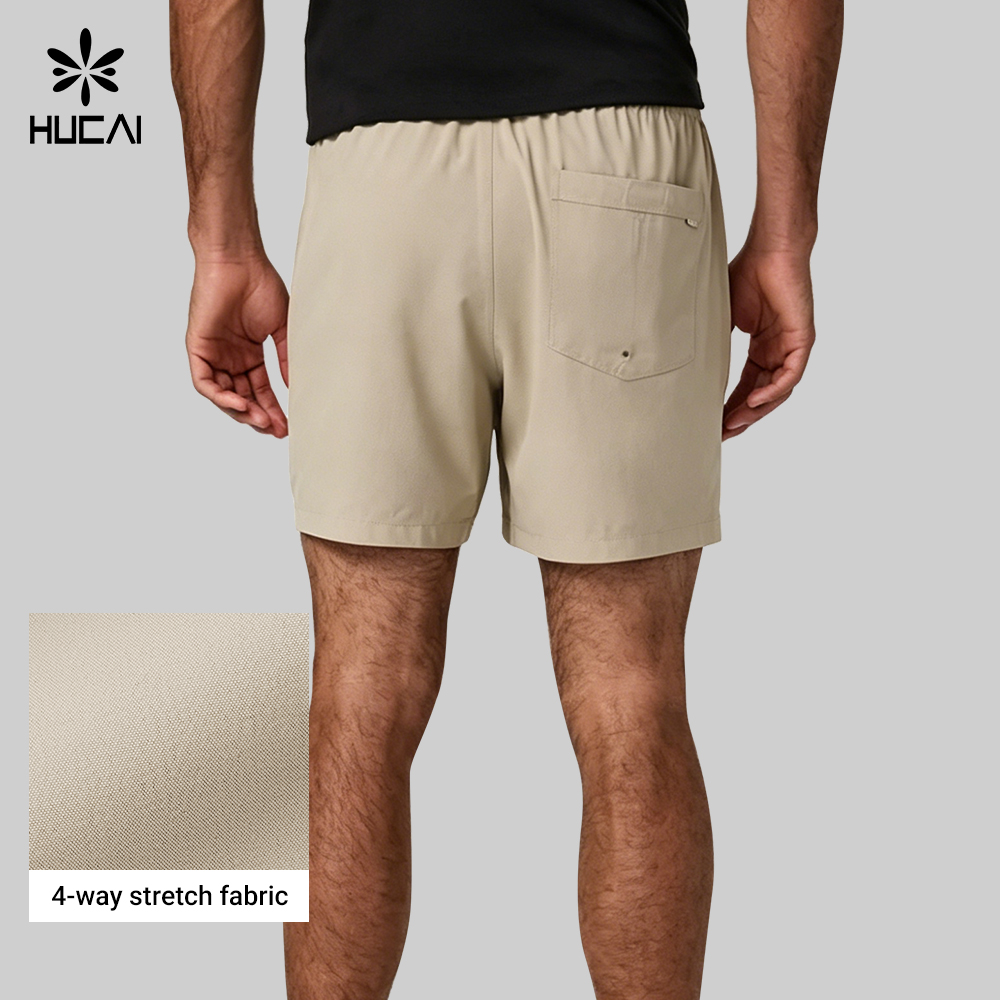
Construction details decide how far that advantage goes. Plain weave is stable and consistent to produce. Twill adds diagonal structure and a drier hand, improving drape without losing shape. Ripstop limits tear propagation, which matters at pocket corners and crotch seams where stress concentrates. Weft-only elastane gives 2-way movement; warp and weft elastane produces the 4-way behavior most training blocks assume.
The failure mode specific to this architecture is tear. High stretch and high tear strength pull against each other, and a shell engineered for maximum elongation can lose the strength needed at a bar-tacked corner. Technical apparel merchandisers running OEM programs usually treat tongue tear and seam strength as fixed approval fields for any stretch woven. Finishing adds a second risk: heat-setting tensions decide whether the fabric returns to a square state after washing, and a skewed roll shows leg twist on the body.
Fields to request from the weaver
- Composition, weave type, yarn denier and elastane direction.
- Stretch percentage and residual growth in each direction the block relies on.
- Tear strength by tongue tear, such as ASTM D2261, reported for warp and weft.
- Abrasion cycles by Martindale logic under ASTM D4966 or ISO 12947, on the ordered weight and finish.
- Seam strength of the proposed construction, per ISO 13935-2 or an agreed equivalent.
- Dimensional change and skew after laundering, per AATCC 135 and AATCC 179 logic.
The Four Decision Axes and How to Measure Each
Recovery, drape, abrasion and stretch are usually discussed as adjectives. Converted into measured fields, they become comparable across two candidates and explain most of the gap between a sample that holds and a bulk that does not.
Recovery decides shape after load and laundering, and is read as residual growth after a defined number of home washes. Drape decides silhouette and cling, most practically assessed by hanging the actual block under the same light. Abrasion decides service life at the inner thigh and seat, where Martindale cycles give comparable numbers. Stretch decides movement only in the direction tested, so name the movement plane and require data in it.
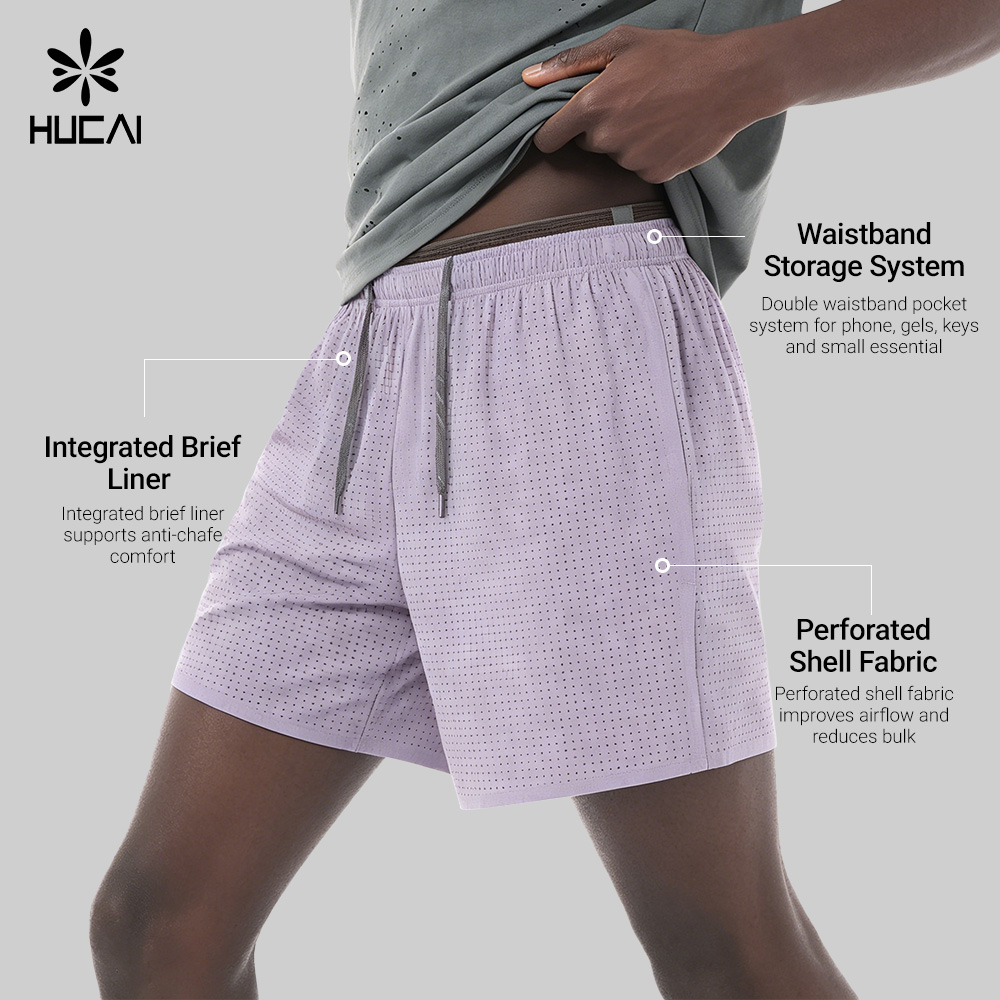
| Axis | What it decides in the garment | How to measure and what to request | What goes wrong when it is under-specified |
|---|---|---|---|
| Recovery | Seat and thigh shape after wear and washing | Residual growth after repeated extension, plus dimensional change after agreed wash cycles | Bagging at the seat, hem flare, a short that looks worn after two weeks |
| Drape | Silhouette, cling and whether a panel reads as designed | Bending length or cantilever data, plus a photographed hang check on the actual block | Board-like front on a knit block, or cling that was not in the lookbook |
| Abrasion | Service life at inner thigh, seat and pocket corners | Martindale cycles to a defined surface change, with pilling assessed on the same lot | Surface fuzz and thinning well before the seams fail |
| Stretch | Range of motion in the working plane | Directional elongation at a stated force, plus growth, in the plane the movement requires | Crotch seam strain, restricted squat depth, torn stress points |
The axes interact, which is why single-number approval fails. Raising elastane improves stretch and often lowers tear strength; increasing weight improves opacity and abrasion but reduces drape and airflow. Set a priority order, accept a controlled compromise on the rest, and document it so the next order does not silently reopen the decision.
Pattern, Seam and Trim Conversion When You Switch Architecture
Fabric decisions propagate. A block developed for a knit carries negative ease, drafted smaller than the body so loops extend and the garment follows. Cut that block in a stretch woven and the short becomes tight, the crotch seam takes load it was never designed for, and the sample fails for reasons unrelated to fabric quality.
Construction moves with the architecture. Knit shells are usually joined with a 4-needle 6-thread flatlock that preserves stretch across the seam; wovens take a 5-thread safety stitch or an overlock plus topstitch. Hems, waistbands, pocket bags and logo application follow the same logic: knit solutions rely on elasticity, woven solutions on structure and reinforcement.

This is where a swatch library stops being enough. The HUCAI activewear pattern room runs a conversion check whenever a program changes architecture: the block is re-marked, gusset necessity is decided, seam type and stitch density are confirmed against the fabric, and the trim set is re-tested at the new stretch level.
| Element | Knit shell | Stretch woven shell | What changes on a switch |
|---|---|---|---|
| Block and ease | Drafted with negative ease; body follows loop stretch | Drafted with woven ease; movement comes from gusset and articulation | Re-block required; a knit block cut in woven strains at the crotch |
| Crotch | Flat gusset or none, depending on activity | Gusset or articulated panel usually required | Add panel and re-check inseam proportion |
| Main seam | 4-needle 6-thread flatlock | 5-thread safety stitch, or overlock with topstitch | Seam allowance, stitch density and needle size all change |
| Hem and waistband | Coverstitch hem, self band with elastic | Double-fold or bonded hem, elastic tunnel with drawcord | Elastic tension and hem behavior tested on the new fabric |
| Pocket and logo | Knit or mesh bag, low-temperature transfer | Woven bag with bar-tacks, more stable transfer | Corner reinforcement and transfer adhesion re-checked |
Bulk Failure Modes by Architecture and the Gates That Catch Them
Most architecture-level failures are predictable, and each has a gate where it can stop before cutting. The patterns below recur because the same fields keep missing from the specification.
| Architecture | Failure in bulk | Root cause | Gate that catches it |
|---|---|---|---|
| Knit | Seat and thigh growth after a few weeks of wear | Loop compression plus insufficient recovery; fabric approved on elongation alone | Growth measurement on the washed pre-production sample, repeated at pre-shipment |
| Knit | Pilling and fuzz at the inner thigh | Fiber and filament choice combined with surface finish | Pilling test on the bulk lot, not only the development roll |
| Knit | Wavy hem and rolling waistband | Coverstitch tension and elastic ratio set on a different fabric | Hem and waistband measurement on the first 50 pieces |
| Woven | Torn pocket corner, crotch seam slippage | Low tear strength at high stretch; seam without topstitch or bar-tack | Tongue tear and seam strength reports at pre-production sample |
| Woven | Leg twist and diagonal skew after washing | Weft insertion and finishing tension; cutting direction not controlled | Skew check on the washed sample plus a cut-direction check at spreading |
| Woven | Shine or glaze at the seat | Press temperature and finishing pressure on synthetic stretch woven | Recorded press parameters and a visual first-off check |
The gates run in the same order for either architecture. Fabric lot approval comes first, with measured fields attached to the lot rather than to a generic fabric name. The pre-production sample is reviewed with a measurement sheet and a washed counterpart, so recovery is judged after laundering. First-off inspection confirms seam type, stitch density and elastic ratios; mid-production and pre-shipment checks return to the same fields, and an AQL 2.5 inspection closes workmanship.
Repeat orders are where architecture decisions are quietly tested. A second bulk in a new fabric lot can shift recovery slightly and still change the fit a customer feels, which is why the approved lot, test values and construction details sit in one record tracked through the MES and ERP production follow-up at HUCAI activewear.
Decision Check: Is Your Shorts Shell Ready for Sampling?
Before requesting samples, confirm the following:
- Product role is named: the program states whether the short is built for range and skin contact, for structure and surface durability, or for a hybrid, and the priority order is written down.
- Comparison is fair: candidates are assessed at similar garment weight and for the same role, not as a light knit against a heavy woven.
- Recovery is measured after washing: residual growth and dimensional change are reported on a laundered specimen, not only on a flat roll.
- Stretch is directional: elongation and growth are stated for the plane the movement requires, with the force level defined.
- Abrasion and tear are both on the sheet: abrasion cycles for the wear zones and tear strength for the stress points appear in the same approval document.
- Construction matches architecture: seam type, stitch density, hem finish and waistband build are confirmed against the chosen fabric, and the block has been re-marked if the architecture changed.
- A named contact owns the fabric record: one person at the brand and one at HUCAI activewear hold the approved lot, the test values and the revision history, so a reorder is compared against data rather than recollection.
If five or more criteria are confirmed, the direction is ready for a structured sample request. If fewer are resolved, one more development round on the fabric brief costs less than a bulk order corrected after the first season.
Founder's Technical Insight: Jean Yuan's Development Note
"In twenty years of pattern and fabric work, I have seen more shorts programs damaged by one unmeasured number than by any sewing defect," says Jean Yuan, Founder of HUCAI activewear. "The number is usually growth. A mill sends an elongation figure because that is what the buyer asked for, and everyone feels reassured. Six weeks later the seat drops, and the brand concludes the fabric was poor, when the specification never asked it to come back."
"The second thing I check is the interaction between fabric and construction. A 4-way woven with excellent stretch will still tear at a pocket corner without a bar-tack and a topstitch, because the load concentrates on four stitches. A knit with modest recovery will still hold its seat if the waistband and block support it. Fabric and construction are one decision, and they are usually written in two documents by two people."
"My advice for a brand comparing the two is to build a small trial set: one style, one color, both architectures, same block family, both washed five times before anyone signs off. Measure the same three points before and after - waist at rest, thigh circumference at a fixed distance from the crotch, and inseam length. That trial predicts bulk behavior more reliably than any swatch meeting."
FAQ
Is a knit or a stretch woven better for men's training shorts?
It depends on the stress the short meets most often. Knits suit programs where range of motion and skin comfort dominate. Stretch wovens suit programs built around shape retention, a clean silhouette and contact with floors or equipment. Many brands carry both and position them by training intensity.
What is the difference between stretch and recovery?
Stretch is how far a fabric extends; recovery is how completely it returns. A fabric can extend 70 percent and recover poorly, which produces a short that fits in the sample room and sags after wear. Both numbers belong in the specification.
How much stretch should a woven shell have for training shorts?
There is no universal figure, because the block, gusset and intended movement set the requirement. What matters is that stretch is stated in the direction the movement uses, that growth is stated beside it, and that tear strength at the stress points is still acceptable at that stretch level.
Why do knit training shorts sag at the seat after a few weeks?
Usually because the fabric was approved on elongation and handfeel without a growth measurement after repeated extension and washing. Loop structures compress under load, and once the loops do not return, the garment grows where it is loaded most.
Which shell resists abrasion better for gym floors and equipment?
Stretch wovens generally hold up better against surface contact at a comparable weight, because the interlaced structure distributes abrasion across a more stable surface. Knits still work when abrasion zones are mapped and the inner thigh uses denser structures or panels, judged on Martindale results rather than fiber name.
Can the same pattern be used for knit and stretch woven shorts?
Not directly. A knit block carries negative ease and relies on the fabric extending; the same block in a stretch woven produces a tighter garment and loads the crotch seam. Switching architecture means re-marking the block, deciding on a gusset, changing seam type and re-testing the trims.
What fabric tests should be requested before pre-production sample approval?
At minimum: composition and weight, elongation and residual growth in the required directions, dimensional change and skew after the agreed wash cycle, abrasion and pilling for the wear zones, tear strength for stretch wovens, and seam strength for the construction - measured on the lot that will be cut.
What is the MOQ and sampling timeline for custom men's training shorts?
MOQ is from 100 pcs/style, with the final quantity influenced by fabric, color, size range and customization. Sampling is usually about 10-15 days and bulk production often about 25-30 days, both depending on confirmed fabric availability, pattern work, logo method, revision rounds and the approved sample. Current certification information can be reviewed during supplier evaluation.
Final Takeaway
Woven stretch and knit are two ways of solving the same problem, and the choice belongs to the product role rather than to preference. Name the dominant stress, compare the candidates at equal weight, and write recovery, drape, abrasion and stretch as measured fields with the wash condition attached.
Then carry the decision into the pattern room. A fabric switch without a re-marked block, a changed seam and a re-tested trim set is not a fabric decision, it is a sample risk. Programs that treat the two as one decision are the ones whose third bulk still measures like the first approved sample.
Next Steps
Ready to develop your men's training shorts? Share your tech pack, reference shorts or target direction, and the HUCAI activewear team will respond with fabric options, construction notes and a sampling plan built around your product role.
Need help with the fabric brief? Send the two candidate directions and the intended use, and our development team will outline which fields to test and where the cost and quality trade-offs sit before you commit to a sample round.
Still comparing options? Review our men's gym shorts development page and the fabric choices for men's sportswear overview, or send a short question through the FAQ and inquiry page.
About HUCAI activewear
- B2B men's activewear manufacturer supporting OEM, ODM and private label development for shorts, T-shirts, tanks, joggers, hoodies, tracksuits and training sets
- Integrated manufacturer-trader setup with in-house sample development, pattern and grading support, and fabric, trim, logo and packaging customization
- Sample-to-bulk coordination with pre-production review and quality checkpoints, AQL 2.5 inspection before shipment, and MES and ERP order follow-up
- Development decisions documented at fabric, trim, pattern, sample, bulk and QC stages so repeat orders can be compared against recorded values
Current certification information can be reviewed during supplier evaluation based on the project and documentation requirements.