Private Label Men's Tank Tops: Armhole Fit and Fabric Stability
- Share
- publisher
- HUCAI activewear
- Issue Time
- Nov 10,2026
Summary
Armhole fit and fabric stability decide whether private label men's tank tops survive bulk. This guide covers armhole depth and circumference specs, binding construction choices, wash-test logic and PPS checkpoints for tank programs.

Private label men's tank tops are usually approved on appearance and rejected on armhole behaviour. A sample can look correct on the form and still gap at the front armhole, cut into the armpit crease, or grow noticeably wider after the first home wash. Those are not styling problems. They are specification and fabric-stability problems, and both are decided long before the cutting table.
This guide is written for brands sourcing men's tank tops and stringers through OEM or ODM development with a men's activewear manufacturer. It concentrates on the two variables that cause most bulk claims in this category: how the armhole is specified and graded, and how the fabric behaves after washing and repeated stretch. HUCAI activewear develops private label gym tank tops from block drafting through PPS and bulk, so the checkpoints below reflect what actually gets measured on the table.
Quick Answer
Armhole fit in men's tank tops is controlled by four numbers: armhole depth measured from the high point shoulder, armhole circumference along the finished edge, front and back drop, and chest width at the armhole line. Fabric stability is controlled by rib recovery, dimensional change after the declared wash cycle, and spirality. Freeze these values in the tech pack, approve them on a washed sample rather than a flat one, and re-measure them on bulk garments from the first carton. MOQ for private label tank programs typically starts from 100 pcs/style, and sample rounds usually take about 10-15 days.
Table of Contents
- Who This Article Is For
- 1. Armhole Fit Is a Coverage Decision, Not a Size Decision
- 2. Writing the Armhole as a Measurable Spec
- 3. Edge Finish: Rib Binding, Self Band or Bonded Raw Edge
- 4. Fabric Stability: Approve the Washed Sample, Not the Flat One
- 5. Six Failure Modes and Where They Enter the Process
- 6. From PPS to Bulk: Controls That Keep the Armhole Consistent
- Decision Check Before You Request Samples
- Founder's Technical Insight: Jean Yuan
- FAQ
- Final Takeaway
Who This Article Is For
- Primary reader: product developers and sourcing managers building a men's tank top or stringer program with a private label supplier.
- Secondary reader: brand owners and technical designers reviewing tank samples who need to explain an armhole problem in measurable terms.
- Product stage: from first tech pack through PPS approval and the first bulk repeat.
- Problem being solved: armhole gapping, cutting-in, edge waviness and post-wash distortion that survive the sample stage and appear in bulk.
- Who may not need this article: teams already running a frozen tank block with documented wash-test history and an approved golden sample for every colourway.
What you gain from this article: a measurement-based way to write tank armhole specs, a construction comparison for armhole and neckline finishing, a wash-test logic you can put into a PPS checklist, and a list of the failure modes that can still be caught before cutting.
1. Armhole Fit Is a Coverage Decision, Not a Size Decision
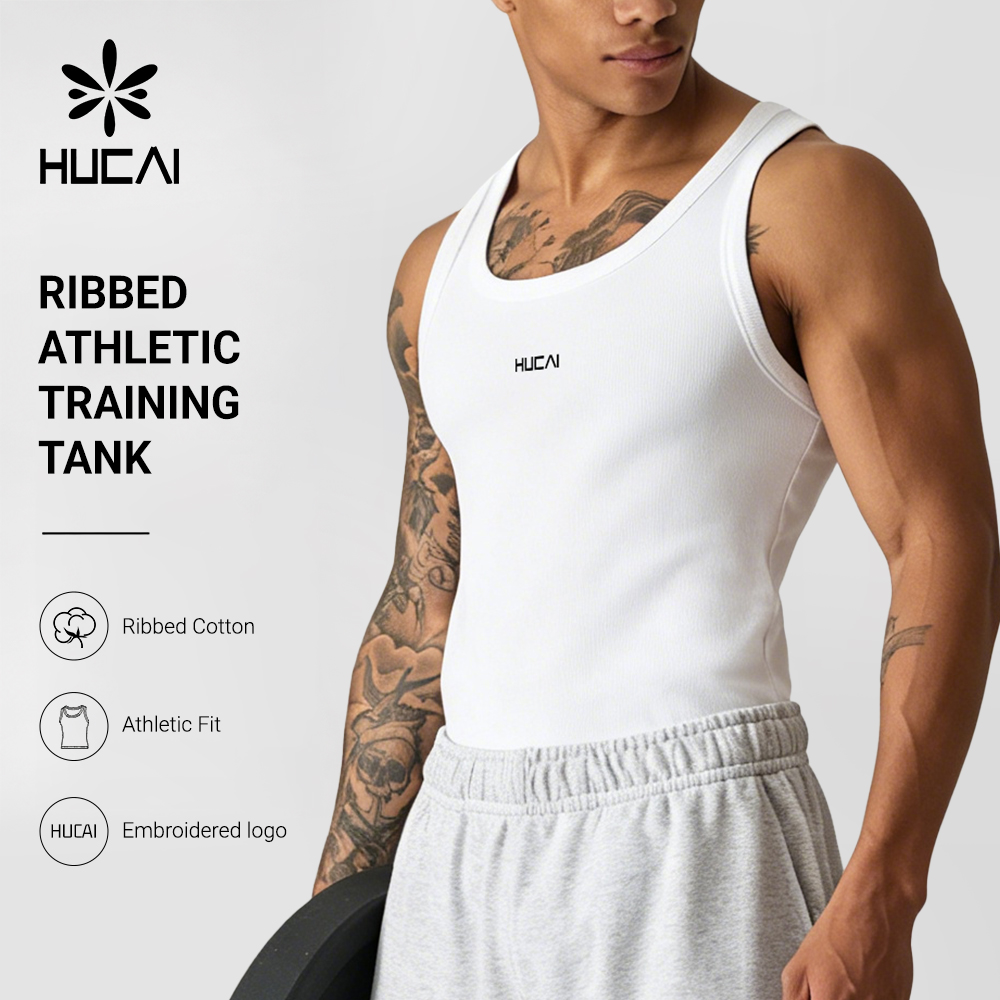
Buyers describe tank armholes by feel: too open, cutting in, riding up at the back. Each of those descriptions maps to a different number, and treating them as one "fit issue" is why revisions repeat. The armhole is a three-dimensional curve cut across a knit panel, so the opening is defined by two independent variables rather than one.
Depth is the vertical distance from the high point shoulder to the underarm point. Circumference is the length of the finished opening measured along its edge. A deep armhole with a short circumference exposes the side of the ribcage and gaps forward. A shallow armhole with a long circumference bunches fabric under the arm, which reads as bulky through the chest.
Coverage depends on a third relationship: how much body panel remains between the armhole line and the centre front and centre back. This is why two tanks with identical depth can feel completely different. The pattern team at HUCAI activewear reviews this relationship in three positions before any sample is submitted: arms down, arm raised to 90 degrees, and arm overhead. Each position exposes a different defect, and a sample that passes only the first is not ready for approval.
Stringers and training tanks carry different intent. A stringer exposes the shoulder and upper back for posing and lifting; a training tank holds coverage during pressing and carrying movements. The same block cannot serve both without a separate grade.
2. Writing the Armhole as a Measurable Spec
Most tank sampling loops come from a tech pack that states "armhole depth 26 cm" without stating where it starts, how the curve is measured, or which size it applies to. Three developers can measure the same sample and report three values. The table below lists the fields that remove that ambiguity.
| Spec field | How to measure | What it decides |
|---|---|---|
| Armhole depth | Vertical distance from high point shoulder to underarm point, garment laid flat without tension | Exposure at the side body and how high the panel sits under the arm |
| Armhole circumference | Tape run along the finished edge, following the curve, no stretch applied | Whether the opening gaps forward or pulls into the armpit crease |
| Front drop and back drop | Separate vertical values at the front and back armhole, not one averaged figure | Front coverage versus back exposure, which is the usual bodybuilding specification |
| Chest width at armhole line | Flat width measured a fixed distance below the underarm point | How much body panel remains beside the opening |
| Binding width | Finished width of the edge finish, measured on the garment | Visual weight of the armhole and how much curve the finish has to control |
| Binding stretch ratio | Length of binding before attachment versus length of the armhole edge it joins | Waviness or puckering after attachment and after washing |
| Grade rule | Change per size for depth, circumference and chest width, stated separately | Whether size L keeps the same coverage ratio as size M |
Name the measurement size in the tech pack, grade outward from it, and give a tolerance per field. For rib knits a tolerance band is usually needed rather than a single target. Recording the values on the sample report, not only in the tech pack, is what makes the second round comparable to the first.
3. Edge Finish: Rib Binding, Self Band or Bonded Raw Edge
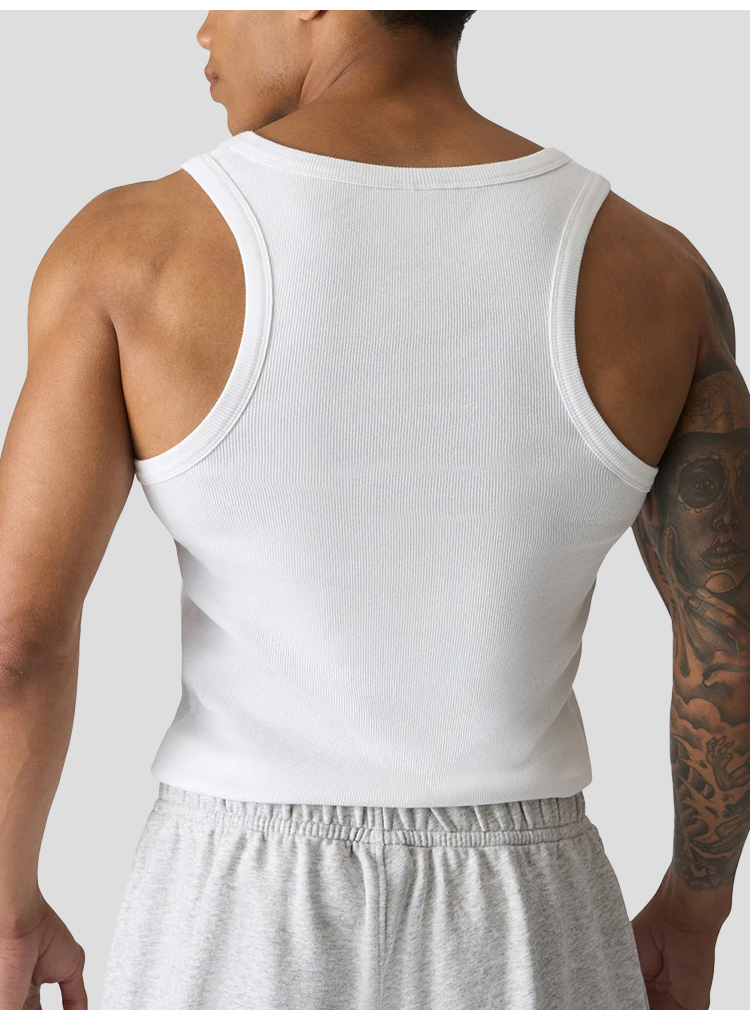
On a tank, the edge finish is a structural component. It is the only element holding a bias-curved opening in shape, and it is the first place where a cheap decision becomes visible. Three routes are common, and the choice should follow the fabric and the training context rather than the sample room's habit.
Rib binding
A separate rib strip, usually 1x1, folded over the raw edge and attached with a cover stitch. It gives the cleanest curve control and the most consistent recovery at the armhole, which is why it suits cotton-rich rib tanks and heavier single jerseys. The trade-off is more operations and a firmer hand at the edge.
Self-fabric band
A strip cut from body fabric, folded and attached flat. It matches the body shade without a separate dye lot and reads lighter in wear, but self-fabric has the same recovery as the panel it is meant to stabilise. On a soft, high-stretch jersey the band can follow the body's stretch instead of resisting it.
Bonded or raw-cut edge
A clean cut edge stabilised with tape or bonding. It gives the lowest-profile armhole and suits synthetic performance knits where bulk at the edge is unwanted. It also removes stitch-based recovery, so the fabric itself must hold the curve and the bonding parameters must be recorded and repeated.
Whichever route is chosen, three process values belong in the tech pack: the stretch ratio at attachment, the stitch type and stitch density, and the seam allowance plus pressing instruction. At HUCAI activewear the binding attachment is recorded as a tension setting on the machine, not only as a specification on paper, because the same nominal ratio applied by two operators produces two different edges.
4. Fabric Stability: Approve the Washed Sample, Not the Flat One
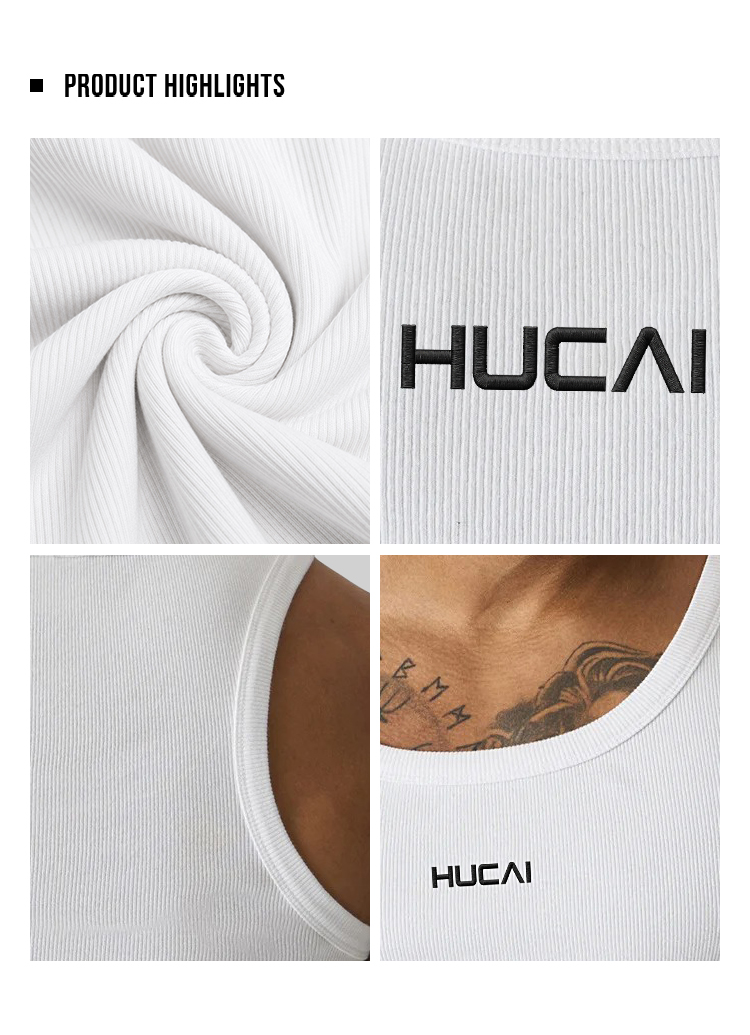
A tank armhole is cut across the bias of the knit, so it is loaded in a direction the fabric was not woven or knitted to resist. That is why growth appears at the armhole and neckline before it appears anywhere else on the garment. Approving a tank from a flat, unwashed sample approves the wrong object.
The practical answer is a short wash and recovery protocol agreed before sampling, run on the actual fabric in the actual colour, and repeated on bulk. Standard test logic gives the structure; the acceptance limits stay a project decision, because a compression-oriented tank and a relaxed cotton rib tank do not share thresholds.
| Test logic | Specimen | What it predicts on a tank |
|---|---|---|
| Dimensional change after repeated home laundering, following ISO 6330 or AATCC 135 practice at the declared care condition | Full garment, three cycles, measured flat before and after each cycle | Whether the body length and chest width still match the approved size |
| Spirality or skew after washing, following ISO 16322 or AATCC 179 practice | Full garment, marked before wash | Side seam twist and armhole rotation, which reads as a fit fault in wear |
| Stretch and growth under sustained load, following ASTM D2594 practice | Fabric strip cut in the armhole direction as well as the body direction | Whether the opening relaxes open after a training session instead of recovering |
| Colour fastness to washing and to perspiration | Body fabric and binding strip, tested separately | Shade shift that makes the binding read darker or lighter than the panel |
Two details decide whether the result is usable. The care condition must match the one printed on the label; a test at a gentler cycle proves little about the garment a customer receives. Body fabric and binding should also be tested as a pair, since a tank is judged on the contrast between them. The fabric library at HUCAI activewear pairs body and trim by lot before sampling, so the finish and the panel are known together.
5. Six Failure Modes and Where They Enter the Process
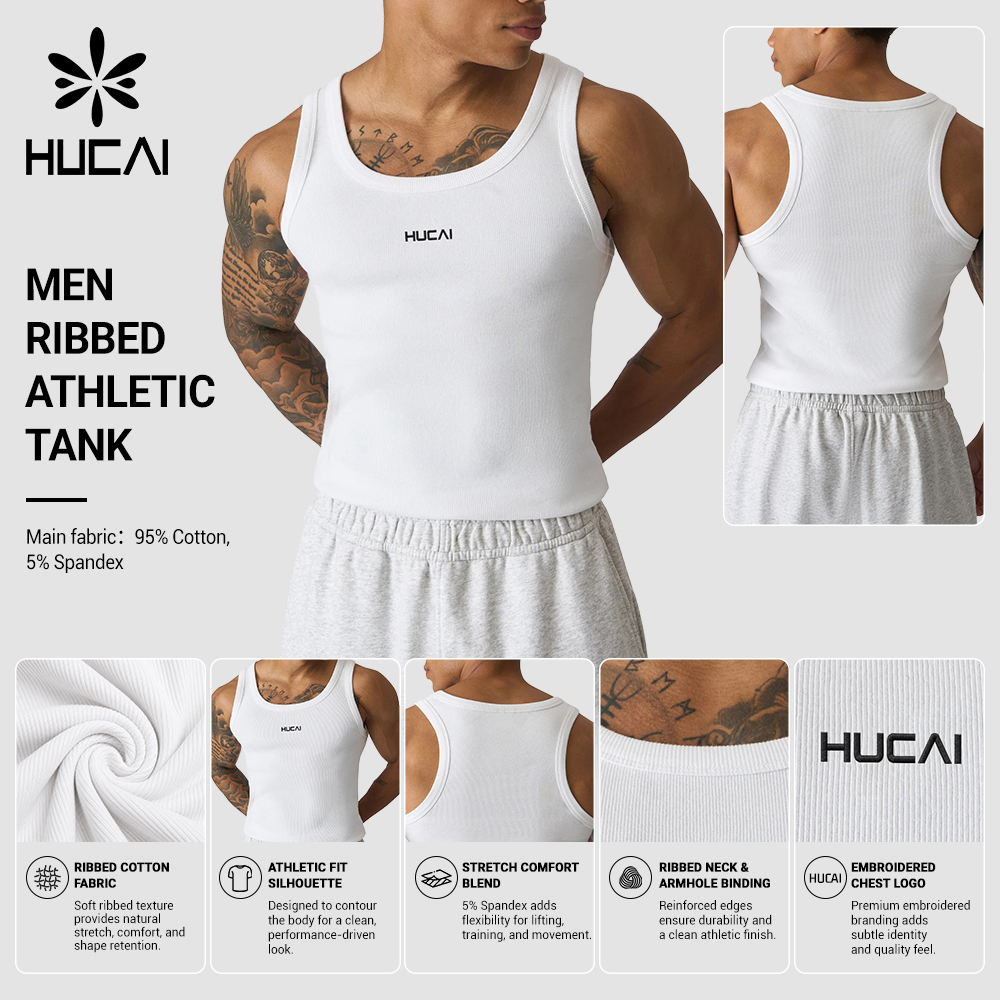
Most tank complaints trace back to a decision made weeks before the garment existed. The table pairs each visible defect with its origin, so the correction is applied at the right stage instead of patched on the sample.
| Failure mode | Usual root cause | Earliest reliable detection |
|---|---|---|
| Front armhole gaps when the arm lifts | Block drafted from a shallow armhole circumference, or chest width reduced without re-checking the opening | Pattern review on the 90-degree arm position |
| Wavy or rippled binding | Binding over-stretched during attachment, or applied to a relaxed edge with inconsistent feed | First-off inspection at the binding operation |
| Armhole grows after washing | Fabric not tested in the bias direction, or body and binding from different lots with different shrinkage | Washed sample measurement, not flat measurement |
| Neckline drops out of shape | Rib with low recovery used for the neck, or a wider finished neckline than the pattern allows | Recovery check on the rib roll before cutting |
| Side seam spirals forward | Knit skew in the fabric, amplified by a narrow panel and a long body length | Skew test on the fabric lot before marker making |
| Binding reads a different shade from the body | Separate dye lots for body and trim, approved under one light source | Shade check under the agreed light at PPS |
6. From PPS to Bulk: Controls That Keep the Armhole Consistent
Once a tank is approved, the risk shifts from design to repetition. What matters is the link between the approved sample, the cutting table and the inspection table.
At PPS stage the sample should be washed and measured rather than reviewed flat. The sign-off record should carry the armhole measurements, the binding stretch ratio actually used, the shade under the agreed light, and the care instruction that will ship with bulk. Approving flat and discovering washed behaviour later is the most expensive sequencing error in this category, and it is avoidable.
In bulk, body and binding for one colour should come from one fabric lot where the order structure allows it. The cut ticket should reference the approved block version rather than a style name, so a later change cannot be applied silently to one size. First-off pieces from each size should be measured before the line continues, and in-line checks at the start and middle of the run catch tension drift on the binding machines while it is still correctable.
Final inspection under AQL 2.5 logic covers workmanship, measurement and packing, and is more useful when the plan names the armhole and neckline as priority points rather than treating the tank as a generic top. HUCAI activewear records fabric, trim, pattern, sample, bulk and QC stages against the same order record through MES and ERP follow-up, so a repeat order is checked against the approved version rather than memory.
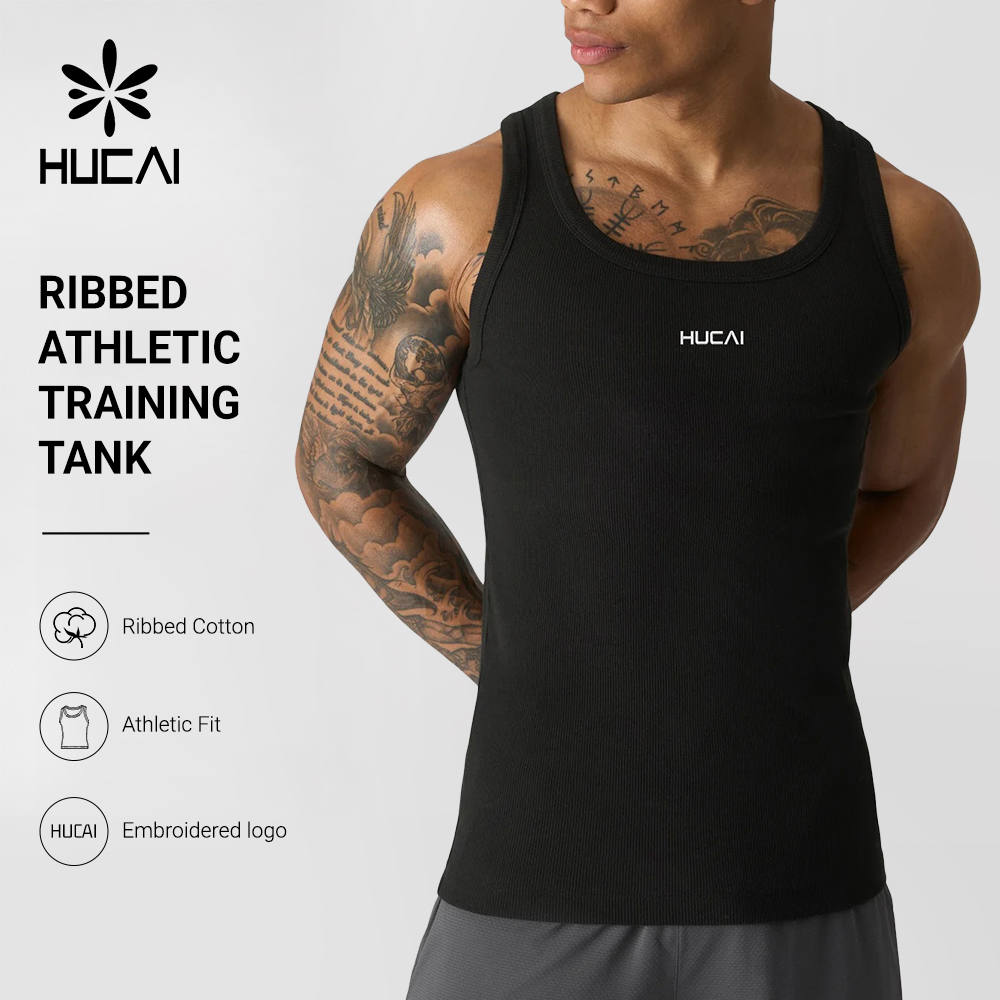
Decision Check: Six Points to Confirm Before Sampling Tanks
Before requesting samples, confirm the following:
- Armhole definition: depth, circumference, front drop and back drop are written separately, with the start point and measurement method stated.
- Coverage ratio: chest width at the armhole line is specified, so the opening is not judged on depth alone.
- Edge finish route: rib binding, self band or bonded edge is chosen against the fabric, with stretch ratio, stitch type and finished width recorded.
- Wash protocol: care condition, cycle count and acceptance limits are agreed before the first sample, and the sample is measured after washing.
- Fabric pairing: body and binding are confirmed from the same or verified lots, with shade checked under an agreed light.
- Bulk control: the approved block version, first-off measurement points and inspection priority list are documented for the production team.
If four or more points are confirmed, the direction is ready for a structured sample request. If fewer are resolved, one development round spent on specification usually costs less than two rounds of sample revision.
Founder's Technical Insight: Jean Yuan on Armhole Recovery
Jean Yuan, Founder of HUCAI activewear, points out from two decades of pattern and production work that the armhole problem in men's tanks is rarely a drafting error. It is a material decision disguised as a fit decision. "Brands often ask for a softer hand feel and a lighter binding on the same tank," he notes. Together those requests remove the recovery the armhole depends on, because the opening is cut on the bias and has nothing else to hold it. In pre-production review we check the rib roll and binding stretch before discussing the pattern, and we ask for a washed sample, not a flat one. A tank that measures correctly on the table and grows in the wash has not been approved; it has only been photographed.
The trade-off is worth stating plainly: a slightly firmer binding and a marginally heavier rib add cost per garment and remove a category of claim that no inspection can catch after shipment. Where positioning depends on an extremely light hand feel, the honest route is a bonded finish on a synthetic knit with recorded bonding parameters, not a thinner binding on a cotton rib.
FAQ
What is the MOQ for private label men's tank tops?
MOQ typically starts from 100 pcs/style. The confirmed figure depends on fabric, colour, size range, customization, trims, logo method and order structure, so it should be confirmed against the actual program rather than assumed from the category.
How long does a tank sample usually take?
Sampling is usually about 10-15 days once the brief, fabric direction and measurement spec are confirmed. Timing depends on fabric availability, pattern work, logo method, fit adjustments and revision rounds. Bulk orders often run about 25-30 days after approvals, subject to the confirmed sample, fabric and order conditions.
Can a tank program start from reference images without a tech pack?
Yes. ODM development commonly starts from reference images, target market and product direction. The first step is to convert those references into a measurable brief covering armhole depth, opening length, coverage and edge finish, because two images can show the same silhouette with very different openings.
Why does an armhole look correct on the table but gap on the body?
A flat measurement cannot show how a bias-cut curve behaves under load. Gapping usually comes from a short armhole circumference combined with a reduced chest width, or from binding that was attached with too little tension to hold the curve. The 90-degree arm position in pattern review, and a washed sample, expose both.
How much shrinkage is acceptable in a cotton rib tank?
There is no universal figure. The limit should be set per program, against the declared care condition, and measured after the agreed number of cycles on the actual fabric and colour. What matters is that the limit is written before sampling and that the same method is used on bulk.
Does a deeper armhole improve mobility?
Not on its own. Depth and circumference move independently. Increasing depth without adjusting the opening length and the body panel can expose the side torso and still restrict the shoulder. Mobility comes from the whole armhole curve and the fabric's stretch direction, not from depth alone.
Should binding be cut on the cross grain?
For rib binding on tanks, cross-grain cutting is the usual route because it puts the rib's stretch along the curve being controlled. The decision still depends on the rib's recovery and the finished width, and it should be recorded with the stretch ratio rather than left to the cutting room.
How do repeat orders keep the same armhole fit?
By keeping an approved washed sample as the reference, recording the block version on the cut ticket, using consistent lots for body and trim, and logging any change to pattern, fabric or finish. Reordering without that record turns a controlled product back into a development project.
Final Takeaway
Tank tops look simple and behave like a technical category, because the most visible part of the garment is an opening cut across the bias. Brands that specify armhole depth, opening length, front and back drop and remaining chest panel as separate values, then approve those values on a washed sample, remove most of the revision cycles this product attracts. The fabric and finish decisions belong together, tested as a pair. Everything after that is repetition control: one block version, recorded settings, first-off measurement and a documented change log.
Next Step
Ready to develop a tank program? Share your tech pack, reference images or target product direction, and the team can review armhole specification and fabric options before a sample slot is booked.
Working with confirmed specifications? Start with OEM sample-to-bulk support, where the approved block, trim and wash protocol carry directly into production planning.
Still shaping the product? Explore ODM development support for fabric, fit and collection planning, or review related guidance on boxy tank and stringer coverage and tank collection planning by muscle group before sending an inquiry.
About HUCAI activewear
- B2B men's activewear manufacturer supporting OEM, ODM and private label development for tank tops, T-shirts, shorts, joggers and training sets
- Sample development with pattern and sample-maker support, plus fabric, trim, logo, label and packaging customization
- Sample-to-bulk coordination with pre-production review, quality checkpoints and AQL 2.5 inspection before shipment
- MES and ERP order and production follow-up across fabric, trim, pattern, sample, bulk and QC stages
Current certification information can be reviewed during supplier evaluation. MOQ for private label programs typically starts from 100 pcs/style, with sample and bulk timing confirmed against the approved sample, fabric and order conditions.