Training to Everyday Wear: How Men's Activewear Can Cross Use Cases Without Losing Performance
- Share
- publisher
- HUCAI activewear
- Issue Time
- Oct 28,2026
Summary
Cross-use men's activewear is a specification problem, not a styling theme. This guide sets out how brands define a use ladder, protect fabric opacity and recovery, reduce trim volume, keep the block honest in seated and reaching postures, and validate dual-use claims in sampling before bulk production.
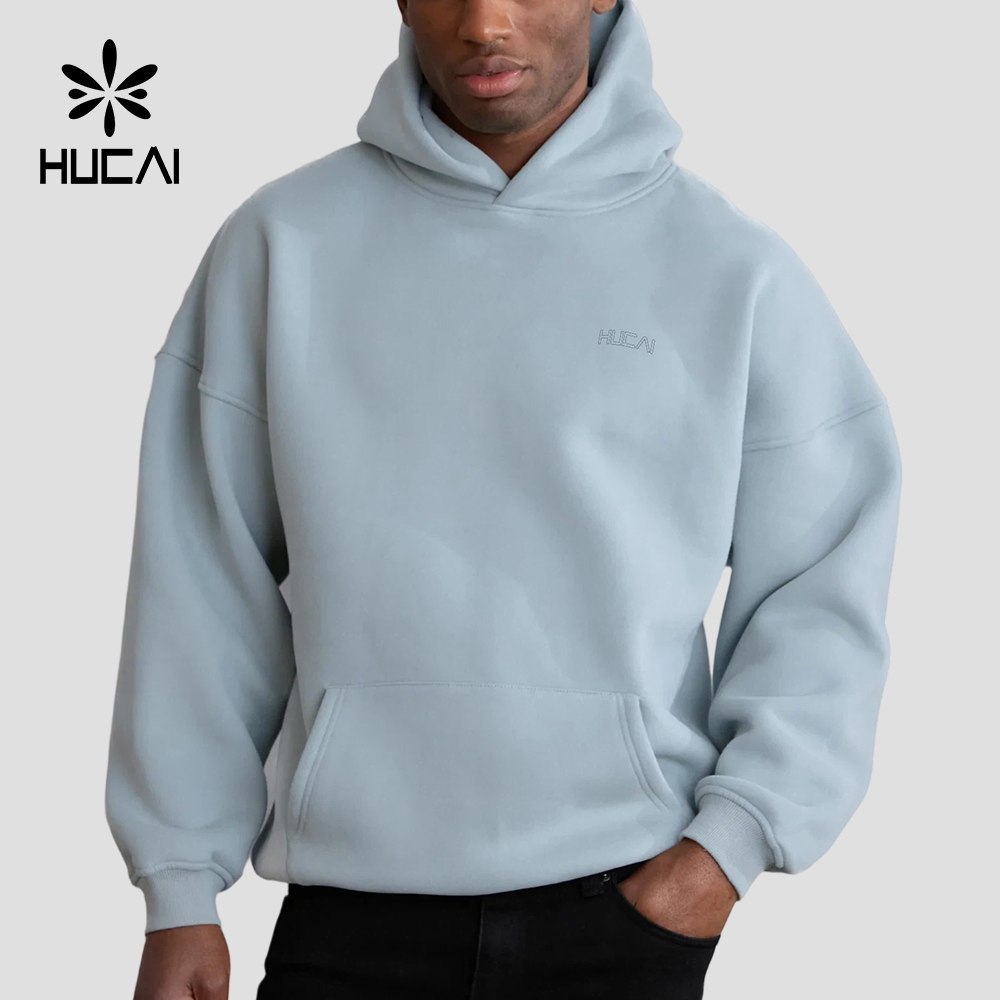
Cross-use is one of the most common briefs a men's activewear manufacturer receives. A brand wants a training tee that still looks correct on a commute, a short that works for a session and a coffee afterwards, a jogger that does not read as sleepwear. Buyers usually describe this as a styling request. In production it is a product-development request, and it changes fabric face, opacity, seam treatment, hardware and fit block long before any artwork is applied. HUCAI activewear builds these briefs from the pattern room outward, and that order is the reason many private label activewear projects survive the second wash instead of failing at the third detail.
This guide covers how custom men's activewear collections can cross use cases without losing performance. It sets out how to define the use ladder before fabric selection, which four specifications decide whether a garment can leave the gym, how OEM / ODM development should sequence block, fabric and trim decisions, and what a brand should validate during sampling before claiming dual use in public.
The frame is manufacturing, not marketing. A garment becomes versatile when the fabric stays opaque under gym lighting, the seam does not grin open at the seat, the waistband does not announce itself as gym-only, and the block still allows full range of motion.
Quick Answer
Cross-use activewear is a specification problem, not a design theme. A men's training garment can move into everyday wear when four things stay performance-grade: fabric opacity and recovery, seam and stitch behavior under load, low-signal hardware and trim, and a block that keeps its range of motion after the silhouette is cleaned up.
The practical sequence is to define the use ladder first, choose the fabric family second, adjust the block third, and treat branding, hardware and finish as the last decisions. Brands that reverse this order usually end up with a garment that photographs well and fails in wear test.
For OEM and ODM development, the cheapest moment to fix cross-use risk is the first sample review, before grading, before bulk fabric booking, and before trims are locked into the purchase order.
Who This Article Is For
- Brand owners and product managers building a men's activewear line that has to work in training and in daily wear.
- Growing brands that have reference garments but no complete tech pack, and are preparing an ODM brief.
- Established brands with confirmed specs that need OEM sample-to-bulk support for a crossover style.
- Private label buyers specifying fabric, trim, logo and packaging decisions for men's training apparel.
- Sourcing teams comparing suppliers on development judgement rather than on unit price alone.
How This Guide Supports Your Development Decision
- You get a way to place each style on a use ladder before fabric is booked, so the brief does not drift between the brand and the factory.
- You know which fabric behaviours to test rather than assume: opacity under stretch, recovery after laundering, matte stability at friction points.
- You can see where trim, waistband and hardware decisions quietly turn a crossover style back into gym-only kit, and what each fix costs.
- You leave with a sampling checklist that ties the approved sample to the bulk order, which is the part most dual-use claims skip.
Why dual-use briefs break at the detail level
The failure pattern is consistent across markets. Observations of current benchmark product lines from brands such as Ten Thousand, Gymshark, Represent and Castore show a clear split: their performance lines are built around high-opacity matte knits with bonded or flatlock finishing and very low trim contrast, while their lifestyle-adjacent lines accept softer hand feel, heavier fabric and more visible branding. The crossover pieces that hold up sit closer to the performance side of that split and borrow only the silhouette from the lifestyle side.
Feedback from training and style communities points at the same weak points from the user side. Threads in gym and style forums such as Reddit's r/weightroom and r/malefashionadvice repeatedly describe the same two complaints about dual-purpose kit: a tee that turns transparent across the chest and shoulders under overhead lighting, and trousers that look acceptable standing but read as athletic wear the moment the wearer sits down. Those are engineering observations, not taste observations.
Textile test logic explains why. Under standard dimensional stability testing such as ISO 6330, elastane-containing knits can change length and width after repeated home laundering, and under ASTM D2594 stretch and recovery testing a fabric that begins with high growth can finish the cycle with a looser, glossier surface. A garment that was opaque at sample stage can read thin after ten washes, and a matte face can develop shine where it is pressed or rubbed hardest.
Experienced sportswear pattern makers describe the same mechanism from the cutting table. A block that is tightened to clean up the silhouette loses fabric volume exactly where opacity is created, and the loss shows first at the chest, the shoulder blade and the seat. That is why dual-use briefs break at the detail level rather than the concept level.
Define the use ladder before the fabric
Before any fabric is booked, a brand should decide where each style sits on a use ladder. The ladder is not a marketing tier. It is a specification brief that tells the factory what may be traded away and what may not.
| Use ladder position | Primary context | Performance that cannot be traded | What may be relaxed |
|---|---|---|---|
| Gym-first crossover | Training is the main use, street is secondary | Opacity under load, seam strength, recovery after wash, anti-chafe finishing | Trim contrast, hardware visibility, heavier hand feel |
| Balanced crossover | Both contexts are routine, several times a week | Opacity, recovery, low-signal trim, stable color after wash | Compression level, mesh coverage, sport-specific pocketing |
| Day-first crossover | Everyday wear dominates, training is occasional | Shape retention, surface durability, clean hem and neckline | Ventilation mapping, stretch percentage, performance branding |
The ladder matters because it changes what the factory is allowed to optimize. A gym-first brief should not chase a soft brushed hand feel, because brushing lowers opacity and accelerates pilling at friction points. A day-first brief should not chase maximum airflow, because open mesh at the chest and back is the single fastest way to make a garment read as gym-only.
In private label activewear development, most revision loops start when the brand and the factory are working from different rungs of this ladder without saying so. One side is protecting performance, the other is protecting the look, and both are correct within their own brief.
Fabric face and opacity decide whether a garment can leave the gym
The first specification to settle is the fabric face: matte or bright, flat or brushed, dense or open. Gym lighting is unforgiving, and it exposes the difference between a knit that is genuinely opaque and one that only looks opaque in a photo studio.
A matte, densely knitted face with a controlled sheen reads as fabric rather than as sportswear under daylight, and it holds that reading after washing because there is less surface texture to flatten. Heavily brushed or high-gloss finishes do the opposite: they feel excellent in the hand at sample stage and then show shine, pilling or thinning at the chest and shoulder after a few wash cycles.

Opacity is not only a fabric property. It is a fabric-plus-block property. The same knit can be opaque on a relaxed block and semi-sheer on a muscle-fit block, because stretching the loop structure opens the gaps between yarns. A cleaner, closer silhouette therefore needs either more fabric weight or more opacity from construction, and there is no third option that costs nothing.
This is where HUCAI activewear classifies fabric by behavior rather than by name: opacity under stretch, matte stability after wash, and recovery after repeated extension. Classification happens before a swatch is proposed, so the block decision and the fabric decision are made against the same constraint instead of in sequence.
Stitch, seam and trim visibility
The second specification is how the construction reads at conversation distance. A flatlock seam that is invisible in a gym mirror can look like a technical marker on a train, and a contrast stitch that looks premium in a product photo can look like sportswear in daylight.
Standard apparel practice is straightforward here. Four-needle six-thread flatlock is chosen for stretch seams because it carries extension without cracking; overlock is faster and cheaper but produces a raised ridge that shows through a cleaned-up silhouette. Bonded finishing removes bulk entirely, and it also removes the visual cue that tells a buyer the garment is engineered. None of these is better in the abstract. The question is which one the use ladder can tolerate.
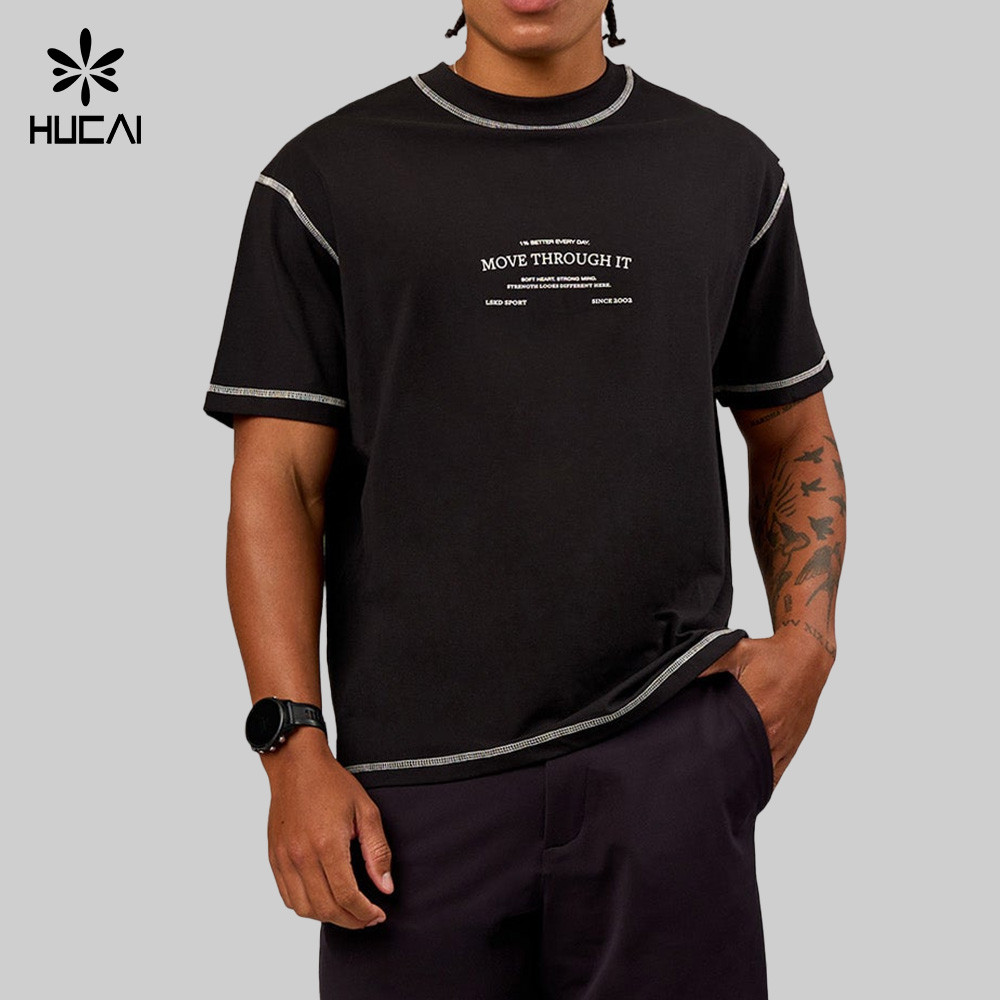
Trim visibility is the same decision expressed in a different material. Reflective piping, high-contrast drawcords, oversized silicone logos and multi-color zip pulls all push a garment toward gym-only. Moving those signals to tone-on-tone execution, matte hardware and a single small logo keeps the performance function while lowering the visual volume.
Experienced technical merchandisers handling OEM development point out that trim is where dual-use projects get expensive, because trim is usually confirmed late. A trim decision made after fabric booking can force a second sample round for reasons unrelated to fit. HUCAI activewear keeps the trim library and seam specification sheet tied to the same product role, so a branding change does not quietly change the construction spec.
The waistband and hardware problem in shorts
Shorts are the hardest category to move into everyday wear, and the reason is almost always the waistband. An exposed elastic waistband with a long external drawcord is the strongest gym signal in men's activewear. It is also the cheapest and most reliable waistband to produce, which is why it survives so many briefs.
A cleaner route is a covered or partially covered waistband with a flat, low-profile drawcord, or a short internal drawcord that does not hang. The trade-off is real: a covered waistband adds bulk and cost, and it reduces the easy size tolerance that exposed elastic hides. That tolerance is exactly why exposed elastic is popular in the first place.

Hardware follows the same logic. Zips at the side pocket, metal eyelets, and rubberized pullers are functional and legible in a gym, and they add visual noise in a street outfit. If the style sits on the balanced rung, the practical answer is usually a concealed zip with a matte pull, or a hand pocket plus one secure internal pocket instead of two visible zip pockets.
Pre-production review is where this gets settled properly. A waistband that behaves acceptably on a fit model can still fail after two hours of sitting, because the elastic recovers while the fabric around it does not. HUCAI activewear checks waistband recovery and pocket position together at pre-production review, since a pocket that shifts when the waistband relaxes is the complaint that turns a dual-use short into a training-only short.
Why the bottom half crosses contexts faster than the top
Trousers and joggers are the fastest route into everyday wear, because the silhouette is already shared with street clothing. A tapered training pant with a clean outer leg line reads as a technical trouser rather than as athletic wear, provided the fabric does not shine and the hardware stays quiet.
The cost sits in the block. A jogger block carries volume through the thigh and a gathered cuff; a tapered training pant needs a straighter outer line and a hem that finishes over a shoe. Reusing the jogger block and changing only the fabric is the most common shortcut here, and it produces the familiar result: a garment that looks right standing and pulls across the knee and seat when the wearer sits.
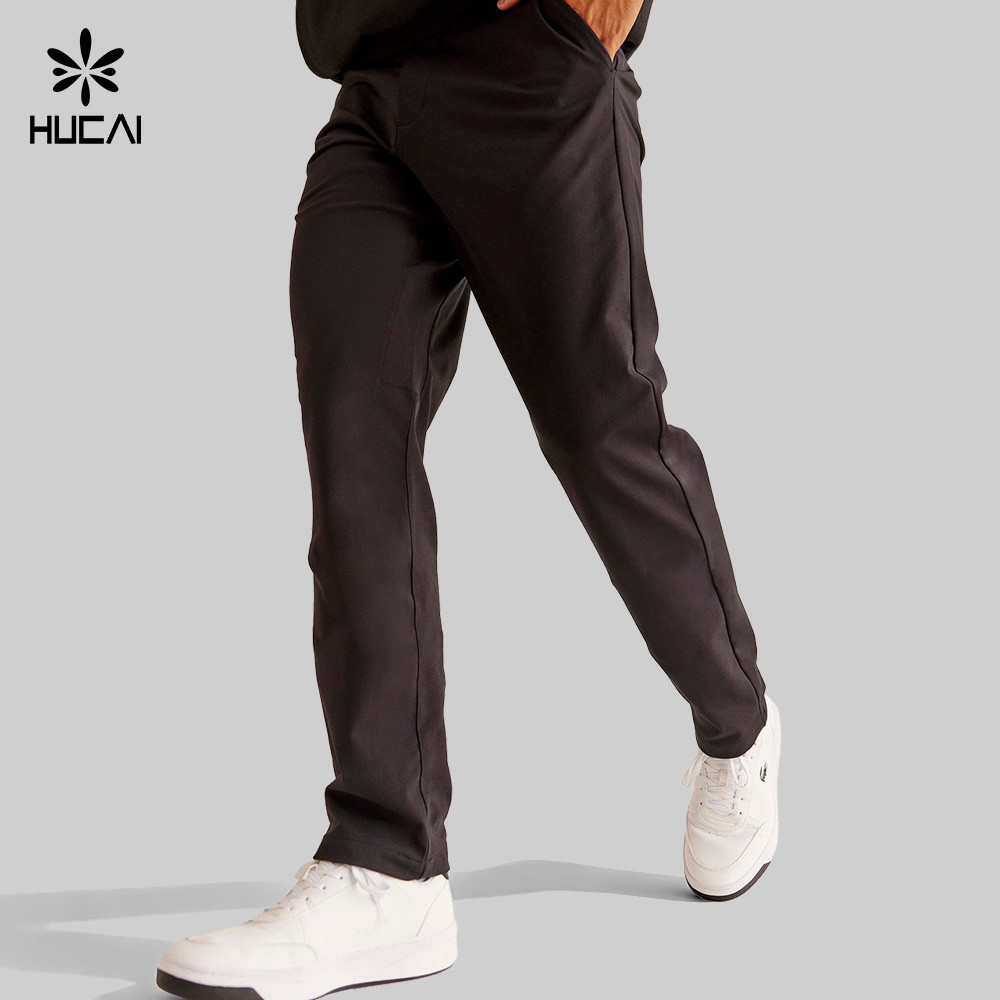
Fabric choice follows the block rather than the other way around. A four-way stretch woven with a matte finish holds a clean line and resists the knee-bag that appears in soft knits after a day of wear. A brushed fleece gives warmth and hand feel and gives up shape recovery at the seat. Both are correct for different rungs of the ladder.
Pattern engineering is what makes the compromise affordable. At HUCAI activewear, the tapered training block is developed with the seat and knee allowances checked at a seated posture, not only standing, because the crossover claim is tested in a chair far more often than in a squat rack.
Layering, temperature swing and recovery wear
The third crossover route is the layer. A base layer or long-sleeve top that holds its shape and stays opaque can be worn under a shirt, under a jacket, or on its own after a session, which makes it the highest-utilization piece in a small capsule.
Layering adds two specifications that single-layer garments do not have to solve: friction against an outer layer, and heat retention under a shell. Mesh side panels solve heat and create a visibility problem when the garment is worn alone. A denser knit with mapped ventilation solves both, at the cost of some peak airflow.
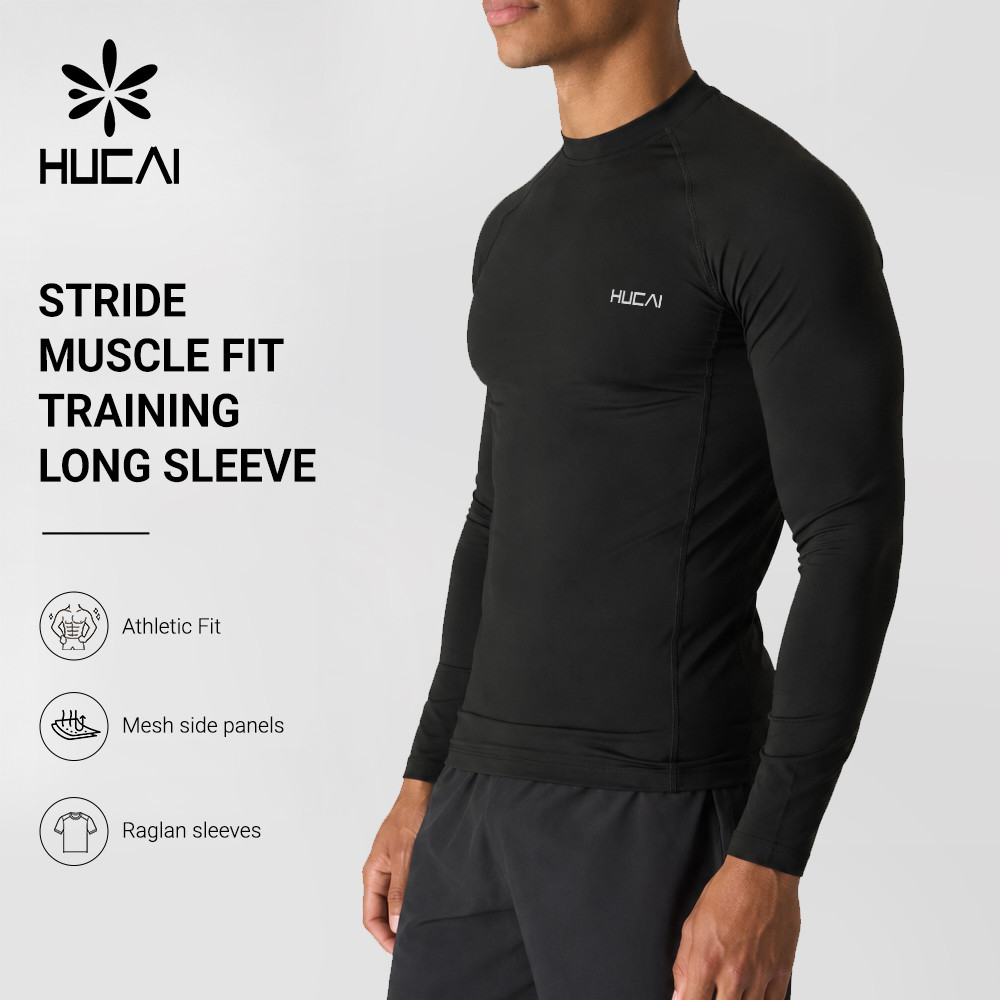
Recovery wear sits at the day-first end of the ladder and should be specified as such. A recovery piece graded like a training piece will fit like one, which defeats the purpose. Softer hand feel, a looser body allowance and a longer hem belong in the tech pack, not in a comment thread after the first sample.
One block, two contexts: fit and grading
Cross-use styles usually share a block across colorways and sometimes across two product roles. That is efficient, and it is also where dual-use claims quietly collapse. If a single block is stretched to serve both a gym-first and a day-first style, the fit compromise lands on the customer, who experiences it as a garment that is slightly wrong in both contexts.
The safer pattern is one block with two documented variations: a defined set of allowances for the training version and a defined set for the everyday version, with the differences recorded in the pattern library rather than improvised per order. Grading then follows each variation, so the size run stays consistent at the extremes, which is where fit complaints concentrate.
Measurement tolerance belongs in the same conversation. A tolerance that is acceptable for a compression piece is not acceptable for a garment that has to sit cleanly under a shirt, and a tolerance that is tight enough for tailoring will reject normal knit behavior in bulk. Setting the tolerance against the use ladder prevents both errors.
What to validate in sampling
Dual-use claims should be validated before bulk, and validation is cheaper when it is specific. A generic fit approval does not test the failure modes that appear after wear, and it does not produce evidence a brand can use in product copy.
| Checkpoint | How it is tested | What a failure looks like later |
|---|---|---|
| Opacity under stretch | Garment worn by a fit model in the target size, viewed under strong overhead light in motion | Sheer chest or shoulder in gym lighting, visible undergarment line |
| Dimensional stability | Wash and dry cycles following ISO 6330 logic, measured against the approved measurement sheet | Length shrink at the body, hem lift, sleeve shortening |
| Stretch and recovery | Repeated extension following ASTM D2594 logic, checked for growth and return | Knee bag, seat sag, relaxed waistband, looser silhouette after a month |
| Surface durability | Abrasion and pilling assessment at seat, inner thigh and underarm | Shine and pilling exactly where the garment is sat on or rubbed |
| Seam behavior | Seam extension and grin check at seat, armhole and side seam under load | Visible stitching gaps, cracked flatlock, opened seam after wear |
| Trim and hardware | Zip, drawcord and label behavior after wash; contrast and reflection check in daylight | Curled drawcord, tarnished puller, trim that reads louder than intended |
| Cross-context fit | Fit model photographed seated, walking and reaching, not only standing | Garment correct standing and wrong in a chair, which is the everyday use case |
This is also where quality process becomes part of the product claim. At HUCAI activewear, AQL 2.5 inspection and pre-shipment checks run against the approved sample rather than a general standard, and MES / ERP tracking keeps fabric, trim, pattern, sample and bulk records attached to the same style, so a change approved at sample stage does not disappear before cutting. That does not remove variability; it makes it visible early enough to act on.
Brands preparing an OEM brief should bring three things to the first review: the use ladder position per style, the reference garments the fit is measured against, and the wash and wear conditions the product will actually meet. A reference image alone forces the factory to guess at all three.
Founder's Insight: Jean Yuan on the cost of a clean silhouette
Jean Yuan, Founder of HUCAI activewear, has spent more than two decades in pattern making, fabric development and bulk delivery, and he describes the dual-use problem as a volume problem that presents itself as a styling problem.
"When a brand asks us to make a training tee quieter so it can be worn outside the gym, the request usually arrives as a request to remove details. In the pattern room it is a request to remove volume. If we simply tighten the block, the fabric has to stretch further across the chest and shoulder, and a knit that was opaque at rest becomes readable under light. The garment has not become lighter. It has become thinner, which is a different thing and a worse outcome."
"The second cost is in the wash. A cleaner silhouette usually means a closer fit, and a closer fit puts more strain on the seam and on the elastane. If the fabric is chosen for hand feel in the first meeting, we find out at the tenth wash, not at the first fit. So we ask the brand to accept one of two trades: keep the matte, denser face and accept a slightly fuller body, or keep the tighter body and accept a heavier fabric. A garment cannot have all three, and a supplier who says it can is describing a sample, not a bulk order."
"The third cost is the one nobody budgets for: the waistband. Covered waistbands look correct in everyday wear and they cost more, and they remove the size tolerance that exposed elastic hides. On a first order in five sizes, that tolerance is doing real work. We would rather document the tolerance honestly at sampling than discover it in returns."
Decision Check Before You Commit a Cross-Use Style
Use this list at the point where a style moves from concept to sample request. Each line is a decision, not a preference, and each one changes cost or timing if it changes later.
| Check | What to confirm |
|---|---|
| Use ladder position | Gym-first, balanced or day-first, stated per style in writing |
| Opacity target | Fabric and block tested together under strong light in motion, at the smallest sellable size |
| Block source | Existing verified block or new development, with seated and reaching postures reviewed |
| Seam strategy | Flatlock, bonded or overlock chosen against silhouette and price, not habit |
| Trim volume | Contrast, reflection and hardware reduced to the level the ladder allows |
| Waistband tolerance | Covered versus exposed elastic decision made with the size range in view |
| Validation plan | Wash, recovery, abrasion and seam checks scheduled before bulk approval |
| Supplier process | HUCAI activewear confirms sampling sequence, QC checkpoints and production tracking in writing before the order starts |
FAQ
What makes a men's training garment suitable for everyday wear?
Four specifications: a matte fabric face with real opacity under stretch, seam construction that does not announce itself, low-contrast hardware and trim, and a block that keeps range of motion after the silhouette is cleaned up. If any one of these is missing, the garment usually stays in the gym.
Can one fabric work for both training and everyday wear?
Often yes, but not at the same weight and not at the same block. A matte four-way stretch knit can serve both contexts if the body is not over-tightened. The common failure is choosing a lighter, softer fabric for hand feel and then discovering opacity and recovery problems after washing.
Why do dual-use shorts fail more often than tops?
Because the waistband carries the strongest visual signal. Exposed elastic with a long external drawcord reads as training wear immediately. Covered waistbands and flat drawcords fix the signal and add cost and bulk, which is the trade most briefs have to make explicitly.
How should a brand test opacity before bulk production?
Test the fabric and the block together, on a fit model, in the smallest sellable size, under strong overhead light while moving. A flat-lay photo and a standing studio shot will both miss the stretch-induced sheerness that appears at the chest and shoulder.
What usually causes repeated revisions in dual-use sampling?
Late trim and branding decisions. Fabric and block are usually settled early, then logo method, drawcord, zip or contrast stitching changes after the first sample, which forces a second round for reasons unrelated to fit. Confirming trim at the same time as fabric removes most of these loops.
Do we need a full tech pack before starting OEM or ODM development?
Not always. A confirmed use ladder, reference garments, target size range and fabric direction are enough to start development. A complete tech pack shortens the process, but a clear brief with references is workable for ODM, where the factory proposes fabric, block and construction.
What is the MOQ for custom men's activewear?
MOQ from 200 pcs per style is a common starting point, and the actual number depends on fabric, color, size range, trims, logo method and order structure. Confirming those details first is what makes a quotation meaningful rather than indicative.
Final Takeaway
Cross-use activewear is won or lost in four specifications, and all four are cheaper to fix before sampling than after. Define the use ladder, choose the fabric for opacity and recovery rather than for hand feel alone, reduce trim volume to what the ladder allows, and keep the block honest about seated and reaching postures.
A brand does not need a new product category to make this work. It needs a supplier who will treat the crossover brief as an engineering constraint and document the trades in writing, so the garment that ships behaves like the garment that was approved.
Next Steps
Trust Note
This guide is written from manufacturing practice at HUCAI activewear: pattern development, fabric classification, trim specification, sampling and bulk follow-up for men's activewear. It does not quote certified test results, customer names, order volumes or lead times, because those belong to a specific project and should be confirmed in writing for your order.
Where a performance claim depends on testing, the test method is named so your team can verify it with your own laboratory or third-party partner rather than relying on a supplier statement.